A diagram of connected patterns
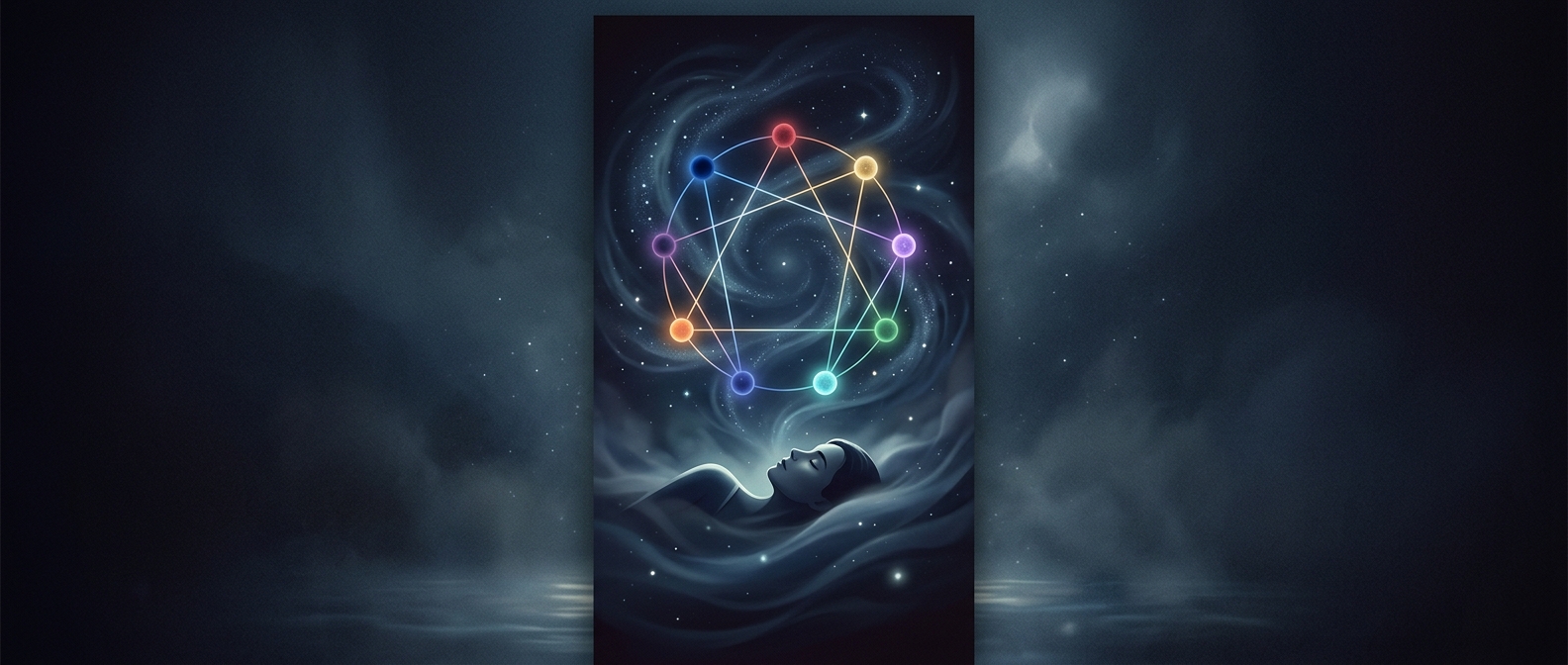
The enneagram is drawn as nine points arranged around a circle, with a triangle and a sequence of crossing lines inside it. In esoteric teaching, those lines were not merely decoration: they offered a way to show how one recurring human difficulty could lead into, or intensify, another. The symbol therefore worked less like a list of nine flaws and more like a map of relationships among them.
The circle gives the points a shared frame, while the inner figures connect selected points in particular paths. A teacher could use those paths to describe how a pattern shifts under different conditions—for example, how a familiar reaction might trigger a second reaction that keeps the original trouble going. The lines supplied a visual grammar for describing those links, rather than a proven account of how people behave.
From process map to personality system
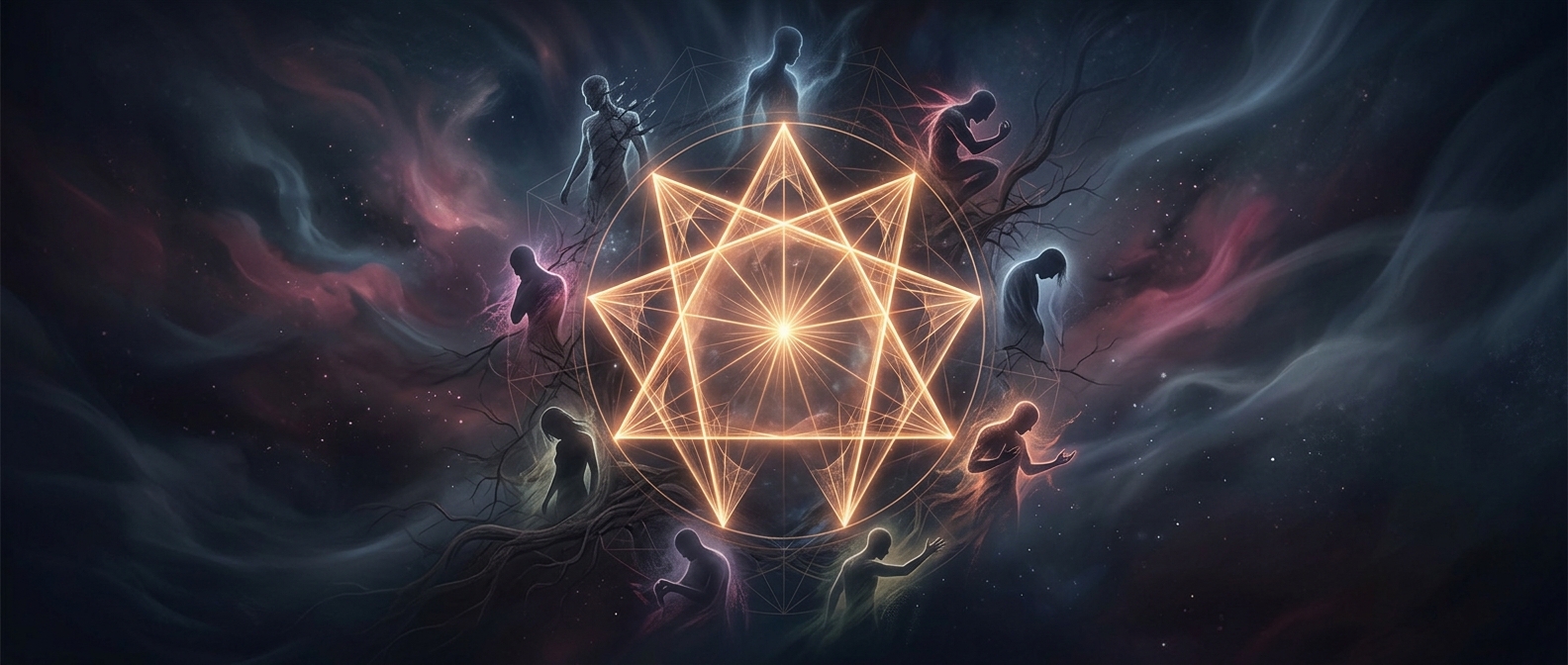
The symbol became associated with the esoteric teachings of George Gurdjieff in the early 20th century. In that setting, the enneagram was used to think about processes and recurring patterns, not simply to assign people fixed personality labels. Later systems made the nine points familiar as personality types, a shift that can make the diagram seem like a static classification chart.
That difference matters: in the older esoteric framing, the central question was how suffering repeats and feeds itself, not just which point describes someone. The lines invite a reader to look for the connections that keep a pattern in motion—the step by which one difficulty becomes the next.