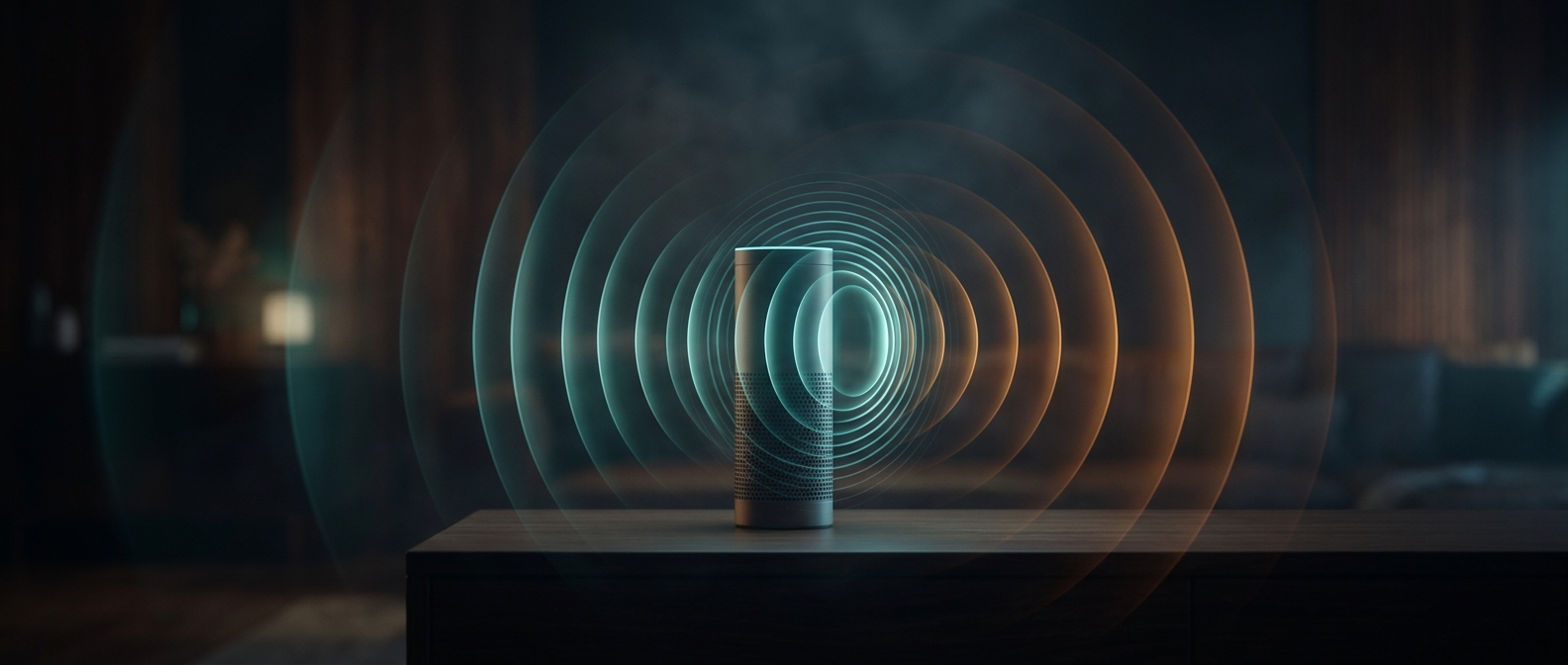
Why “Doppler” fit a voice-controlled speaker
The Doppler effect is the change in a sound’s perceived pitch when its source moves relative to the listener. An approaching siren seems higher-pitched; as it passes and recedes, it seems lower. The proposed name Amazon Doppler therefore pointed toward acoustics and the behavior of sound—an apt scientific neighborhood for a device built around listening and speaking.
But the Doppler effect is specifically about motion changing a sound’s pitch. That is not the defining experience of using a home assistant: a person speaks, the device processes a request, and a voice answers.
“Echo” makes the interaction easier to picture
An echo is a sound that returns after bouncing off a surface. The product does not need to create a literal acoustic echo for the image to work: someone says something, then hears a response from the device. The word turns a technical subject into a simple, familiar interaction.
That contrast helps explain the naming choice without requiring a claim about the company’s private reasoning. “Doppler” evokes a physics principle; “Echo” evokes a voice coming back. For a speaker meant to be addressed aloud, the latter gives the name a direct connection to what a person does with it.