Why the IBM 3800 Was Room-Sized
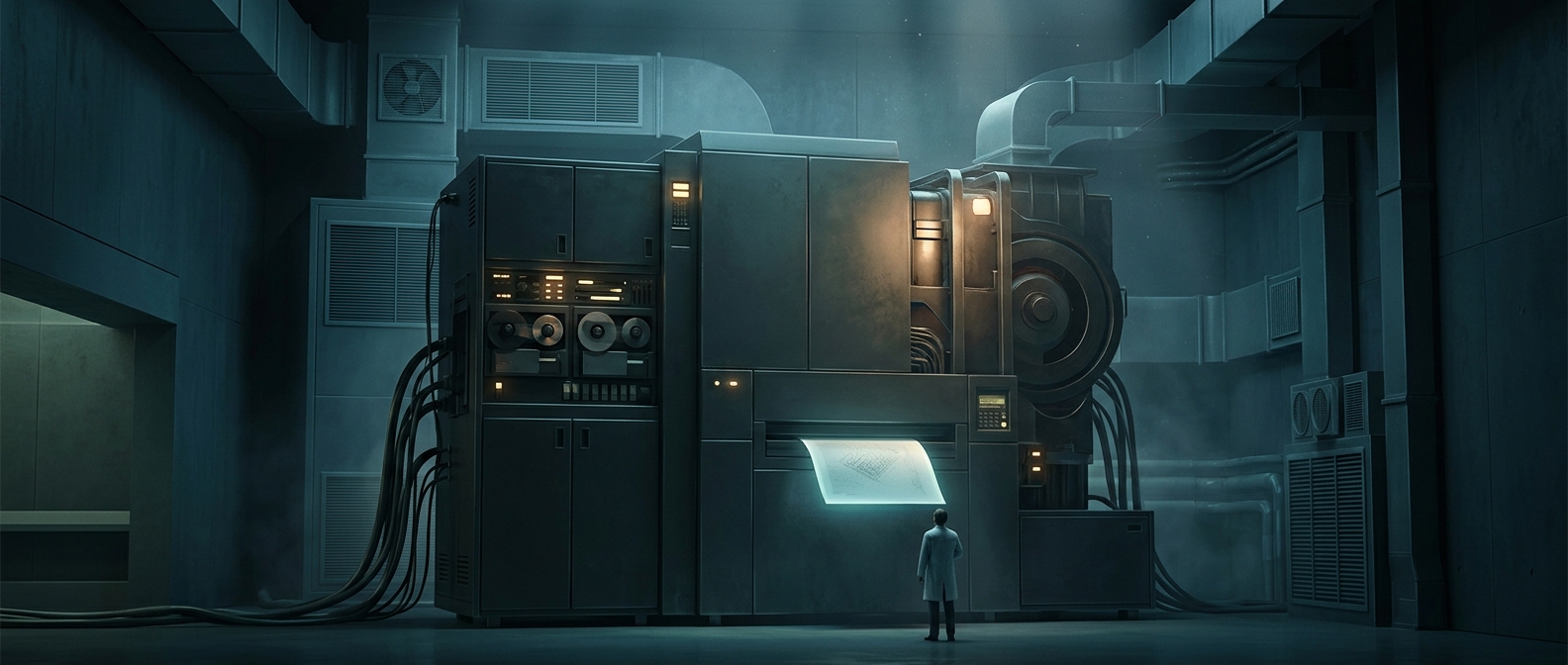
When IBM introduced the 3800 in 1976, printing at computer speed was an industrial job. Instead of feeding sheets one at a time, the machine printed continuously on wide rolls of paper, then cut and stacked the output. Its paper path, toner system, and finishing equipment made it far larger than an office printer: installation could take up an entire floor.
Printing With Light—and Managing the Byproducts
The 3800 used electrophotography, the same basic family of process used in photocopiers. A laser traced each page onto a rotating, light-sensitive surface. Toner stuck to the pattern, transferred to paper, and was fixed in place with heat. That sequence let the printer turn digital data into pages at a pace ordinary equipment could not match—but it also produced substantial heat.
The machine’s charging system could generate ozone, a gas that needs to be carried away rather than allowed to accumulate in a work area. Industrial ventilation helped remove heat and airborne byproducts, keeping the installation suitable for sustained operation. The printer was not simply a large box that could be plugged into an office; it needed space, airflow, and the infrastructure of a computer room.
A Different Idea of a Printer
The 3800 made sense where computers produced enormous volumes of paperwork—such as statements, forms, and reports. Its scale reflected a tradeoff: businesses could print continuously and quickly, but only by dedicating a room and industrial support to the task. In that era, a “printer” could be closer to a production line than a desk accessory.