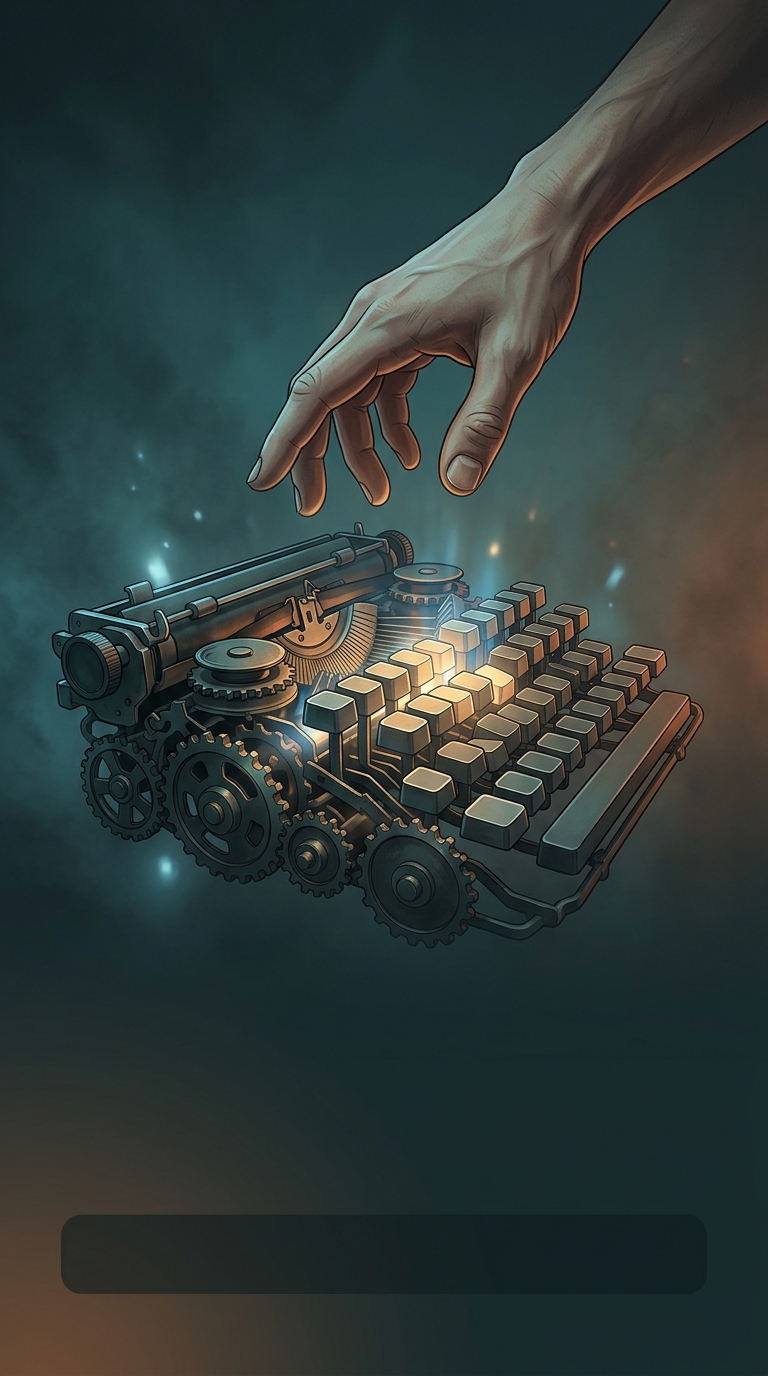
A layout shaped by the typewriter’s moving parts
The familiar QWERTY layout took shape in the 1870s, when a keyboard did more than send a signal to a screen: each key set a metal typebar swinging toward paper. On early machines, typebars could collide or jam if they struck too close together in quick succession. Keyboard designers had to consider the machine’s mechanics as well as the typist’s hands.
Christopher Latham Sholes and his collaborators revised their keyboard designs as they developed a workable typewriter. The popular story that QWERTY was invented simply to slow typists down is too neat. The arrangement helped address mechanical problems, but its exact design history is complicated; it was not a clean, scientifically optimized solution to one problem.
Familiarity made the arrangement stick
In 1874, the Sholes-and-Glidden typewriter, made by Remington, brought a version of QWERTY to market. As typewriters spread, typists learned that layout, businesses trained workers on it, and manufacturers had reason to keep using a familiar standard. Each new generation of users and machines made switching less attractive.
Later keyboards no longer had typebars to tangle, and alternative layouts were developed. But replacing a layout is not just a matter of choosing a theoretically better one: people would have to relearn where the keys are, and institutions would have to retrain users and change equipment. QWERTY’s staying power comes less from being perfect than from being widely learned. The mechanical workaround outlived the mechanism that helped make it useful.