Your Eyes and Inner Ear Disagree
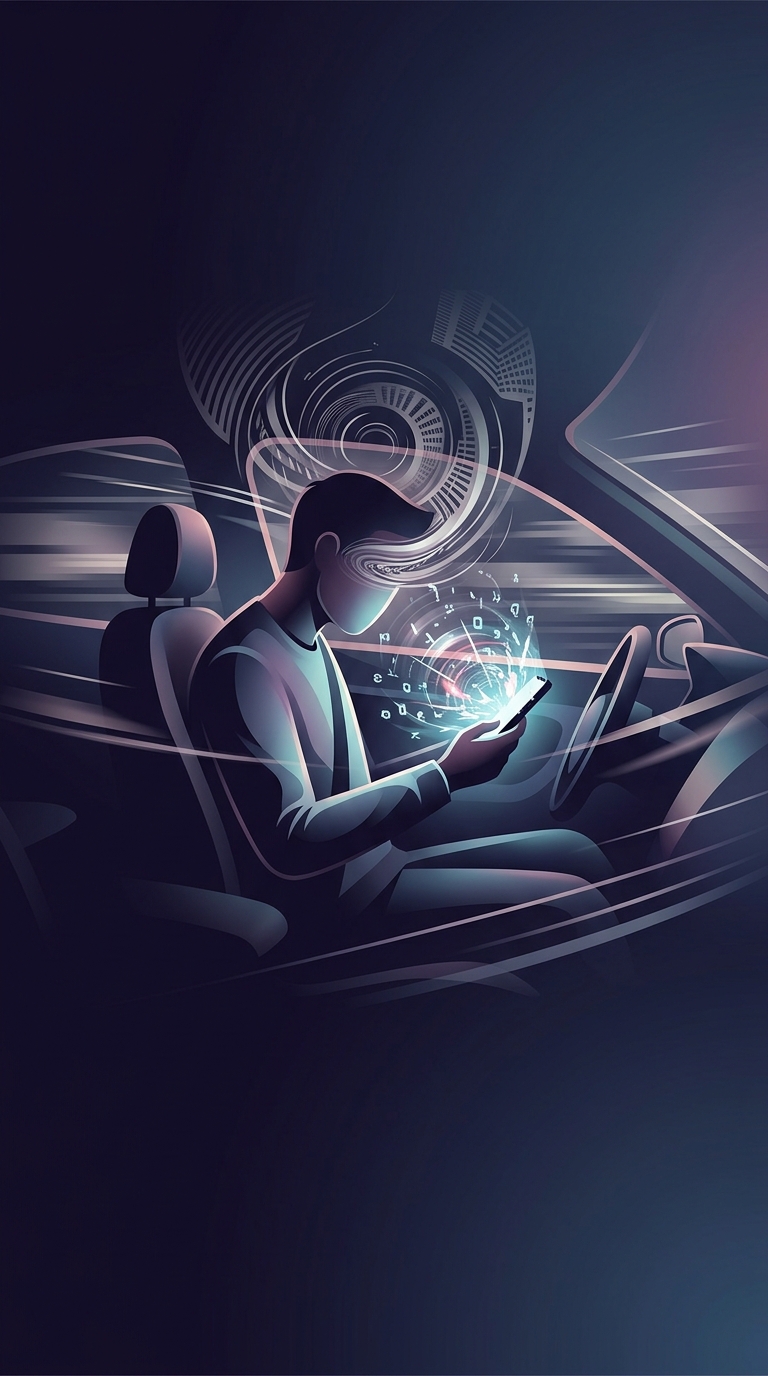
A moving car sends two different reports to the brain. The inner ear, which helps track balance and motion, senses the vehicle speeding up, slowing down, and turning. But when you focus on a phone, your eyes see a small, nearby scene that appears steady in your hands. They provide little of the broad visual movement that would help explain what the car is doing.
The brain tries to reconcile those signals. When they do not line up, the mismatch can disrupt the systems that regulate balance and nausea. The result may be queasiness, sweating, dizziness, or a sudden urge to stop looking at the screen. It can feel especially abrupt because the conflict continues with every turn and change in speed.
Why the Passenger Seat Can Be Worse
A driver usually anticipates the road and can make small movements in preparation for a turn or stop. A passenger has less control and may not know when the car will move. Meanwhile, looking down removes the road and horizon—visual cues that could help the brain interpret the motion.
The phone itself is not the only factor: a close, visually absorbing screen makes it easier to ignore the outside world while the inner ear keeps registering the ride. Reading or scrolling can intensify the conflict because the eyes stay fixed on content that does not move with the car.
Give the Brain a Moving View
Looking up at the road or distant scenery gives the eyes motion cues that better match what the inner ear detects. Taking breaks from the screen can help for the same reason. In practical terms, the trouble often begins when the phone holds your attention while the car’s movement stays just outside your field of view.