The turbine solved only one part of the problem
Ford’s Nucleon concept treated the reactor as a heat source, not as a miniature engine. In a power station, a reactor’s heat can make steam that spins a turbine; the turbine then turns a generator or drives machinery. In a car, a similar heat-to-motion system could replace the gasoline engine’s familiar cycle of burning fuel inside cylinders.
That idea was mechanically imaginable. The harder task was packaging the heat source. A reactor needs fuel, equipment to control the nuclear reaction, and cooling systems to carry heat away. It also produces radiation, so people nearby need shielding. The shielding itself can be heavy, and a car must work through bumps, collisions, changing temperatures, and tight spaces.
A swappable unit would move the burden elsewhere
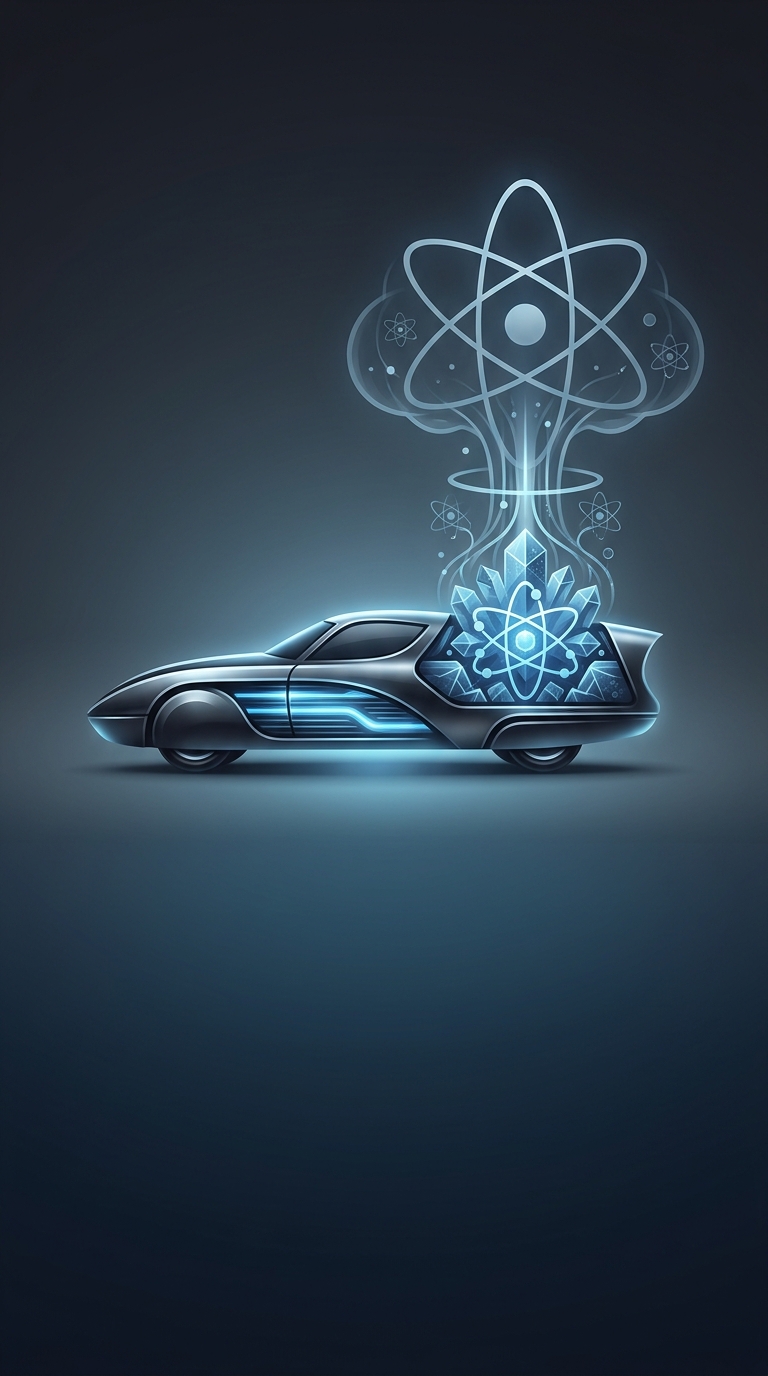
Ford’s proposed exchangeable power unit offered a clever answer to one everyday inconvenience: instead of refueling, a driver could replace the reactor module. But swapping a module would not make its contents ordinary cargo. A practical system would also need secure handling, shielding during transport, and facilities able to manage used units and their remaining radioactive material.
The car would therefore depend on an infrastructure far beyond a network of ordinary filling stations. The more protection and support equipment it needed, the less plausible it became as a compact, affordable vehicle.
The missing advance was not just a smaller reactor
A useful car reactor would have to be small and light while also controlling heat, radiation, and crash risks. Shrinking the reactor alone could not remove those requirements. Nor could a turbine make them disappear: it could convert heat into motion, but it still needed a reliable source of heat and a safe way to contain and manage it.
The Nucleon remained a design study, not a working car. Its striking swap-the-power-unit idea exposed the real engineering obstacle: nuclear propulsion could be drawn as a vehicle, but making the whole system safe, serviceable, and roadworthy was a much larger challenge than fitting an engine beneath the hood.