Why lunar driving called for a light foot
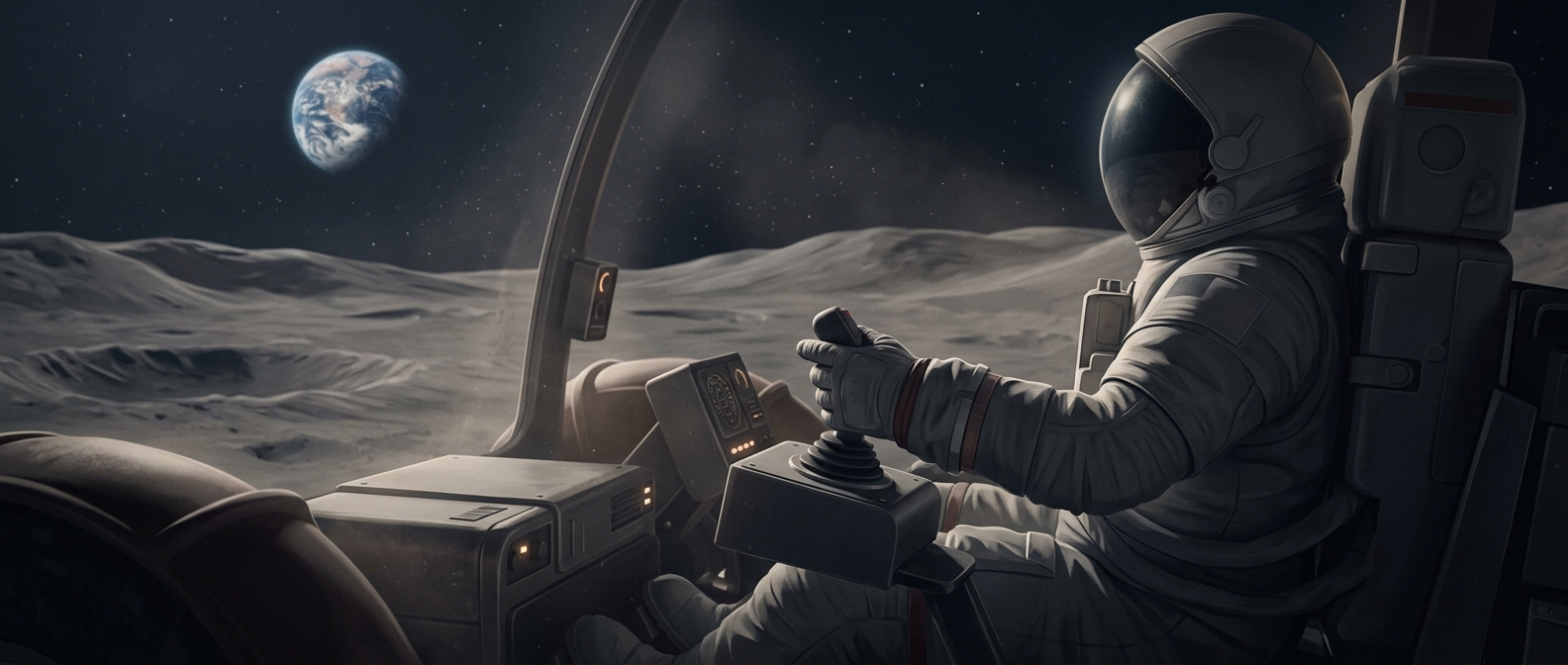
The Moon’s weak gravity made the rover lighter on the ground, but it did not make a fast ride safe. The vehicle and its astronauts still had mass—and therefore inertia—so they would resist changes in motion. Over uneven terrain, a wheel could rise over a rock and come down hard, jolting the crew or upsetting the rover. With less weight pressing the wheels onto the surface, maintaining grip was also a concern.
Speed affected more than comfort
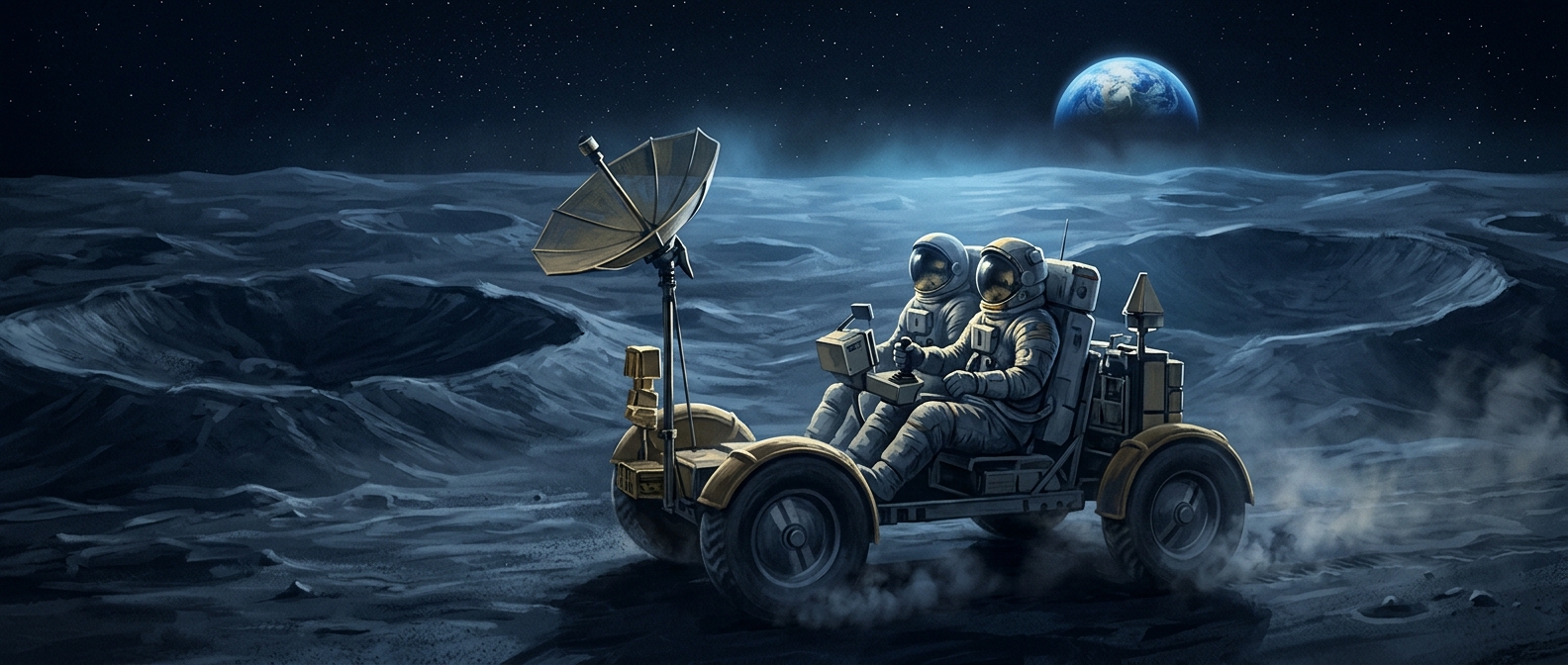
The Apollo rover was an open electric vehicle, not a cushioned car with a protective cabin. At higher speeds, bumps left less time for the driver to react, while the rover’s wheels could kick up lunar dust that obscured the ground. A seemingly small obstacle could become a control problem if the vehicle bounced or slid across loose soil.
The often-cited 10-mph limit is best understood as a practical operating constraint, not a speed sign planted on the Moon. Crews had to balance covering useful distance against keeping the vehicle manageable on unfamiliar, broken ground. On the lunar surface, driving slowly was a way to preserve control and keep the astronauts’ route—and return—within reach.