How a thin film changes a car window
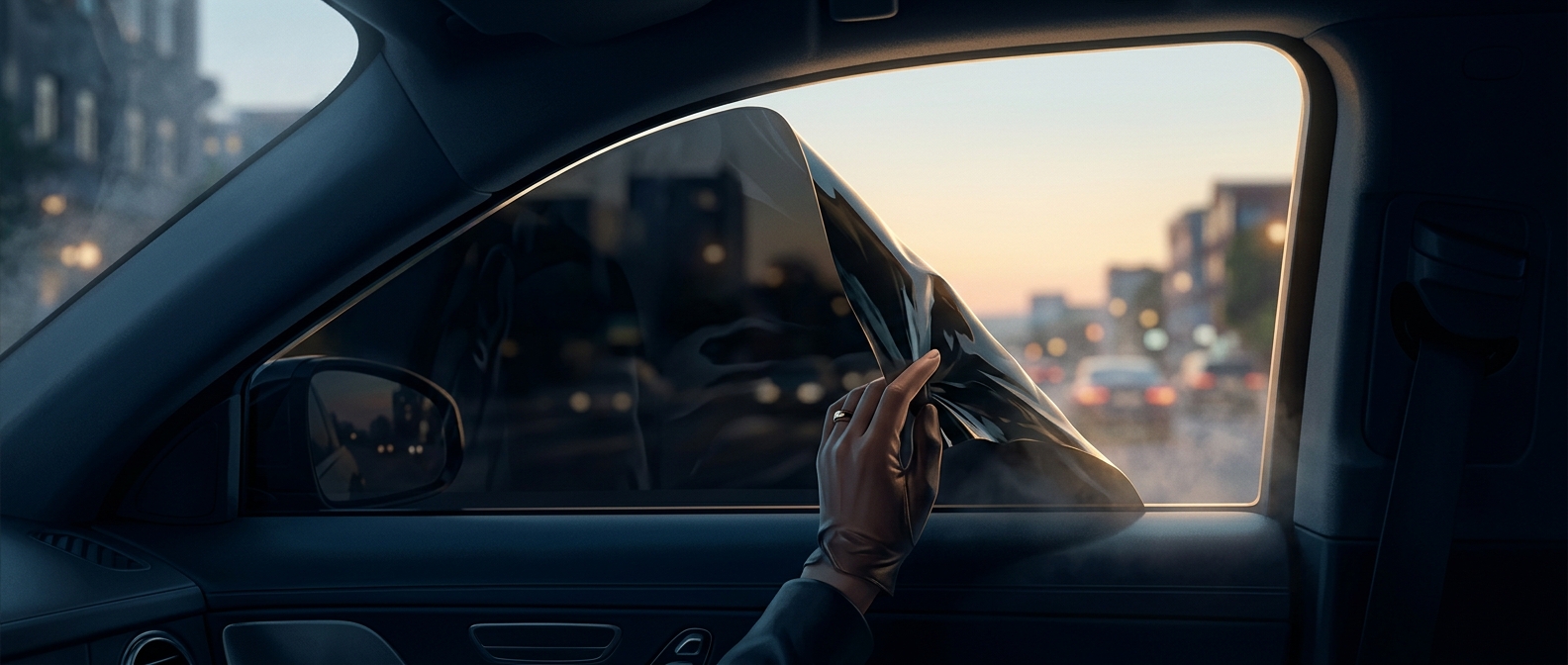
Most aftermarket tint works by changing what reaches the cabin, not by replacing the window. A flexible polyester sheet is treated with materials that absorb or reflect portions of incoming light. Depending on the film, those materials may be dyes, tiny metal particles, or ceramic compounds. The film is then bonded to the inside of the glass with a clear adhesive.
The result is not simply a darker view. Tint can reduce visible light and help block ultraviolet radiation; some films also limit the infrared energy that contributes to heat. These effects vary by product, so two films that look equally dark may perform differently.
Why the layers matter
A film is engineered as a stack: the polyester provides the flexible base, coatings do much of the filtering, and an outer protective layer helps resist scratches. The adhesive must hold the sheet smoothly against curved glass without bubbles or haze. Installers often use heat to shape the film to a window’s curves, then trim it to fit around edges and hardware.
Because the original glass remains in place, tint can be added without the cost and complexity of making every window from specially treated glass. But the film is a surface layer, not a permanent change to the glass: it can scratch, peel, or discolor over time, and replacing it means removing the old sheet and applying another.
The practical tradeoff
Tint can make a bright cabin more comfortable, but reducing visible light also makes it harder to see through the glass—especially at night. That is why darkness is not the only useful measure: a relatively clear film may still reject substantial heat. The practical choice is a balance between comfort, visibility, appearance, and the tint limits that apply where the vehicle is driven.