From foot movement to engine torque
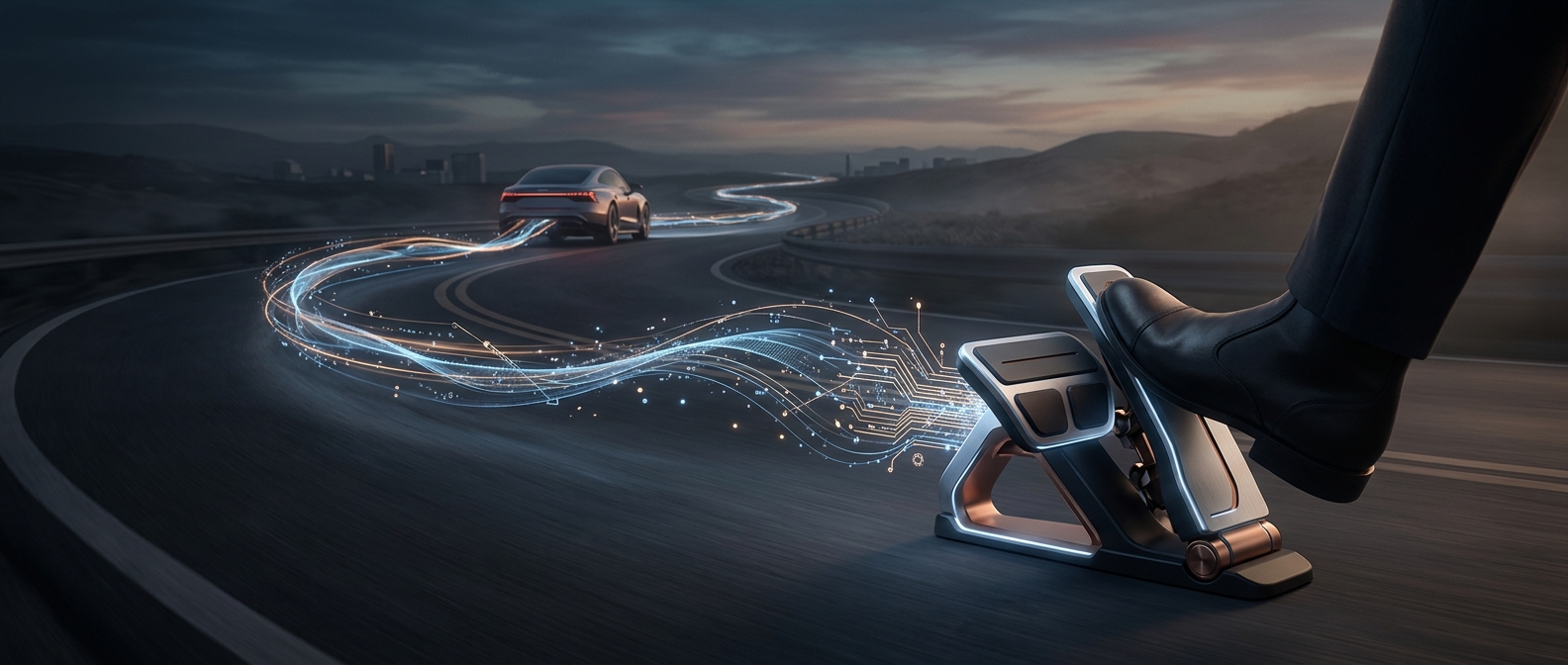
In many modern cars, the accelerator pedal is an input device rather than a mechanical lever. Pressing it moves a small sensor that reports the pedal’s position to the engine computer. The computer then commands an electric motor at the throttle body—the part that controls how much air enters the engine—to open or close a plate.
That separation lets the car translate a foot movement into a power request instead of treating it as a direct command. The computer can consider engine speed and other operating conditions before deciding how much air, fuel, and torque to provide. This arrangement is commonly called electronic throttle control, or “drive-by-wire.”
Why the computer gets a say
A driver may ask for more power, but other systems can have reasons to limit it. Traction control, for example, can request less engine torque when the driven wheels begin to slip. The engine computer can also shape throttle response so the car accelerates smoothly rather than reacting sharply to every small pedal movement. Managing airflow and combustion also gives it more control over emissions.
This is not the same as the car ignoring the driver. The pedal remains the driver’s main way to request acceleration; the electronics coordinate that request with the engine and vehicle systems. The result is a tradeoff: less direct mechanical connection, but more ability to regulate how power is delivered.
A request with safeguards
Because the pedal’s signal matters so much, electronic systems are designed to check it and respond to faults. Cars may use multiple signal tracks or other monitoring so the computer can detect readings that do not agree and enter a reduced-power mode. The exact safeguards vary by vehicle.
The practical consequence is subtle: the same pedal position need not produce identical engine response in every situation. Your foot asks for acceleration; the car decides how to deliver it safely and smoothly.