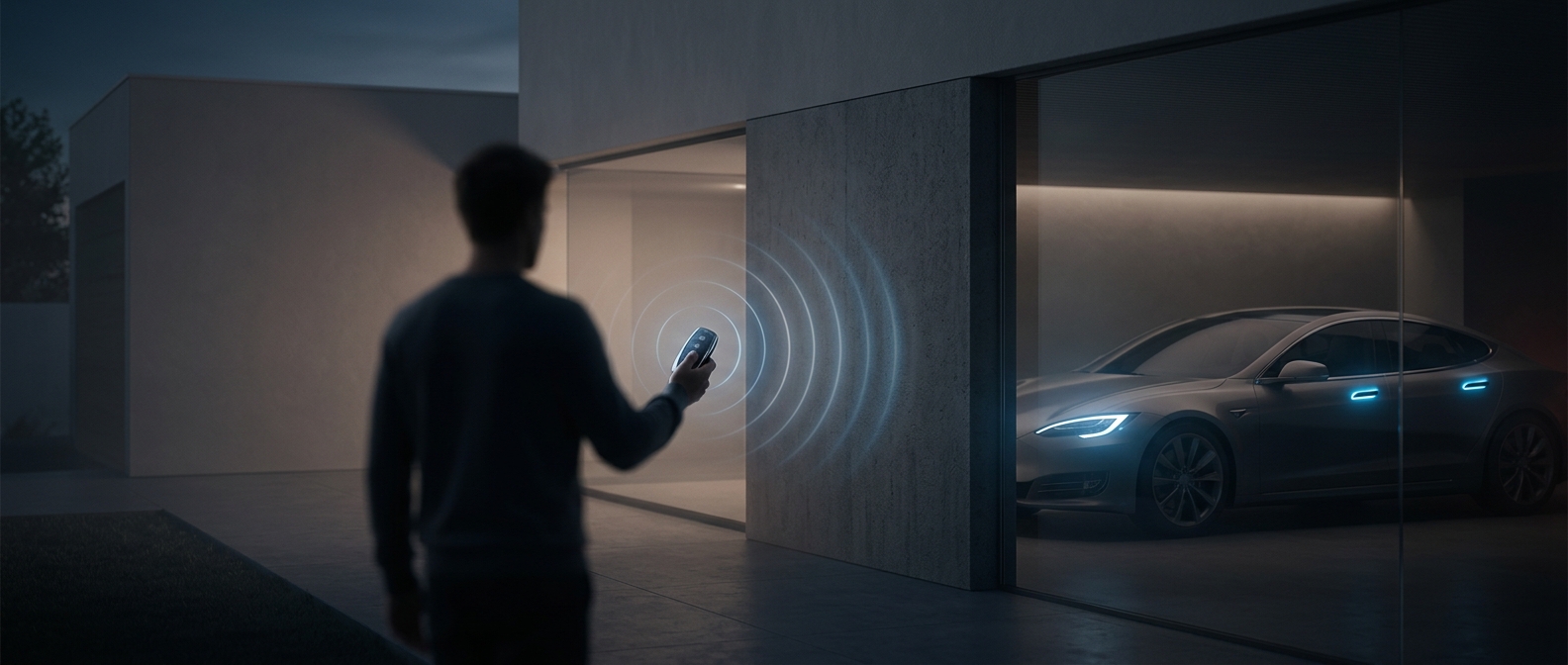
Why a wall may not stop your key fob
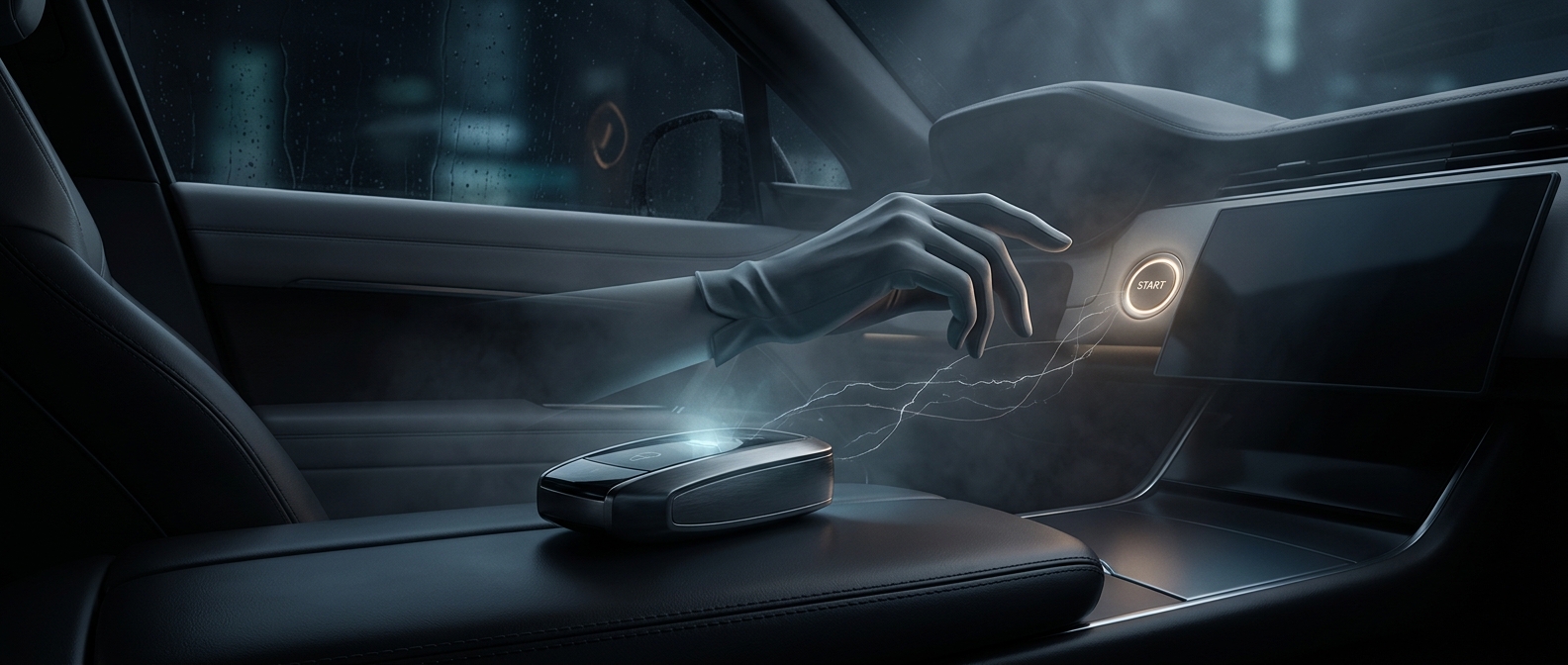
A key fob does not need a clear view of the car. When you press its button, it sends a brief radio transmission—electromagnetic energy that can travel through the air and through many everyday building materials. A wall may weaken the signal, but it usually does not absorb every bit of it. If enough reaches the car’s receiver, the car can respond.
That is different from visible light, which an opaque wall blocks. Radio waves can pass through materials that stop light, though the amount that gets through depends on the wall and the distance. Dense materials and metal can interfere more than a typical interior wall, so the same fob may work from one spot and fail from another.
The signal is a request, not a command
The car’s receiver does not simply unlock whenever it detects radio energy. It checks whether the incoming coded signal is one it recognizes. That distinction matters: a passing radio transmission is not enough; the car must receive a valid message from the fob.
The wall, then, is not what protects the lock. It only reduces the signal, unpredictably. The actual decision happens inside the car, where its receiver and locking system evaluate the fob’s message. That is why a fob can unlock a car from indoors—and why moving a few steps, changing the building materials between you and the car, or increasing the distance can change the result.