A name could travel without its owner
A passport has to do more than identify its holder on paper: it must help an official decide whether the person presenting it is the person the document describes. Names alone are a weak link. Different people can share one, and a traveler can give a name that is difficult to check across languages, borders, and unfamiliar record systems.
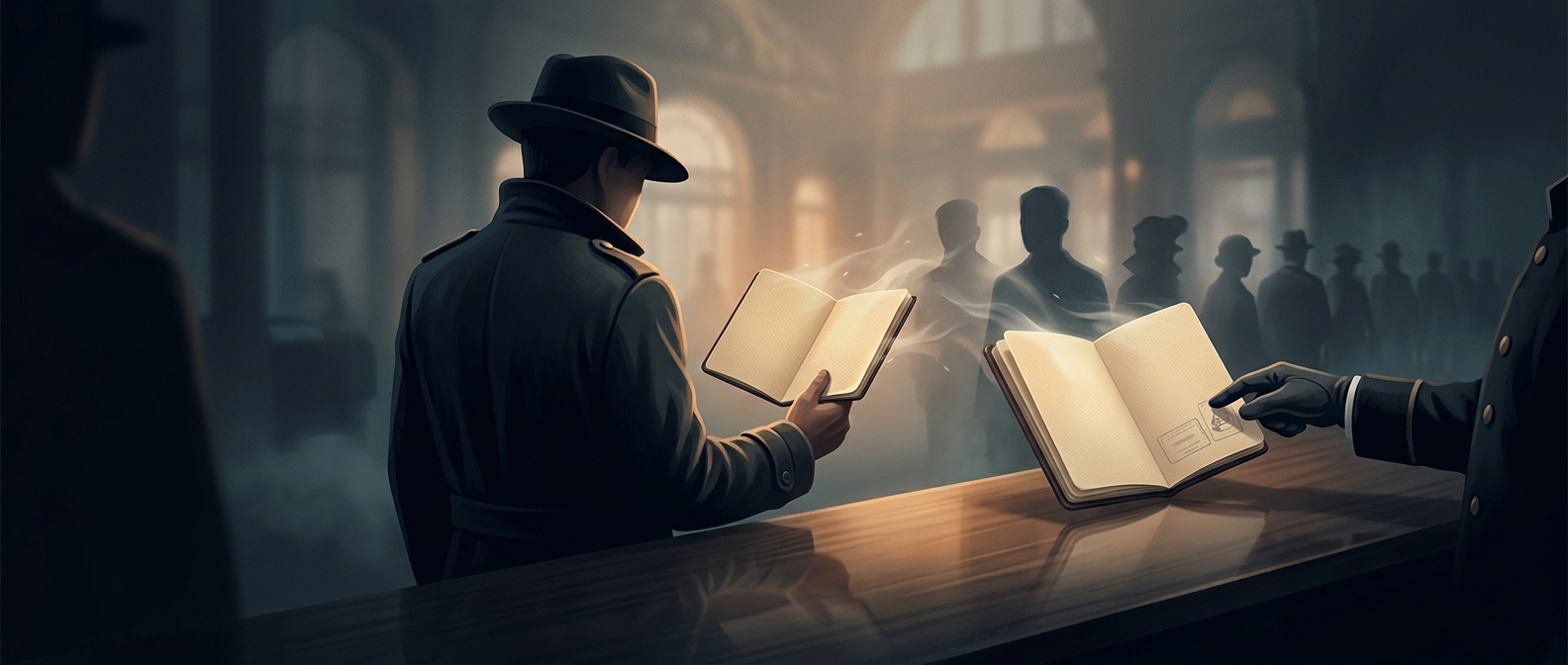
A portrait supplied a visible point of comparison. Instead of relying only on written details, an official could look from the document to the traveler and judge whether they appeared to match. That made the passport more useful at the moment it mattered most: at the border, in someone else’s hands.
From description to recognition
Before photographs became practical for identity documents, written descriptions could try to distinguish one traveler from another. But height, complexion, or other traits are hard to record consistently—and harder to compare quickly. A photograph preserved a specific face in a form that could be carried and inspected later.
The image did not make identification foolproof. Faces change with age, illness, or appearance, and a small portrait can be unclear. The photograph worked as one piece of evidence alongside the holder’s name and other document details, not as a guarantee by itself.
A credential tied to a person
That shift changed what a passport could do. It remained a document used for travel, but it also became a portable identity check: the paper could be compared with the person standing in front of the official. The portrait’s lasting value is practical and immediate—it gives a border officer a face to verify, not just a name to read.