The route is part of the charging system
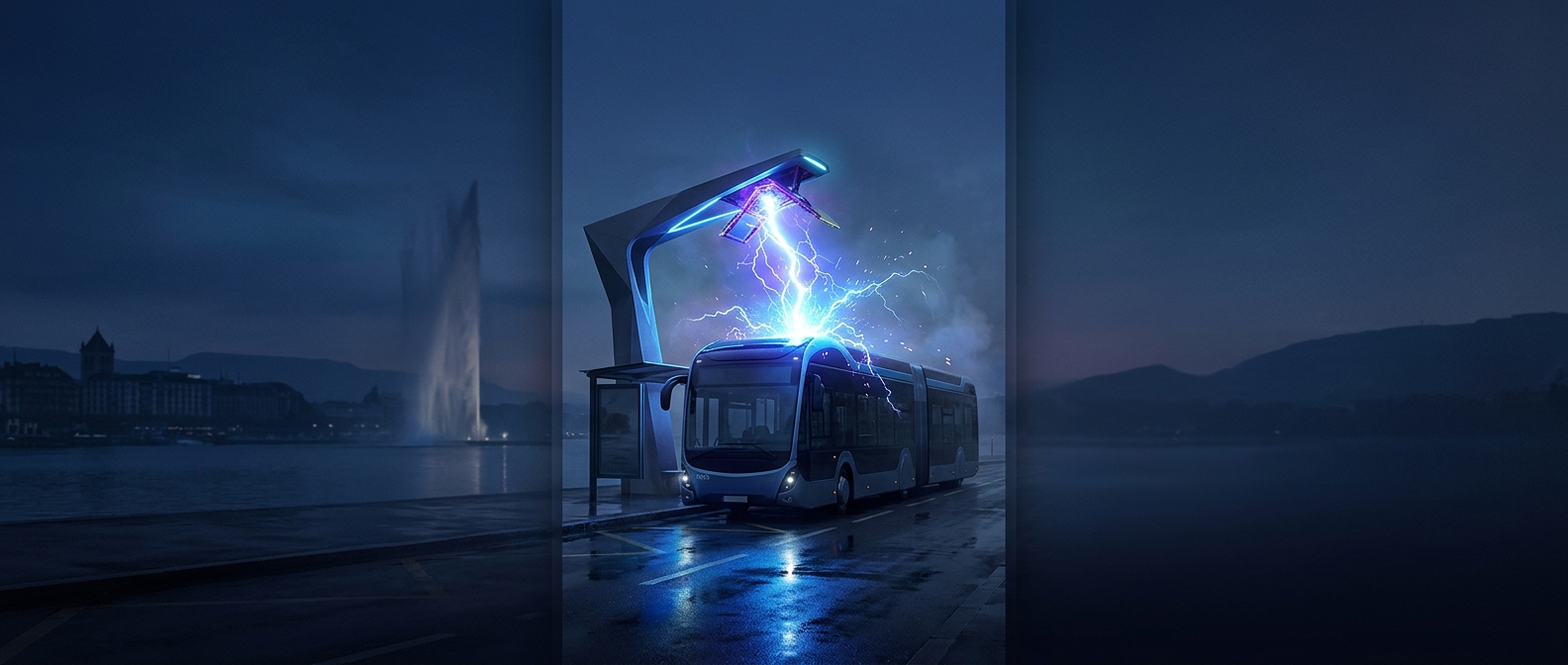
A bus that gains energy in seconds does not rely on one brief stop to refill a nearly empty battery. It is designed to take repeated, very fast top-ups along its route. At a terminus or selected stop, a roof-mounted arm—often called a pantograph—makes contact with charging equipment overhead. The bus can then draw a large amount of electricity while passengers get on and off.
This approach is known as opportunity charging: instead of carrying enough battery capacity for an entire long shift, the bus replenishes energy during scheduled pauses. The regularity of the route makes those pauses useful. A few seconds at one stop, repeated many times, can add up across a day of service.
Seconds at the curb require planning
The short connection is the visible part of a larger system. Chargers must be placed where buses already have enough dwell time, and the vehicle, charger, and electrical supply must be designed to work together. Because the bus draws power at a high rate, the charging equipment and local grid connection need to handle a substantial electrical load.
There is a tradeoff: smaller batteries can reduce the weight and space devoted to onboard energy storage, but they make the bus more dependent on chargers being available at the right places. A delay, a missed connection, or a charger out of service can leave less room in the schedule for recovery. Operators therefore have to plan charging around routes, layovers, and backup options—not just the bus itself.
A pit stop built into public transit
The key design choice is to treat charging as part of the timetable. Passengers use the stop as usual; the bus uses the same pause to replenish its battery. That turns infrastructure at a few strategic points into part of the vehicle’s effective range, and makes an ordinary curbside dwell do double duty.