Why a Dead Fob Can Still Start the Car
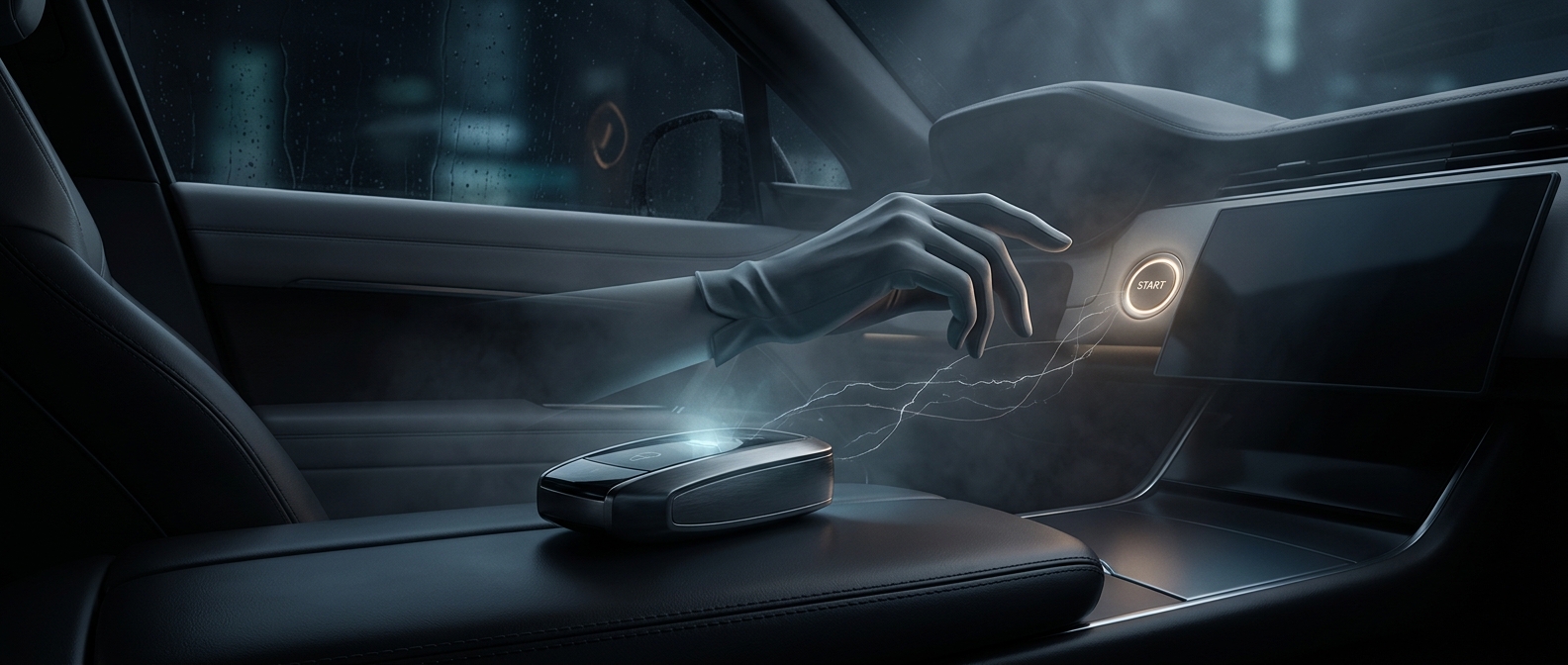
A key fob usually does two different jobs. Its battery powers the radio signal used for hands-free entry and starting, while a separate passive transponder can identify the key without that battery. The car can read this backup chip only at very close range, so the driver may need to press the fob directly against the start button—or hold it at a designated spot nearby.
The Backup Reader Takes Over
In normal use, the car detects the fob’s radio signal from a distance and checks that its coded identity is authorized. When the fob battery dies, that long-range communication fails. The backup reader uses a short-range electromagnetic field to energize the passive chip and receive its identifying code. The car can then verify the key and allow the engine to start.
This is not the same as bypassing the security system: the chip still has to be recognized. The close contact simply lets the car communicate with it when the fob can no longer transmit normally.
Where to Hold the Fob
The exact location varies by vehicle. Many models use the start button; others have a marked pocket or a specific spot in the console. The owner’s manual gives the correct procedure, and the dashboard or instrument display may show a message when the car cannot detect the fob.
Once the car is running, the fob’s battery may still be too weak for remote locking or another restart. Replacing the battery restores the usual range, but the passive backup explains why a dead fob does not always mean a stranded driver.