How a ventilated seat moves heat
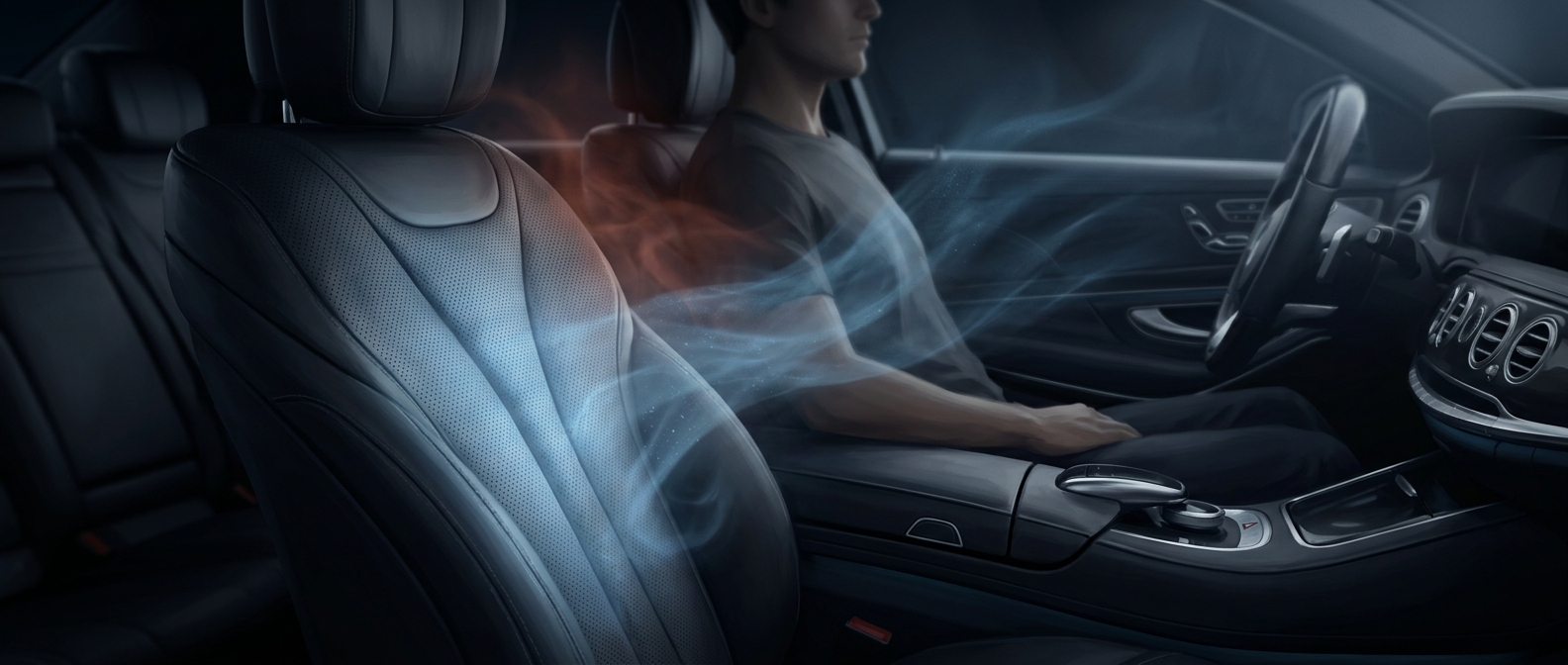
A suction-style ventilated seat works by drawing air inward through tiny perforations in the upholstery. Small fans beneath the seat create that airflow, carrying warm, moisture-laden air away from the places where your body presses against the cushion and backrest. The seat feels cooler not because it makes cold, but because it helps heat and dampness escape from the close-fitting space between you and the upholstery.
Why pull air through the seat?
Your body warms the seat’s surface, and perspiration can make that contact feel sticky. Without airflow, heat and moisture tend to linger against the upholstery. Pulling air through the holes disrupts that trapped layer and moves it into channels inside the seat, where it can circulate away. This is a different approach from a seat that blows air outward at the occupant: here, the sensation comes from air being drawn through the material.
The holes must be small and numerous enough to let air pass while still supporting the seat’s cushioning. The fans and internal passages also need to distribute suction across the seating area; otherwise, airflow would concentrate near a few openings and leave other spots feeling unchanged.
Cooling without refrigeration
Unlike an air conditioner, a ventilated seat does not actively chill the air. Its effect depends on moving the warmth and moisture your body adds, so it is most noticeable when the seat has become warm or clammy. In practical terms, the upholstery acts less like a cold surface and more like a breathable layer: it keeps the seat from holding onto as much of your heat and perspiration while you sit.