Why a Car’s Ceiling Needs a Backing
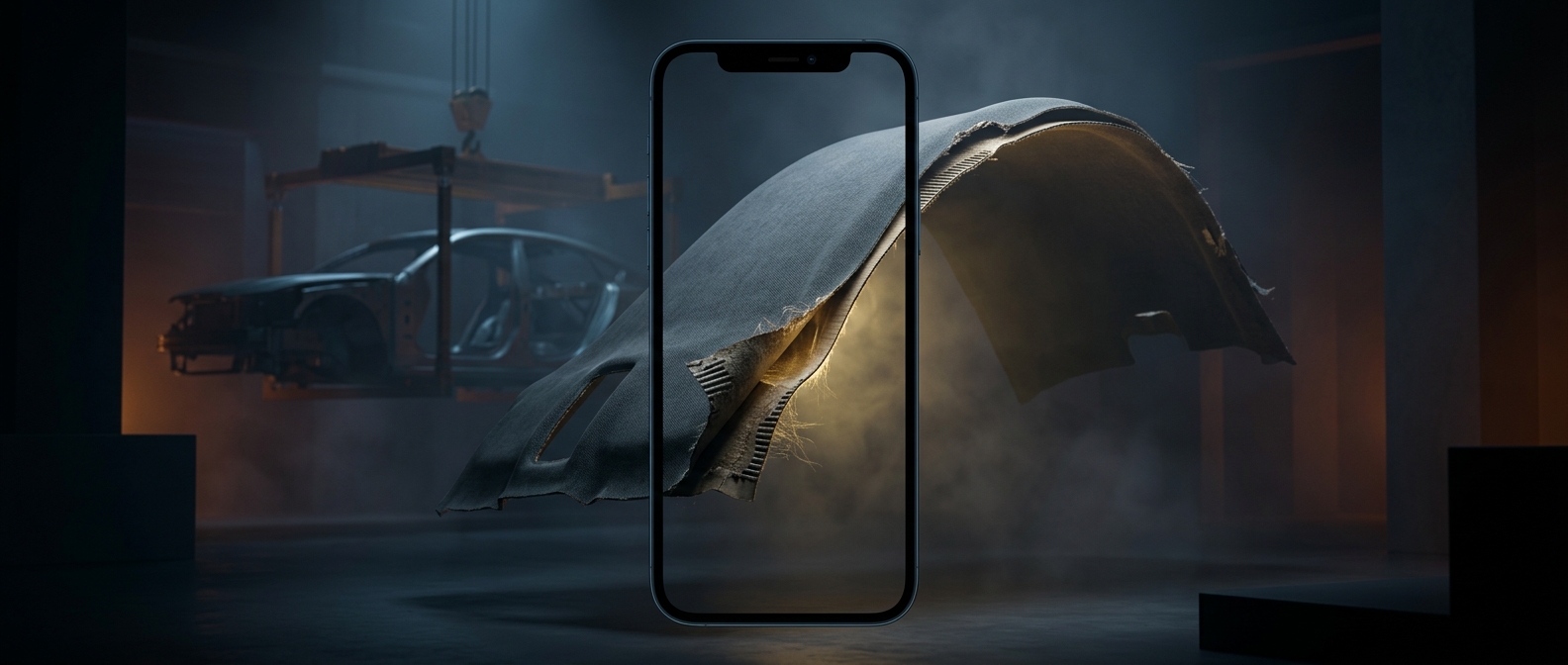
A headliner is more than a sheet of cloth stretched overhead. Its backing—often a lightweight, cardboard-like panel—gives the fabric a stable surface and helps the finished piece follow the roof’s curves. The panel also makes it possible to shape openings for lights, handles, and other fittings before the headliner is installed.
The material has to be light enough to mount above passengers, yet stiff enough not to flutter or sag. That balance is why the fabric is bonded to a shaped panel rather than simply hung like a curtain.
Heat Turns a Bonded Surface Into a Sagging One
The fabric and backing move and age differently. A parked car can become very hot inside, and repeated heating and cooling puts stress on the adhesive holding the layers together. As that bond weakens, gravity pulls the fabric away from the panel. If the fabric has a foam layer beneath it, that foam can also break down, making the separation harder to reverse with a quick dab of glue.
Once a section lets go, the loose fabric can droop well below the roof. The problem is visible, but it can also obstruct the driver’s view or interfere with overhead fittings if the sag becomes extensive.
Why a Neat Repair Can Be Difficult
The headliner is usually a large, shaped piece fitted around the cabin’s edges and openings. Reattaching only the loose cloth may leave wrinkles or fail to reach adhesive that has deteriorated across a wider area. A lasting repair often means removing the panel and rebonding or replacing the covering, while preserving its contours and cutouts.
That hidden panel is doing the quiet structural work: without it, the roof’s fabric would have nothing to hold its shape against—and when the bond fails, the car’s ceiling starts to come down.