Why a Sun Visor Slides Sideways
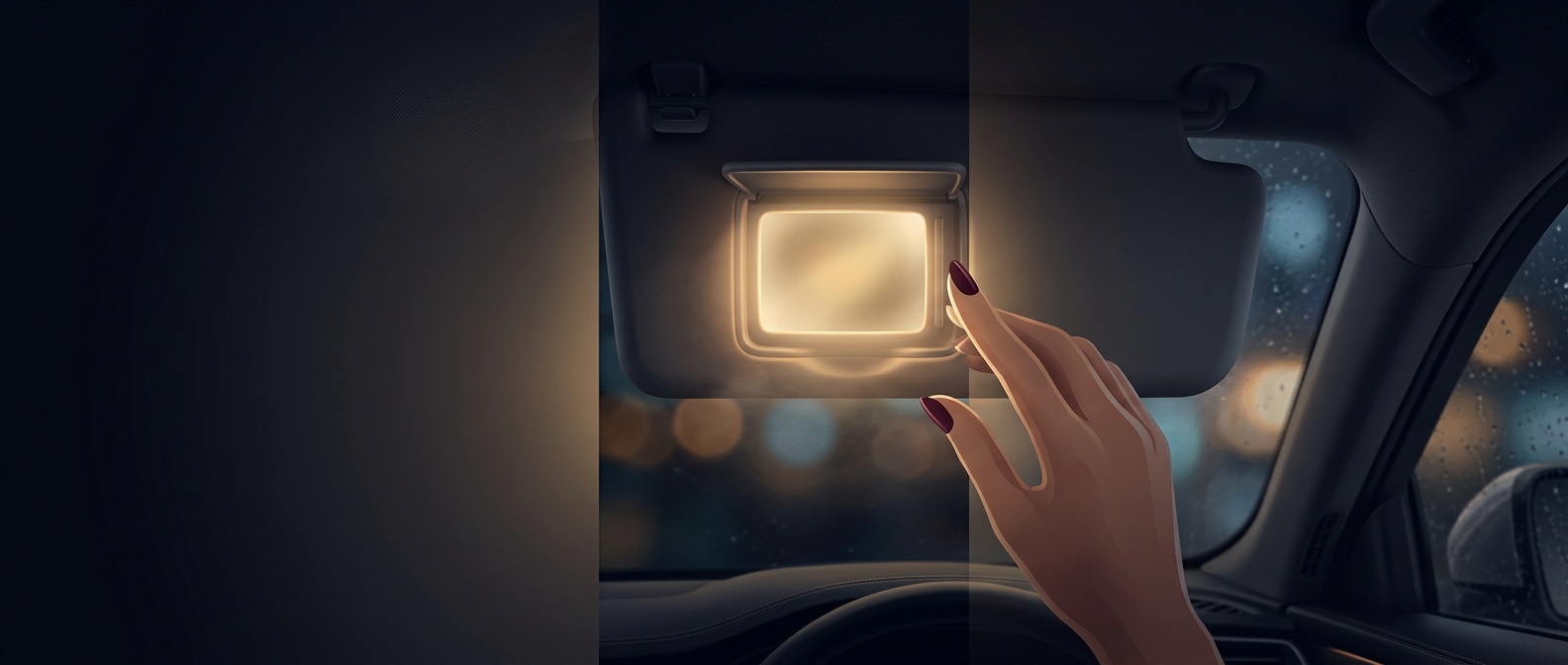
A car’s sun visor has two jobs: it can drop in front of the windshield, then swing toward the side window when sunlight comes from beside the car. But rotated into that second position, the visor may stop short of the spot where the glare enters. A sliding mount lets it reach farther across the side window.
The Rod Is a Small Reach Mechanism
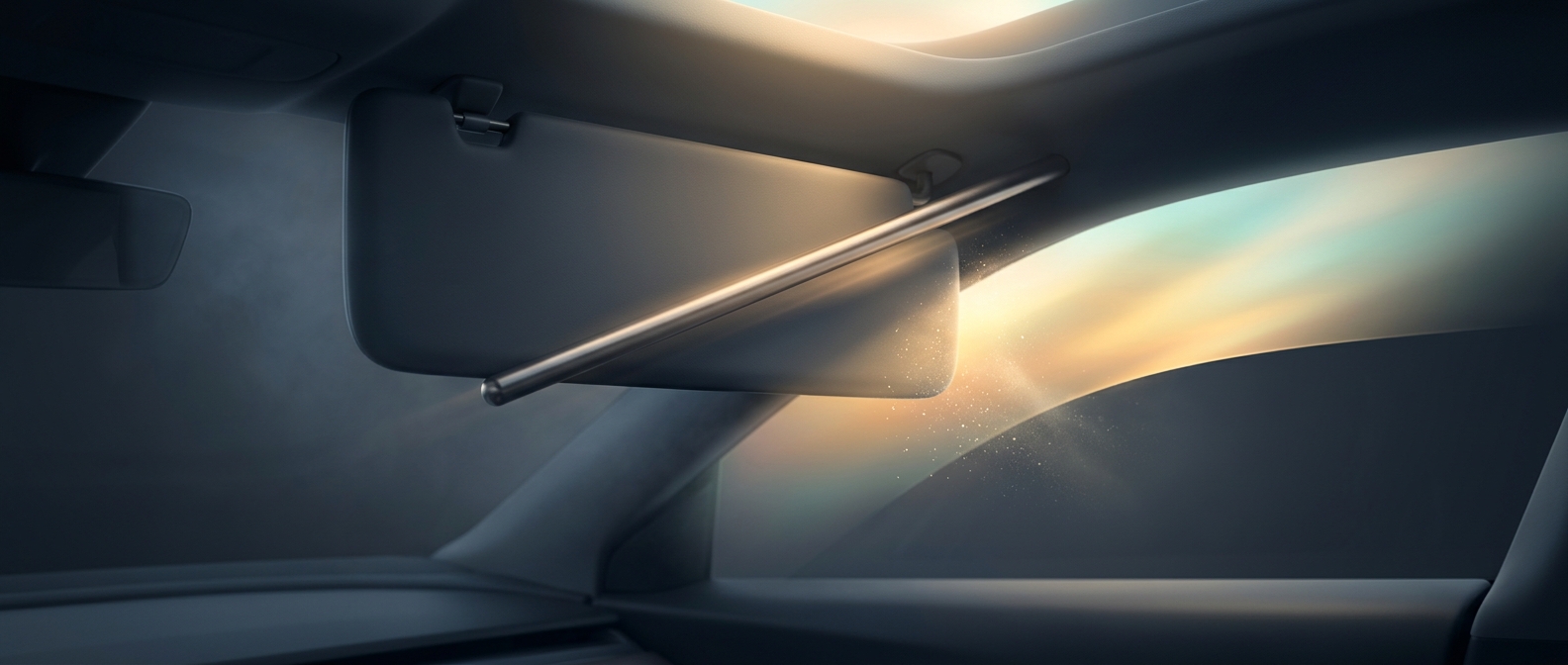
One end of the visor pivots down from the headliner. The other end can be released from its clip and swung toward the door. A metal rod inside the visor then slides outward, carrying the panel along with it. The rod keeps the visor supported while adding reach; without it, the panel would need to be wider or hang farther from its mounting point.
That extra travel matters because the driver’s view of the sun changes with direction. A turn, a bend in the road, or a different time of day can move the bright patch from the windshield to the side glass. Extending the visor helps close the gap between its edge and the window frame, where low-angle light can otherwise slip through.
Reach Without a Larger Panel
The sliding design solves a packaging tradeoff: the visor stays compact when stowed but can cover more area when needed. It cannot block every angle, and its position must still leave the driver able to see the road. But a short pull can put shade exactly where a fixed visor’s edge would leave a stripe of glare—making the sun’s change of position something the visor can follow.