Why exhaust pipes collect water
Burning fuel produces water vapor along with hot exhaust gases. As those gases move through a muffler—a chamber that reduces engine noise—the metal cools them. Some vapor then turns into liquid water on the muffler’s inner surfaces, much as moisture forms on a cold drink.
The amount can build up during short trips. An exhaust system may not stay hot long enough for the collected water to evaporate and leave as vapor, so droplets remain pooled in low spots.
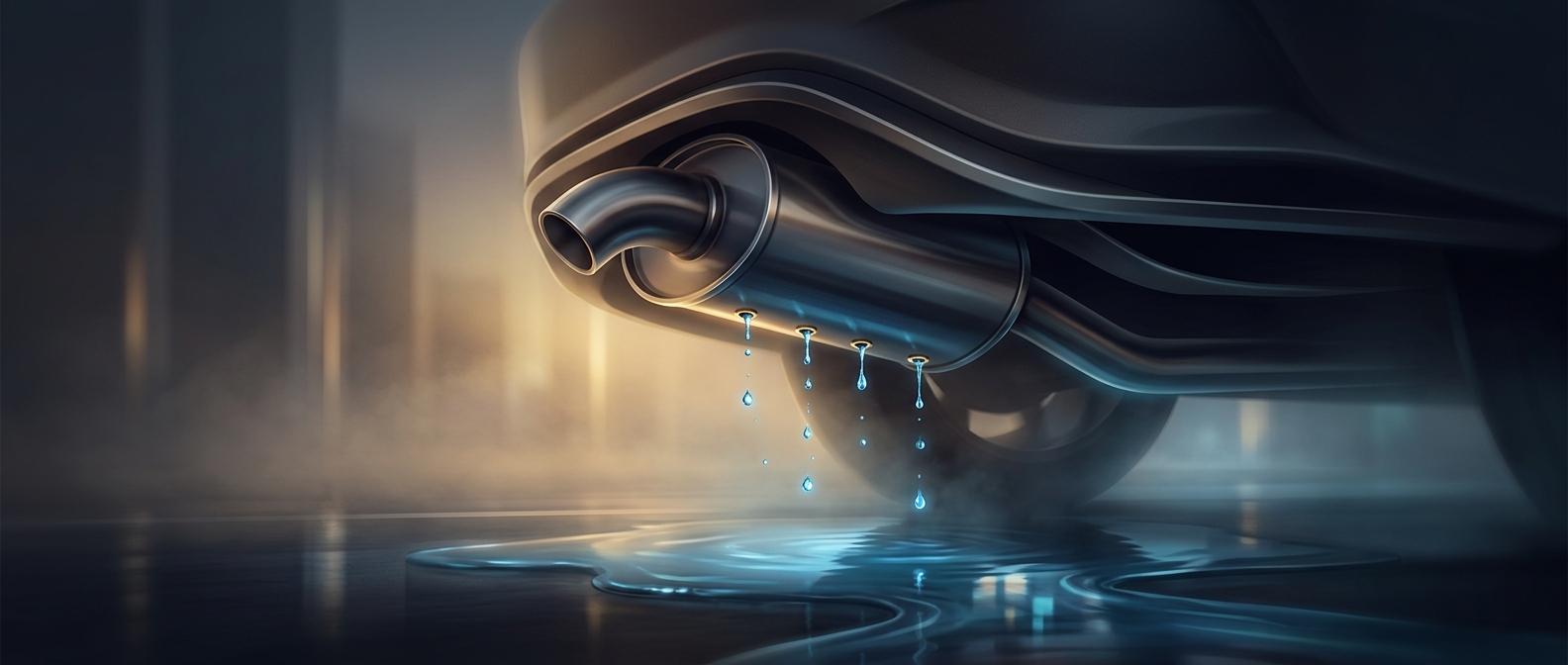
A small opening protects the metal
Mufflers are made from metal exposed to heat, water, and exhaust by-products. When water sits inside, it can promote corrosion, gradually weakening the metal from the unseen interior. A small drain opening at a low point gives the liquid a way out before it can linger.
The hole is a deliberate compromise: it allows a little water to escape, while the muffler’s design still contains and directs the exhaust. Without that escape route, corrosion can eventually create an uncontrolled opening through a weakened section of the muffler—a leak that may be larger and less predictable.
Why the drip is not necessarily a problem
Water beneath a vehicle can look like a leak, but a few drops from the exhaust drain can simply be condensation doing what the opening is meant to do. The useful distinction is where the liquid appears: the drain lets moisture out of the exhaust system, rather than signaling that the muffler has already failed. A tiny, intentional opening can therefore help prevent a much bigger one from forming inside.