How a glacier became a landing ground
A glacier is not a smooth sheet of ice. Snow can conceal cracks called crevasses, while wind and melt create ridges, hollows, and patches of different firmness. For a pilot, the challenge is not merely touching down: the aircraft needs enough room to slow without striking hidden hazards, then a route to take off again.
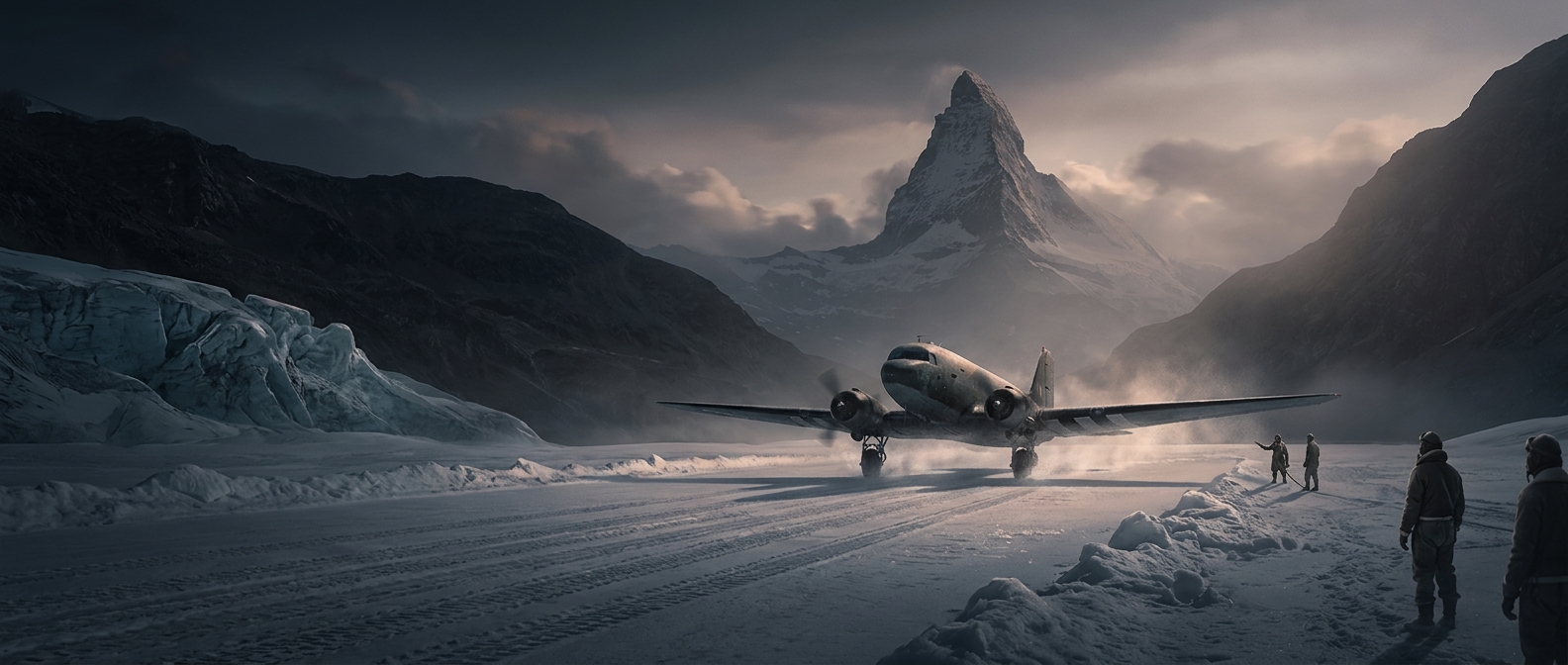
In 1946, rescuers faced that problem on Switzerland’s Gauli Glacier after a U.S. military transport plane came down there. Helicopters were not a practical option for the mission. Swiss aircraft fitted with skis could distribute their weight over the snow and slide across it, making a landing possible where ordinary wheels would have been poorly suited. The rescue became known as Operation Matterhorn.
From emergency improvisation to alpine access
The operation showed that a glacier could serve as a temporary runway—but only when pilots could judge the snow, choose a usable stretch, and manage the landing and departure. It was a demanding form of flying, not a reliable way to reach any ice field at will.
That distinction matters to the story’s modern echo. Today, helicopters can carry visitors to remote alpine ice, but they do so with very different aircraft and capabilities. The 1946 rescue did not itself create glacier tourism; it made the possibilities and risks of landing in high mountain terrain more visible. The striking legacy is that a place used as an emergency refuge became part of a broader question about access: when technology makes a remote landscape reachable, who gets to use it—and at what cost to its solitude?