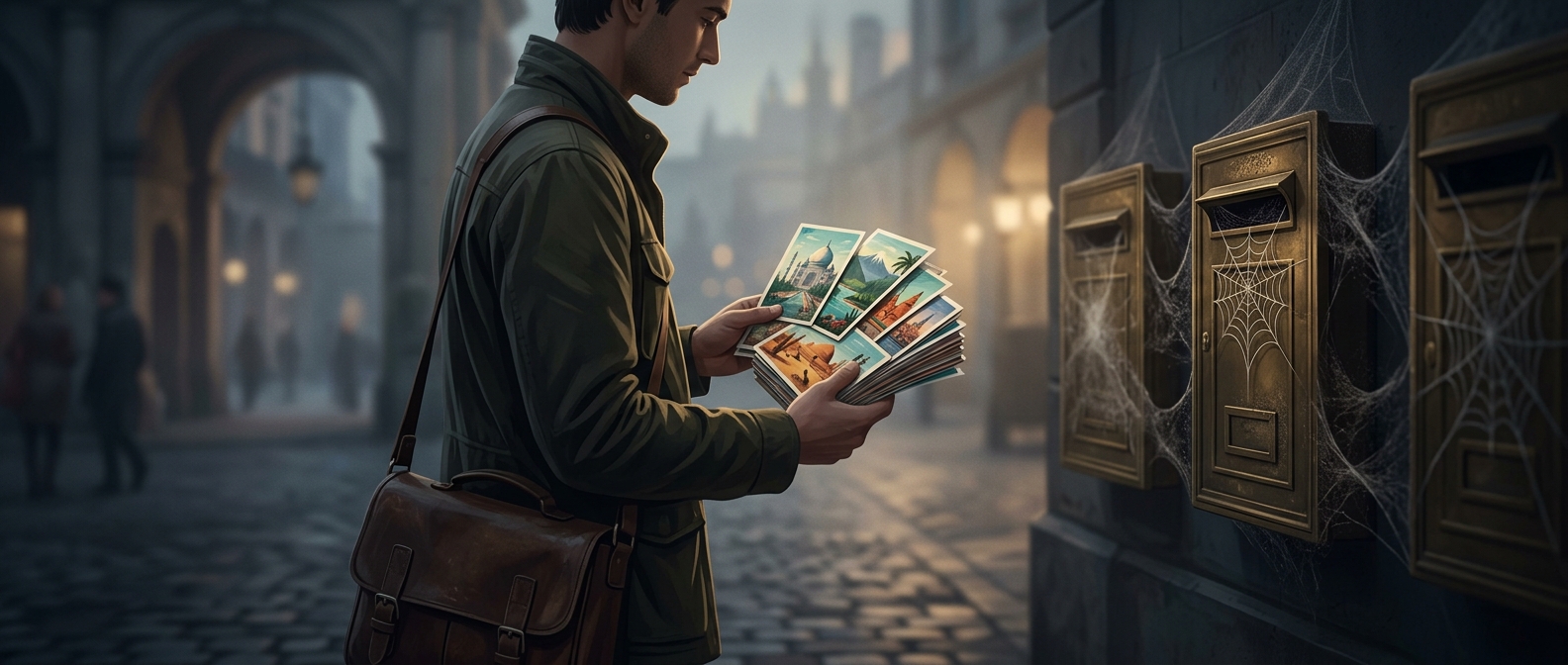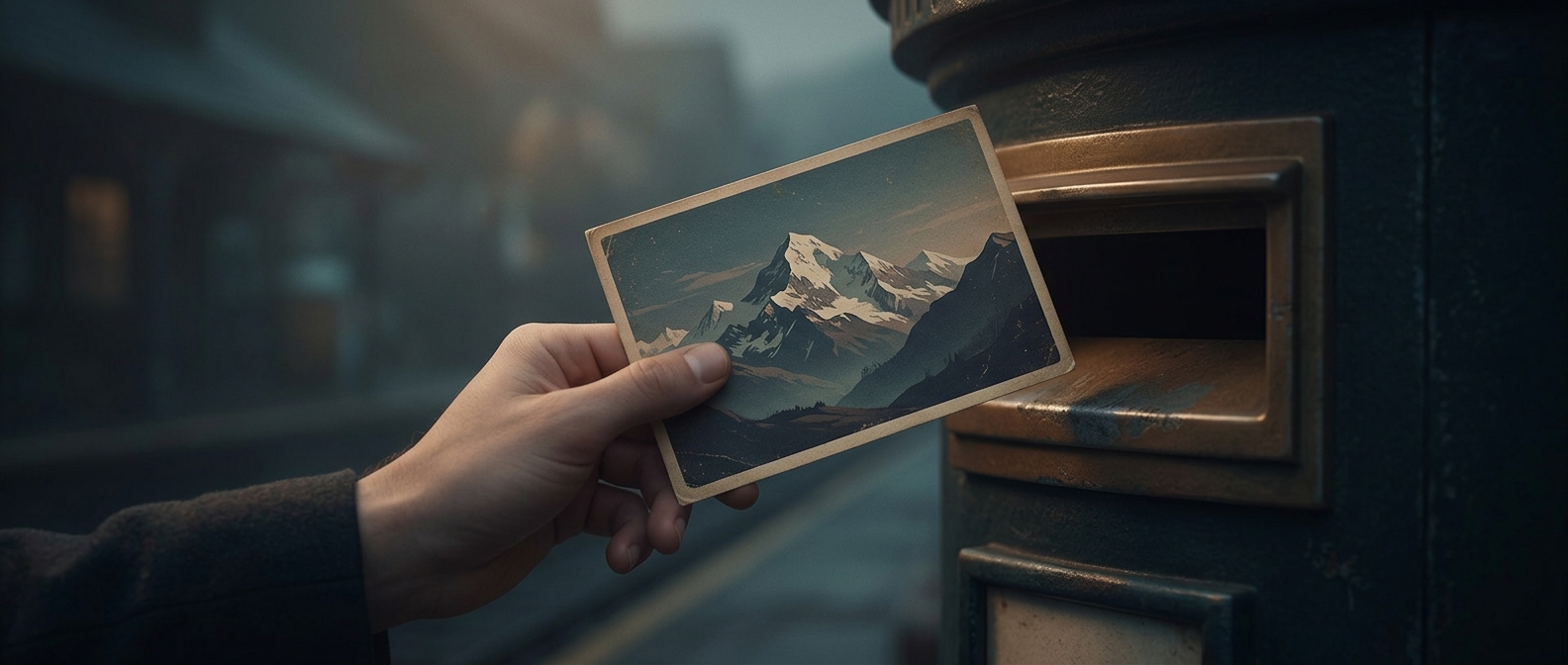
A postcard has to catch up with its traveler
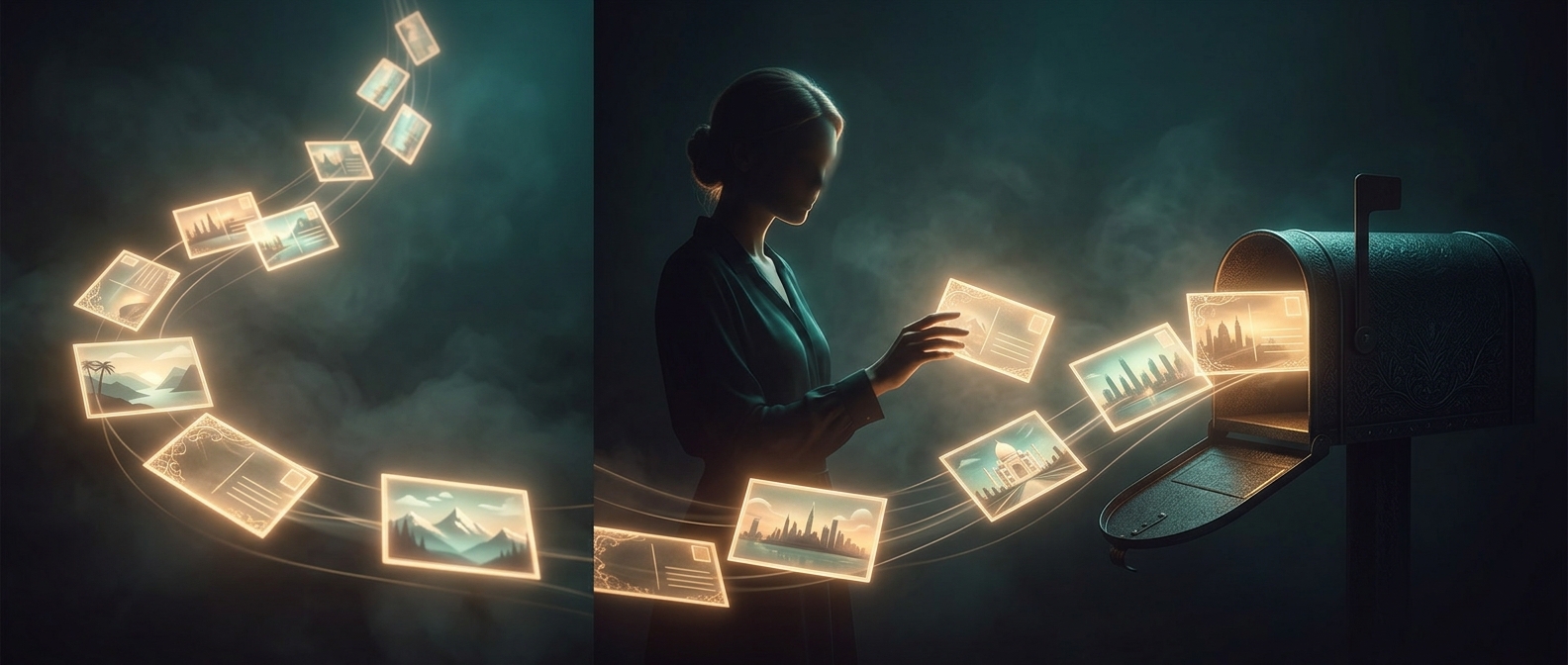
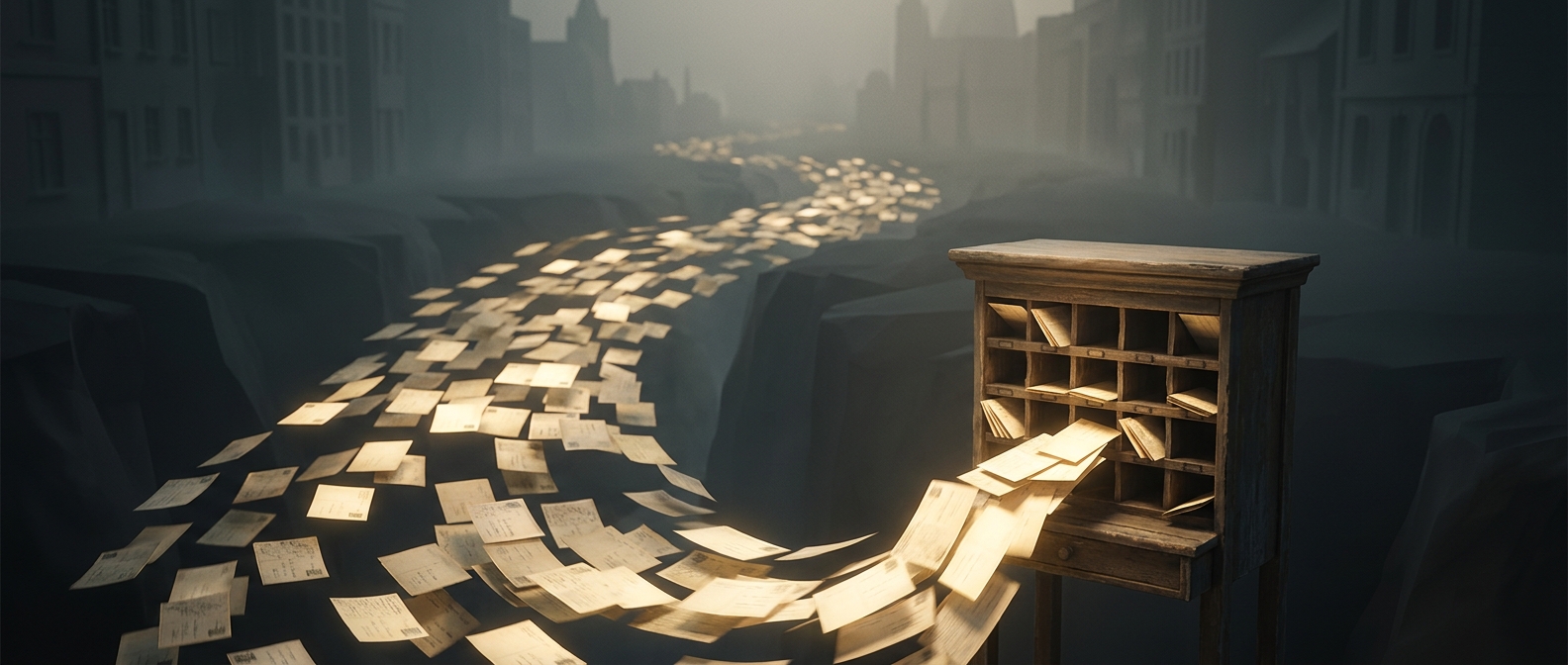
A postcard travels by the same postal network as other letters: it is collected, sorted, moved between facilities, and delivered along a route that may involve several handoffs. Unlike a digital message, it cannot take a shortcut if a bag misses a connection or mail is waiting to be processed. Meanwhile, the traveler has already crossed the distance by plane, train, or car—and may reach home before the card does.
The delay is part of the souvenir
Postcards are often written during a trip and mailed from wherever the traveler happens to be. That means the card enters a postal system whose schedules and handling practices are unfamiliar to its sender. A card posted near the end of a holiday may still be making its way through the network after the holiday has ended.
Its brief greeting also reflects the conditions of writing on the road: a small space, little time, and perhaps a quick stop at a shop or post office. The message may say little about the trip, but sending it required pausing long enough to choose a card, find a stamp, and write an address.
A small arrival after the big journey
When the card finally appears at home, the trip is already a memory. That mismatch gives the postcard its peculiar charm: it is a physical trace of a moment that reached the mailbox only after its sender returned. Even a generic line can carry the more specific message that someone thought of home while away.