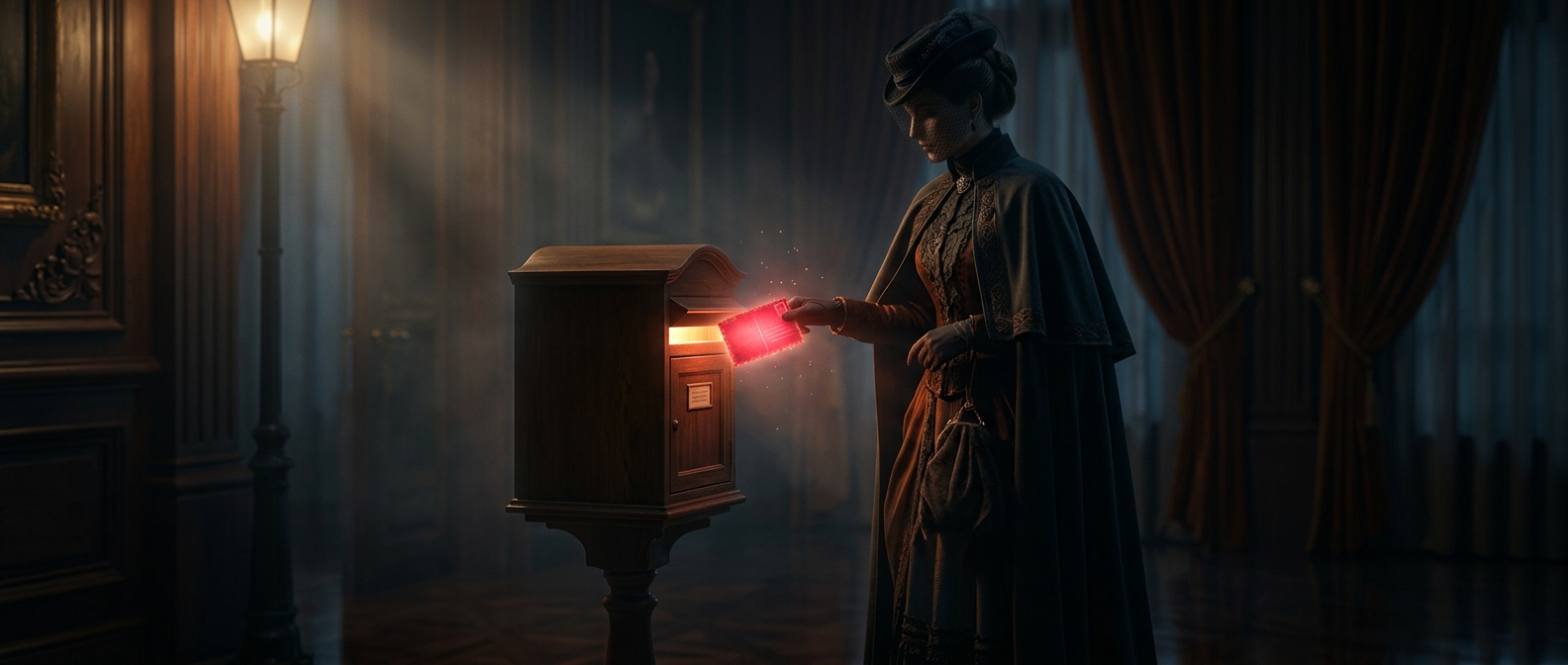
A message with no private side
A postcard made the act of sending a note visible by design. There was no envelope to separate the message from the address: the same small card carried both through the mail. That made it convenient for a traveler who wanted to send a quick update, but it also meant the words could be seen before the card reached its destination.
The concern was not only that a postal worker might read it. Anyone who handled or happened upon the card could encounter a message its writer might have meant for one person. A greeting that felt harmless in private could seem indiscreet when exposed to strangers.
Convenience came with a social cost
An open card offered speed and simplicity, and postcards were often a less expensive way to send a brief message than a sealed letter. But the format also imposed a boundary: writers had to decide what was suitable to put where others might see it. Personal news could be shortened, softened, or left unsaid; the card itself could carry a public-facing image while its few lines remained carefully restrained.
That tension made the postcard more than a practical travel keepsake. It was a small test of etiquette—how casual a message could be when its route through the mail made it, at least temporarily, visible to everyone along the way.