A souvenir designed to travel
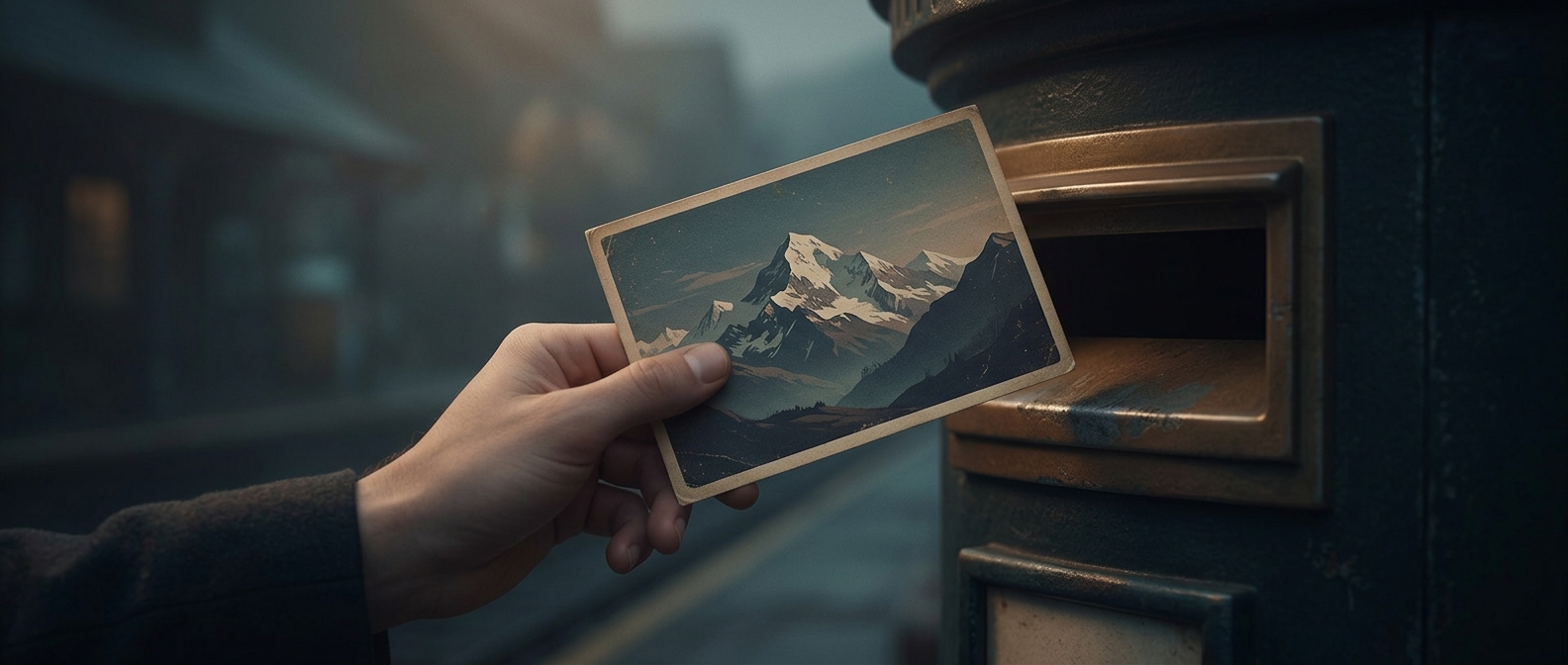
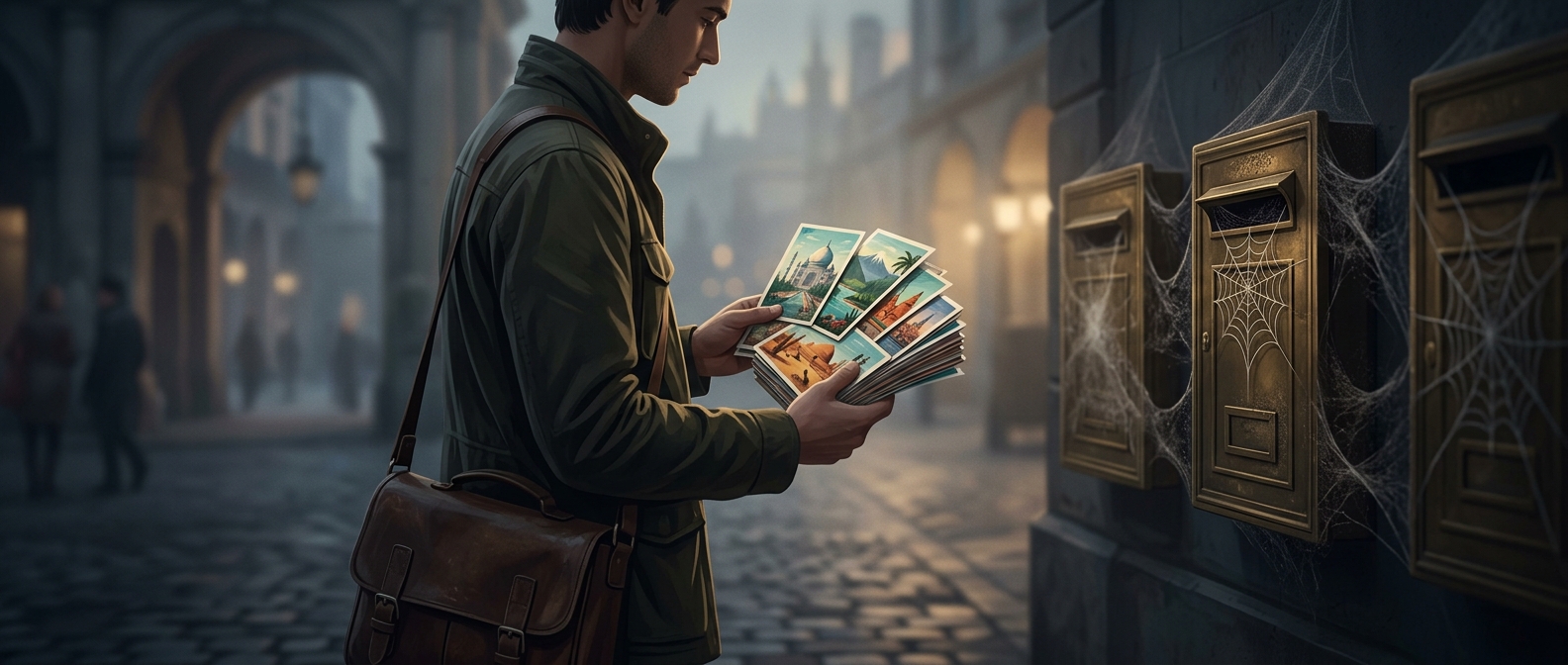
A postcard turned a vacation into a small, shareable object. Unlike a letter, it paired a short message with a picture on the same card: the sender could point to a famous view without having to describe it. As picture postcards became common alongside expanding tourism and postal services, scenic images offered travelers an easy way to send home evidence of where they had been.
The view did social work
The image was rarely a neutral record of an entire trip. It tended to show the part worth displaying: a grand hotel, a beach, a mountain panorama, or a celebrated landmark. That choice compressed days of travel into one polished scene. The recipient saw not the delays or expenses, but a place associated with leisure—and knew the sender was there.
The postcard also made the message public in a modest way. It traveled through the mail with its writing exposed, rather than sealed inside an envelope. That suited a brief greeting, but it meant the card was less a private travel diary than a tidbit meant to be read along the route and kept afterward.
A vacation becomes visible
Sending a card connected two places at once: the destination pictured on its front and the home address written on its back. For travelers, it was a low-effort souvenir; for people at home, it was a glimpse of a place they might never see themselves. The postcard’s quiet boast came from that contrast: one person’s ordinary view on holiday could become another person’s reminder of being elsewhere.