A travel scene that could fit in the mail
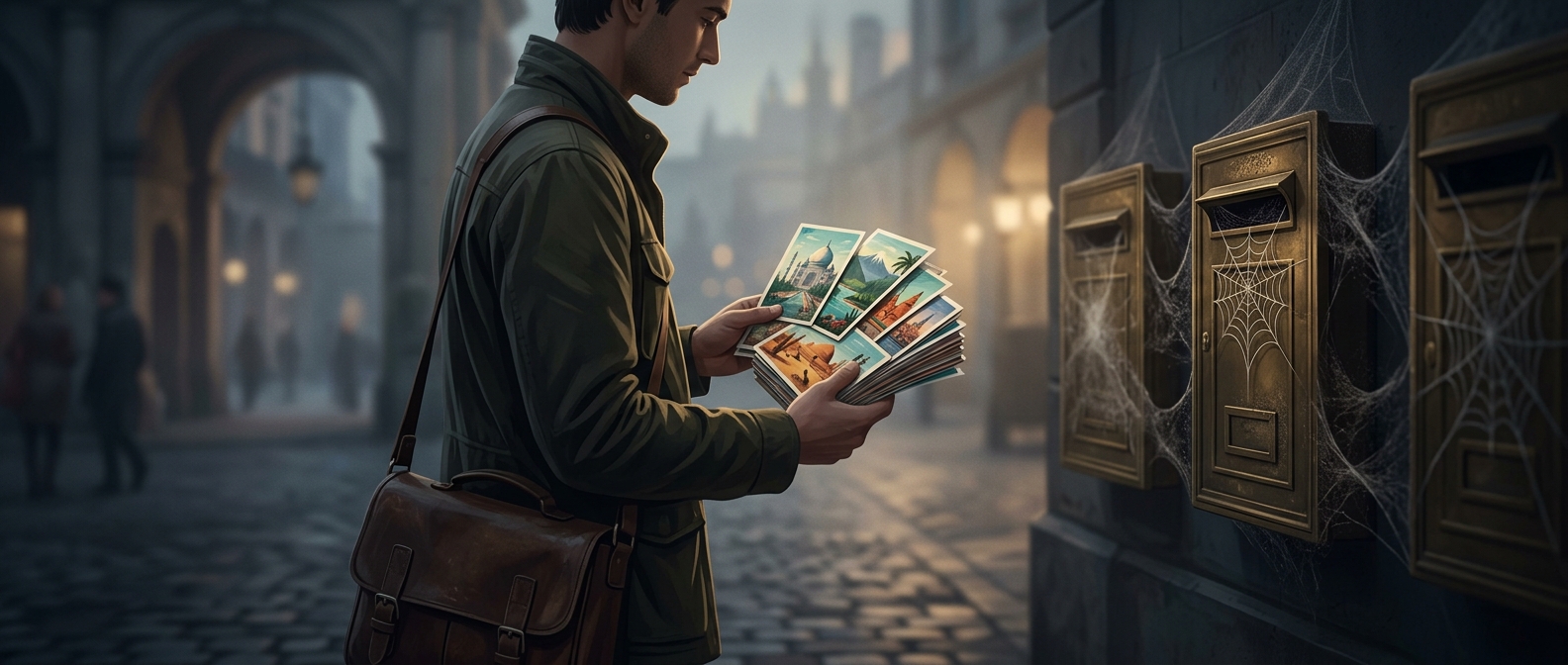
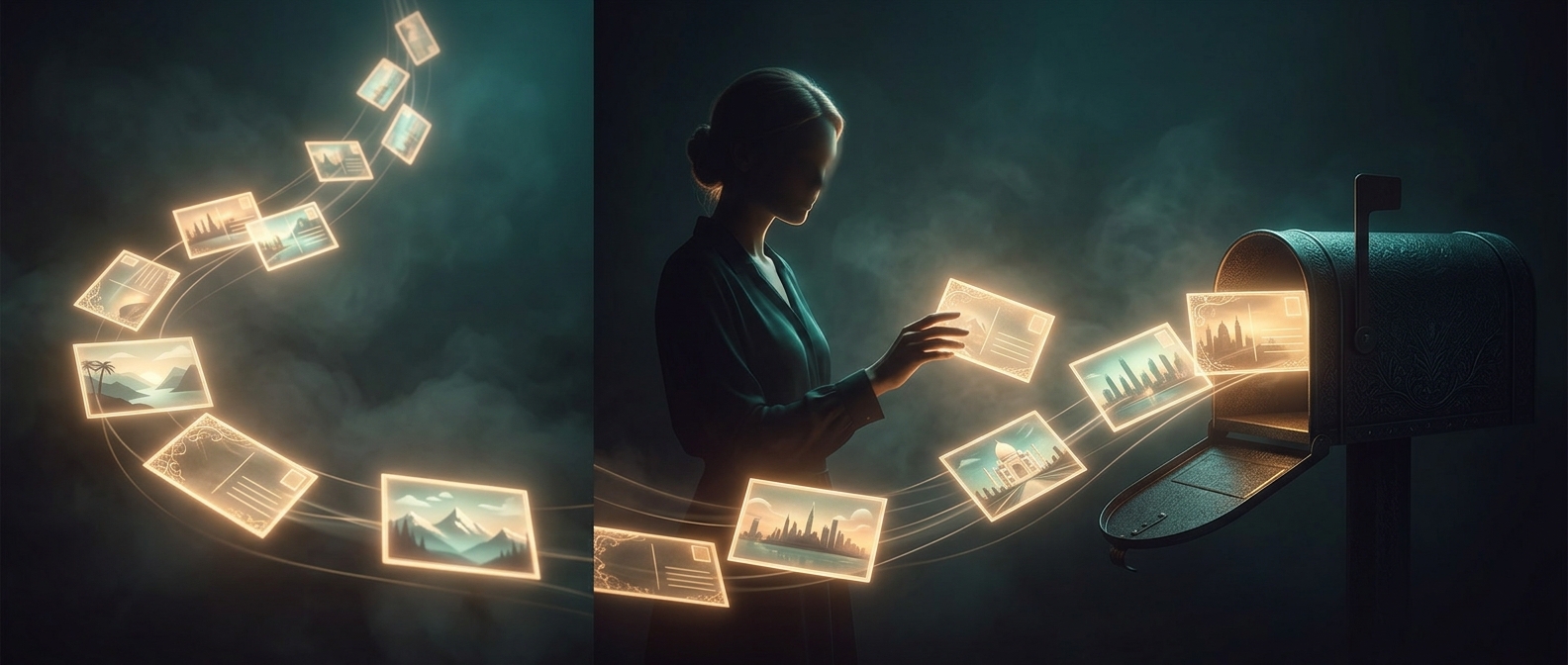
Before travelers could share a photograph instantly, they could send one home on a postcard. A picture of a beach, mountain, hotel, or busy street turned a distant place into something friends and family could see for themselves—not just hear about later.
Some glossy postcards were printed from photographs rather than drawn as illustrations. In a “real photo” postcard, a photographic negative was used to make multiple paper copies, combining an actual scene with a format that was easy to address and mail. The image did more than record a trip: it let the sender choose which part of the experience to show.
A small, portable broadcast
Postcards were brief by design. The picture carried much of the message, while a few handwritten lines could add a greeting, a travel update, or a detail the image left out. Sending one made a visitor’s location visible to someone elsewhere, with the postal service doing the slow work of carrying that glimpse home.
That made postcards a kind of early social sharing, but with a different rhythm from an online post. A traveler selected a card, wrote on it, and sent it to particular people; the recipients saw it only when it arrived. The delay was part of the experience: a view of a place could travel separately from the traveler and become a keepsake after the trip ended.
The destination became the message
Postcard images also shaped how places were remembered. A card might frame a landmark or scenic view as the defining sight of a visit, giving the sender a ready-made way to say, in effect, “I was here.” Back home, the card could be kept, passed around, or displayed—so one small photograph extended a vacation into other people’s lives.