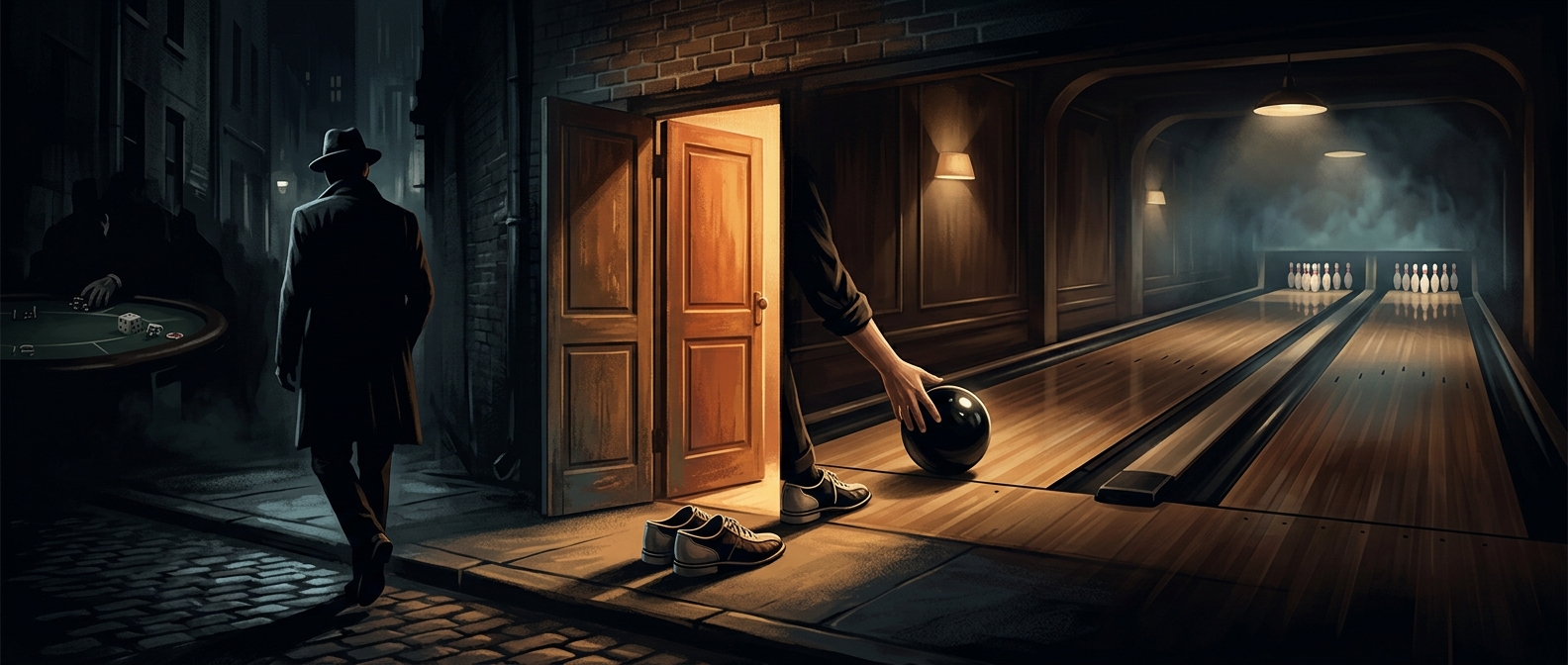
From open ground to controlled lanes
Outdoor bowling was harder to separate from the crowds and side dealings that gathered around it. Betting rings and hustlers could make a game look less like recreation than a gambling operation, inviting police attention. Moving play into dedicated indoor spaces changed more than the weatherproofing: organizers could manage who gathered, how games were run, and what kind of atmosphere the sport presented.
A new setting, a new audience
Inside, bowling could be framed as an organized pastime for families rather than a public gathering associated with wagering. The venue itself helped make that case: a marked lane, set equipment, and a place designed for play made the activity look orderly and repeatable. The shift did not erase bowling’s rougher associations overnight, but it gave organizers a practical way to distance the sport from them.
The change in address therefore carried an image-making purpose. A roof and a managed venue helped turn bowling into something people could present as respectable family entertainment.