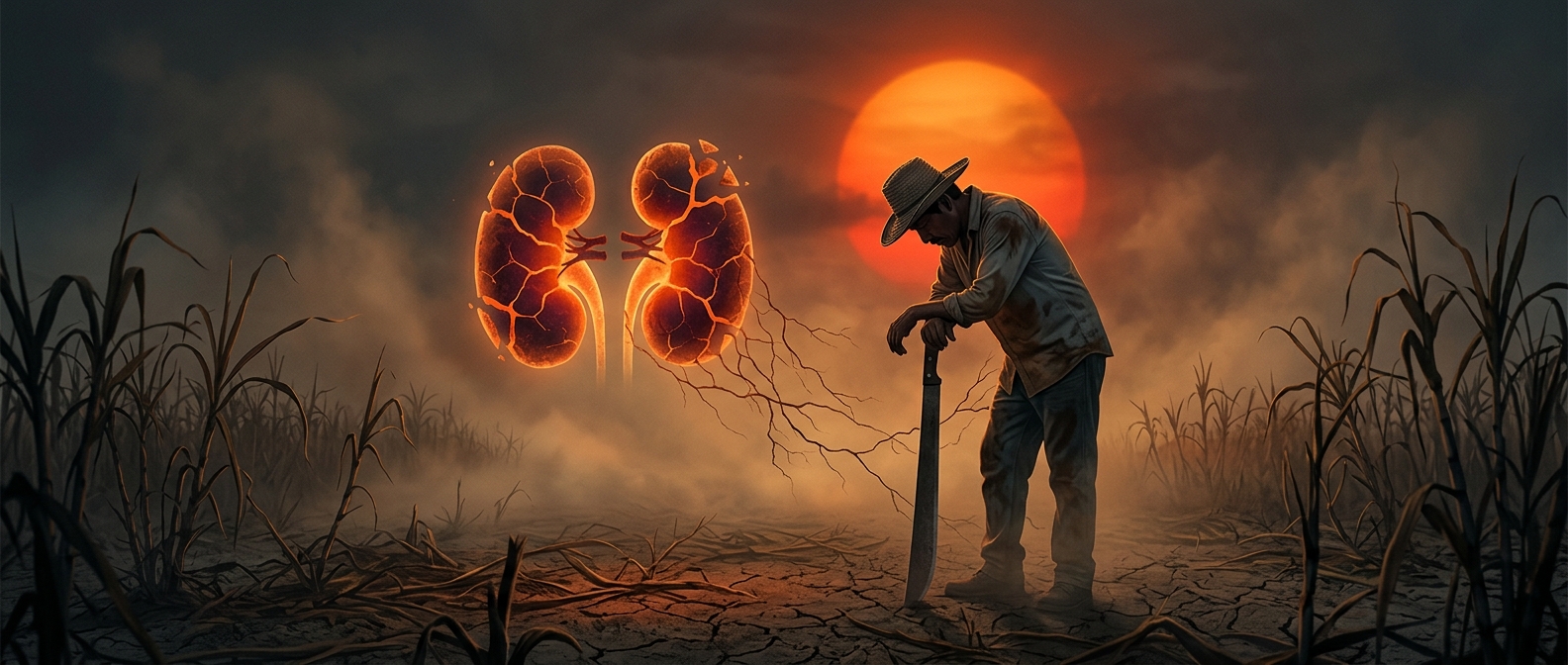
How heat can injure the kidney’s working tissue
During hard work in extreme heat, the body loses water through sweat. If that water is not replaced, blood volume falls, and the kidneys receive less blood. They respond by conserving water: tiny kidney tubules reclaim water and salts that would otherwise leave the body in urine.
That conservation system has a cost. Tubule cells need energy to move salts, and reduced blood flow can leave them short of oxygen just as they are working to retain more water. A severe episode can injure the tissue. If demanding work and dehydration recur before the kidneys have fully recovered, damage may accumulate rather than remain a one-time illness.
Why repeated workdays matter
A worker may not collapse or recognize every episode as a medical emergency. But repeated strain can still matter: the kidneys can be injured without a dramatic, obvious event, and lasting damage may emerge over time. In some young sugarcane workers in Central America, this pattern has been linked to chronic kidney problems despite their having been healthy before starting the work.
The link is not a claim that heat is the only possible cause in every case. It points to a plausible chain: intense exertion raises the body’s demand for water, heat increases fluid loss, and dehydration can stress the kidney’s filtering and water-saving machinery. The concern is cumulative injury—not simply feeling thirsty after a hot shift.
The practical stakes
Preventing repeated dehydration and allowing recovery between bouts of intense heat may help reduce strain on the kidneys. The stakes are especially high because kidney damage can build quietly: by the time symptoms become noticeable, an organ that once handled fluid and waste may already have lost some of its reserve.