Why the Spider Story Sticks
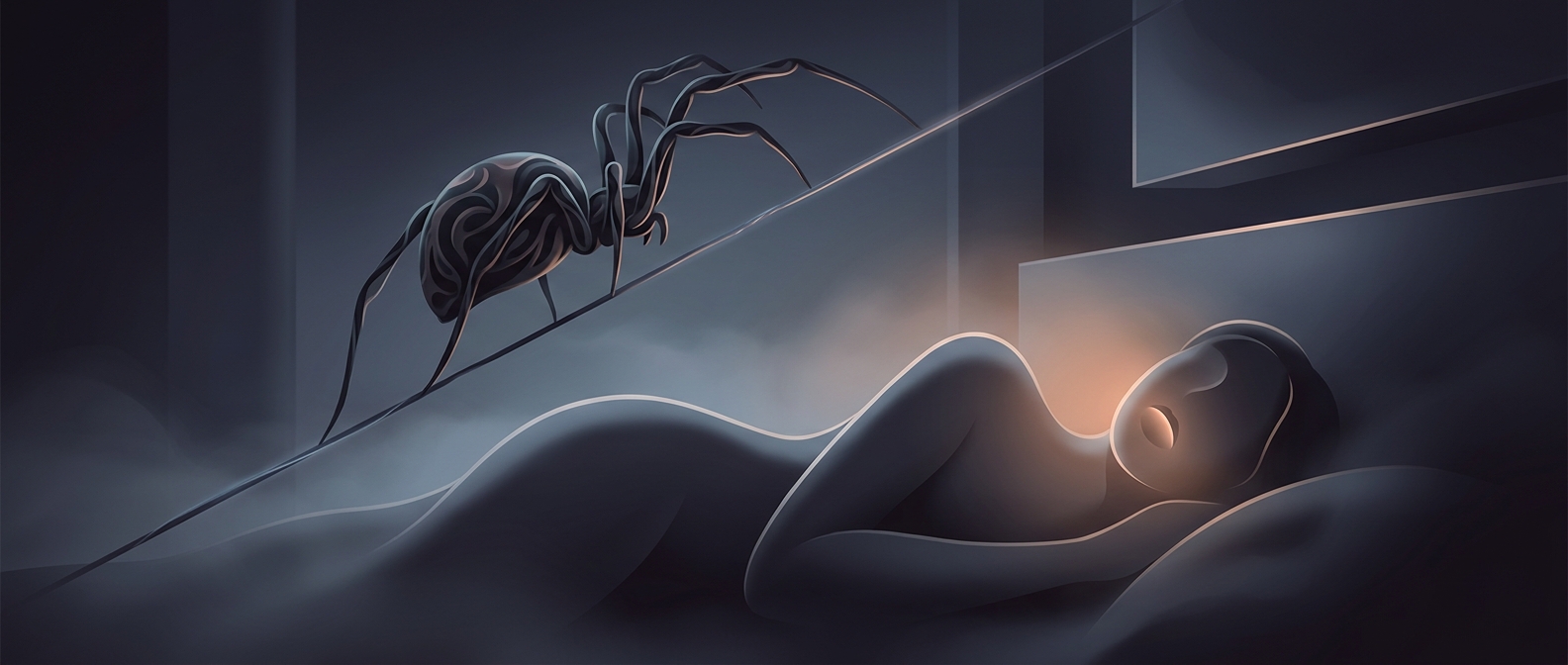
A sleeping person’s open mouth can sound like an easy target, but the rumor depends on imagining a spider as an animal that wanders without purpose into a person’s breath and warmth. Spiders generally move in response to their surroundings: they seek shelter or prey and avoid large, vibrating animals. A sleeping human is a source of movement, airflow, heat, and noise—not an inviting hiding place.
What Would Have to Happen
For a spider to end up in someone’s mouth, it would need to approach the person, cross exposed skin or bedding, and enter a dark, moving space. The mouth’s breathing currents and the sleeper’s shifts make that route especially unlikely. People also swallow, cough, and change position during sleep, all of which would tend to disturb a tiny animal.
This is not a claim that a spider could never come near a bed. Spiders may live in homes, and an unusual encounter is possible. But the familiar story of people routinely swallowing spiders in their sleep has no reliable evidence behind it.
A Rumor Built to Be Repeated
The tale’s staying power comes from its vividness: it turns an ordinary night into a private, unsettling possibility. That emotional jolt can make a claim feel memorable before anyone asks where it came from. The story has also been used as an example of how readily people pass along unsourced information online—not because the event is established, but because the image is hard to forget.
The practical takeaway is simple: finding a spider indoors does not mean it is likely to crawl into a sleeper’s mouth. The rumor is far more at home in a forwarded message than in a bedroom.