A fingerprint is built from a growing fingertip
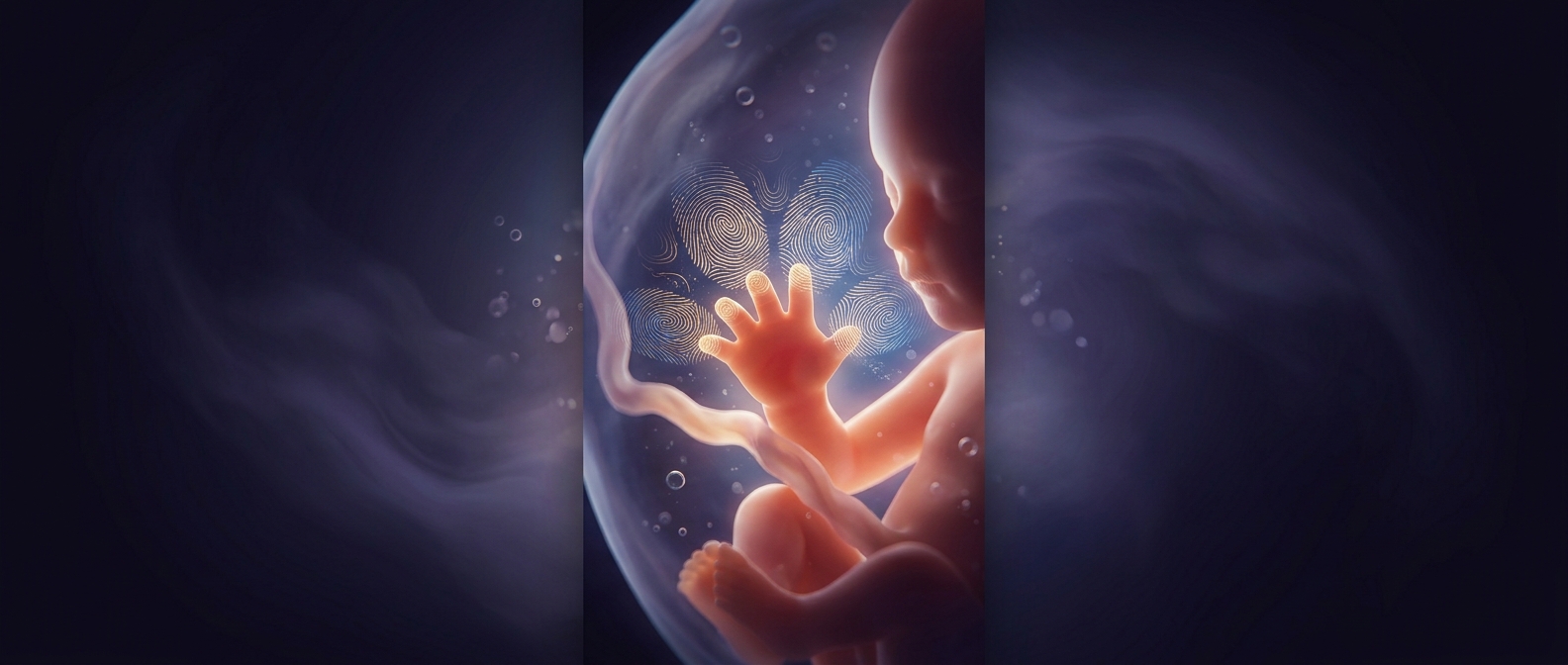
Fingerprint ridges take shape while a fetus’s hands are still developing. Early in that process, the pads at the ends of the fingers are temporarily swollen. As each pad changes shape and the skin grows over it, folds emerge and branch into the raised lines that later appear as a print.
Genes influence the broad pattern a finger tends toward—such as loops, arches, or whorls—but they do not lay down a precise, prewritten map. The ridges form through interactions between growing layers of skin and the changing shape of the fingertip. Small differences in pressure, movement, and contact with surrounding tissue can shift where folds start or how they divide. Those local variations are minute, but they accumulate into a pattern specific to that finger.
Why even identical twins have different prints
Identical twins share nearly the same genetic instructions, but their fingertips do not develop in perfectly matched conditions. Their positions and movements differ, as do the pressures and fluid around their hands. Those small variations influence the final ridge paths, so twins can share many inherited traits without sharing identical fingerprints.
Once formed, the ridge pattern is anchored in the skin’s deeper structure. The surface continually sheds and replaces cells, but new surface skin follows that underlying arrangement. A cut that heals without reaching the deeper layer may leave the pattern intact; damage deep enough to scar can permanently alter it.
That is why a fingerprint is both stable and individual: genes help establish the starting conditions, while development supplies the fine-grained details. The finished map is not simply copied from DNA—it is the lasting record of how one fingertip grew.