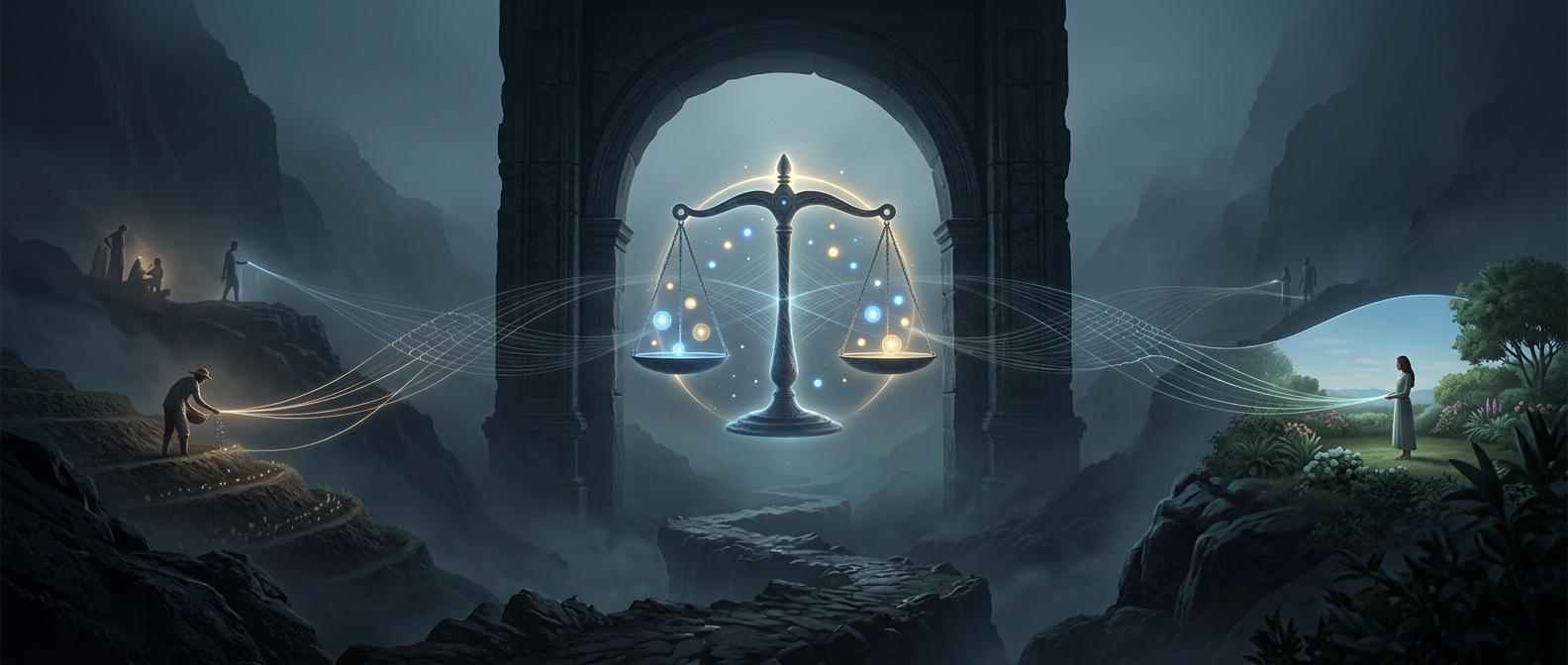
Karma is a long arc, not an instant verdict
In traditions that teach rebirth, karma describes how actions shape consequences that may emerge later—even in another life. The word comes from a term meaning “action,” but the idea is more than a tally of good and bad deeds: what a person does, and in many interpretations the intention behind it, helps shape the conditions they will encounter.
That makes karma different from a system of immediate rewards and punishments. A compassionate act may not bring its maker visible good fortune, and harmful conduct may go unpunished in the moment. The balance, within these beliefs, may unfold on a timescale longer than one lifetime.
A shared term, not one identical doctrine
Karma is important in several South Asian religious traditions, including Hinduism, Buddhism, and Jainism, but those traditions do not explain it in exactly the same way. Their teachings differ on how action produces results, how rebirth works, and what liberation from that cycle means. So “karma” is best understood as a family of related teachings, not a single rulebook promising that every event is deserved.
The idea can encourage people to treat ordinary choices as consequential even when no one is watching. But it is not simply a guarantee that the world will deliver visible justice to each person. Its distinctive claim is that actions matter beyond their immediate effects—and that their consequences may be hidden in a future the actor cannot yet see.