Burton Holmes made distant places move
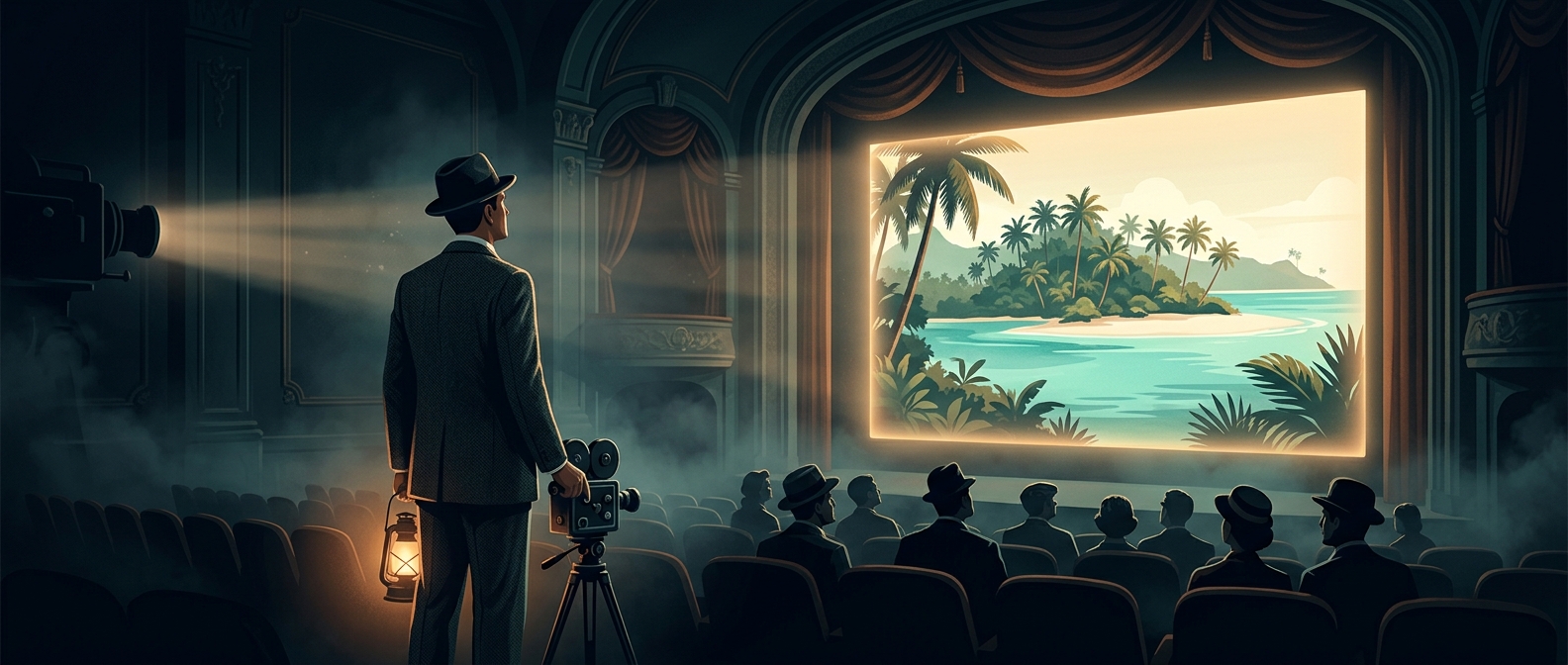
A photograph could show a landmark; a travel film could show the approach to it, the traffic around it, or people moving through an unfamiliar street. Burton Holmes built his presentations around that difference. He filmed journeys abroad and brought the footage back to theaters, where a projector enlarged it for an audience. The screen let viewers follow a route and notice changing scenes rather than encounter a destination as a single still image.
The lecturer was part of the show
Holmes’s programs were not simply films sent out to play on their own. He toured with presentations that combined moving pictures with spoken explanation and other visual material, including photographs and slides. The narration supplied names and context while the images gave audiences a view of places they might otherwise know only through descriptions or printed pictures.
That format also shaped what travel looked like from a theater seat. A journey had to become a sequence of scenes an audience could follow: a departure, a route, a striking view, or a glimpse of local life. The result was both entertainment and a guided introduction, with the lecturer helping viewers interpret what crossed the screen.
Holmes’s lasting innovation was not merely carrying a camera overseas. It was turning travel into a public performance: a distant place became a story told through images, movement, and narration, experienced collectively without the audience leaving the theater.