A Garden City That Never Filled
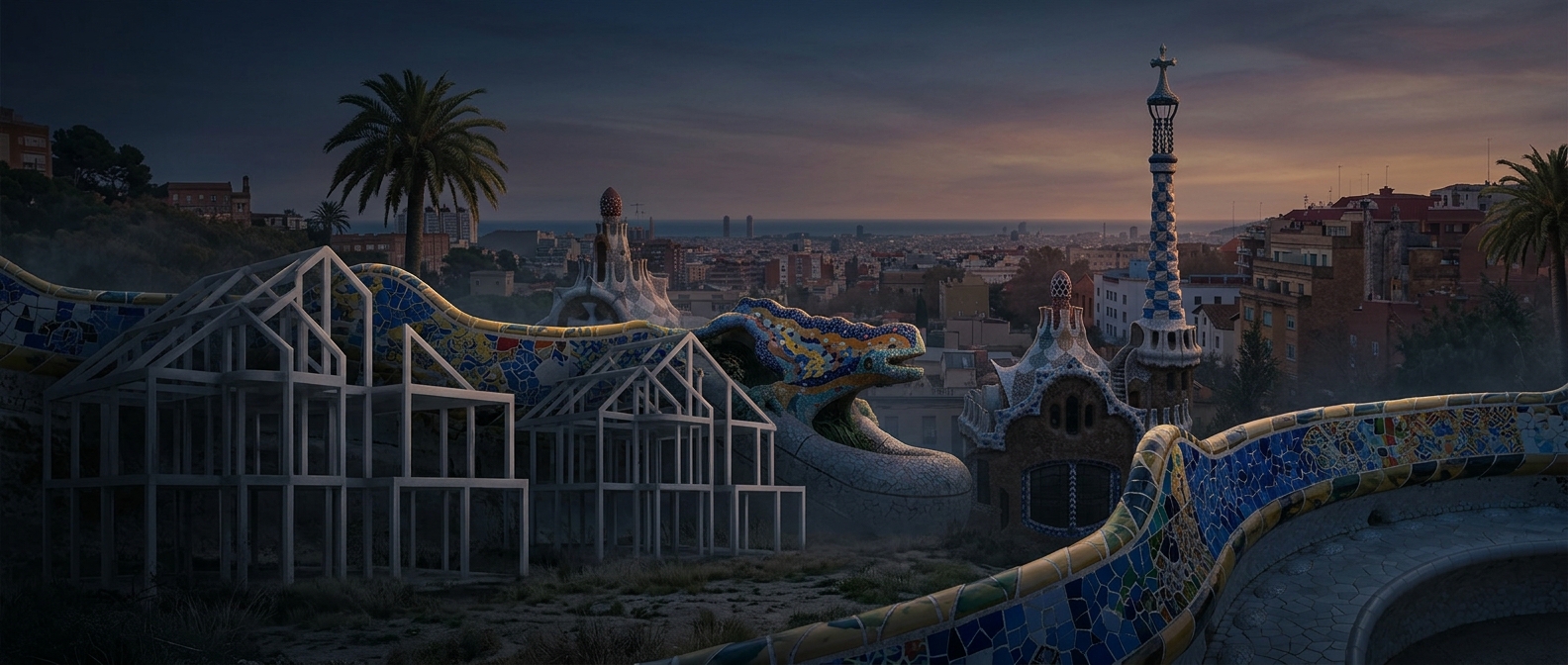
Park Güell began as a real-estate venture, not a public park. In the early 20th century, industrialist Eusebi Güell hired architect Antoni Gaudí to create an upscale residential enclave on a hillside above Barcelona. The project drew on the “garden city” idea: homes set among greenery, with shared amenities and room to escape the crowded urban core.
The Hillside Was Part of the Problem
The site offered sweeping views, but its steep slopes made building and getting around more difficult than on level ground. Gaudí shaped paths, viaducts, retaining walls, and stairways to work with the terrain rather than flatten it. Those structures gave the project much of its striking character, but they also served a practical purpose: supporting access and construction across an uneven hillside.
The plan depended on wealthy buyers choosing plots and building homes there. Few did. An exclusive address and elaborate infrastructure could not overcome the drawbacks of the location, and the development never became the thriving neighborhood its promoters had envisioned.
From Private Venture to Public Landmark
After the housing scheme faltered, the land changed hands and became a municipal park, opening to the public in 1926. That shift changed how people encounter Gaudí’s work: features devised for residents and their daily routes became part of a shared landscape visited for its architecture, gardens, and views.
The park’s famous mosaics are only one layer of the story. Its paths and stone structures preserve the outline of a neighborhood that was never built—an ambitious hillside plan whose most lasting success was becoming a place for everyone.