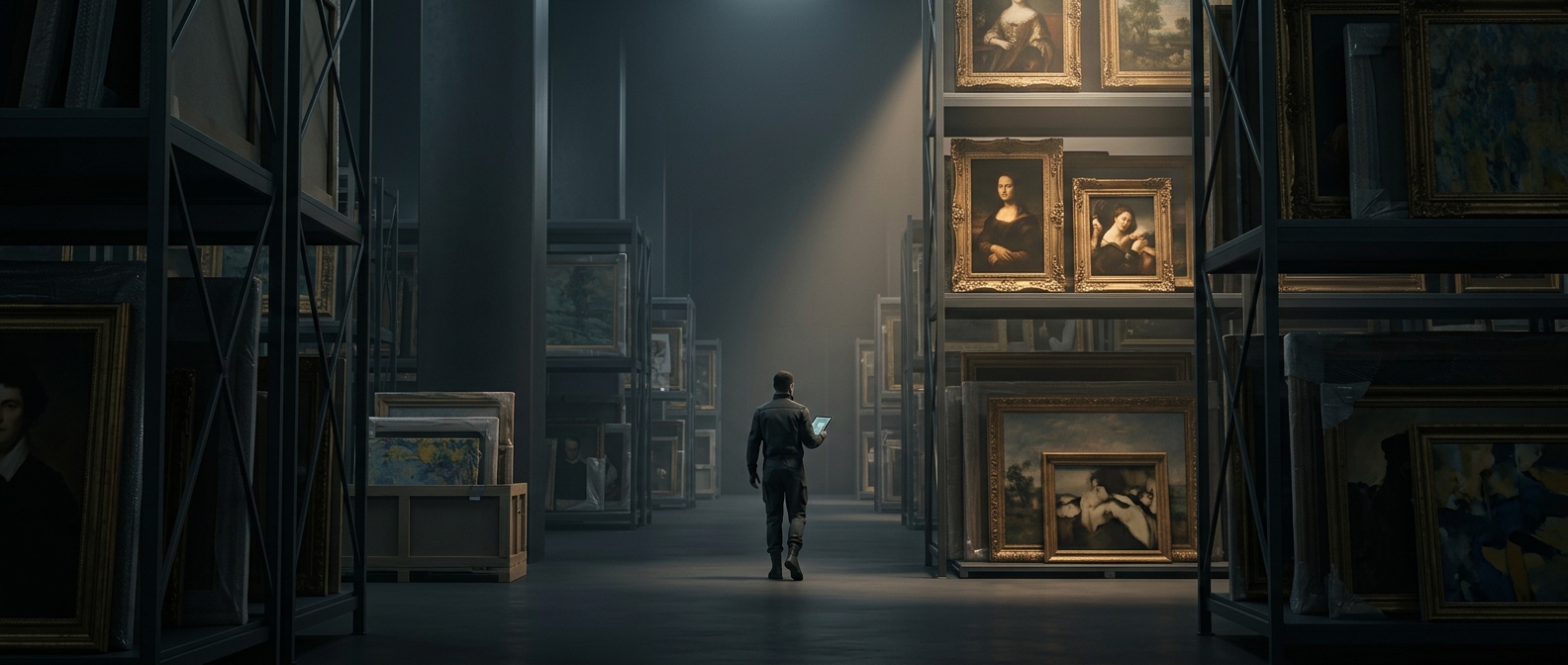
A sale can happen without moving the painting
A freeport is a secure storage facility in a customs-controlled zone, often near an airport. Art kept there can remain under customs supervision rather than entering the country’s ordinary import system. Depending on the jurisdiction and transaction, that can defer import duties or taxes until the work is brought into the domestic market. The details vary, so a freeport is not a universal tax-free zone.
The arrangement also separates the artwork from its ownership. A buyer can acquire a painting while it stays in the same crate, in the same storage facility. The object does not need to be shipped to a home or gallery each time its owner changes. That makes the “bearer bond” comparison useful—but only as an analogy: a painting is not a financial security, and its ownership still depends on legal records and proof of title.
Storage turns art into a flexible asset
Keeping a work in a freeport can reduce handling, transport, and exposure to damage or theft. It may also give an owner time to decide whether to display, lend, export, or sell it. In a market where a single object can be difficult to move safely, leaving it in place can make a transaction simpler than arranging another shipment.
Those conveniences have a cost. Secure storage and insurance are not free, and the owner gives up the experience and public visibility that come with showing the work. For an investor focused on preserving or reselling an asset, however, public display may matter less than keeping the object protected and ready to transfer.
The tradeoff is visibility
A warehouse can therefore serve as more than a place to wait between shipments: it can be part of the machinery of the art market. But when ownership changes hands behind closed doors and the work remains packed away, the market’s efficiency comes at a cultural cost. A painting can be famous, valuable, and repeatedly traded while remaining unseen by the people who made it valuable in the first place.