The shredding became part of the artwork
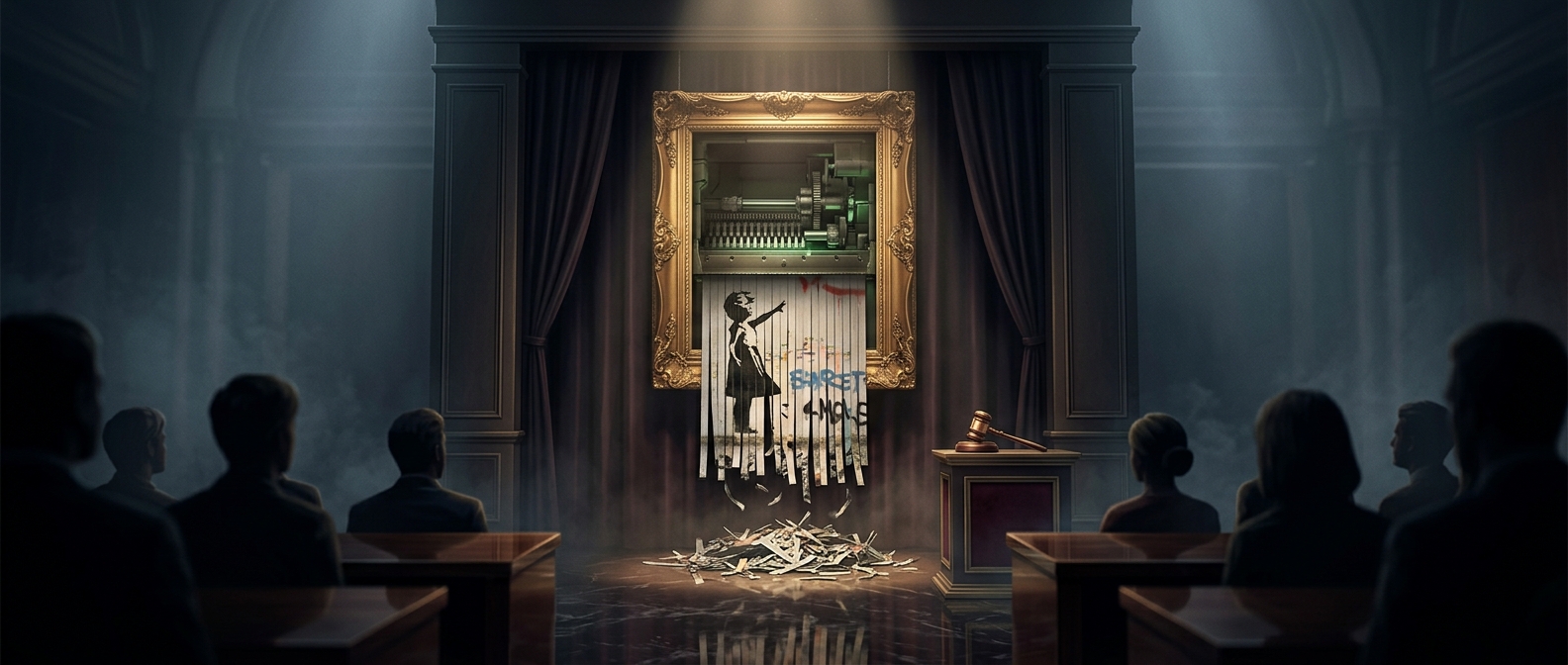
When Banksy’s Girl with Balloon was partially cut into strips during a 2018 auction, the result was no longer quite the same work that bidders had seen on the wall. The canvas remained caught in the frame, and the altered piece was later given a new title: Love Is in the Bin.
That change mattered in the art market because buyers were not paying only for an image. They were also buying an unusual object with a dramatic, documented history: a finished auction, a concealed mechanism, and a canvas transformed in public. The event made the work instantly recognizable and difficult to confuse with another version of the image.
Why a damaged work could command more
An artwork’s price is not a simple measure of its physical condition. Buyers may value an artist’s reputation, the work’s rarity, its history, and the attention surrounding it. In this case, the shredding did not erase the painting; it created a one-of-a-kind version associated with Banksy’s intervention. That story could make the altered object more desirable to collectors than an intact example.
The price jump—from about $1.4 million at the first auction to $25.4 million when the work later sold—shows how strongly that combination can affect demand. It does not mean damage reliably increases an artwork’s value. The same act could diminish another work, or leave buyers unsure what they were purchasing. Here, the alteration itself became the feature collectors were bidding on.