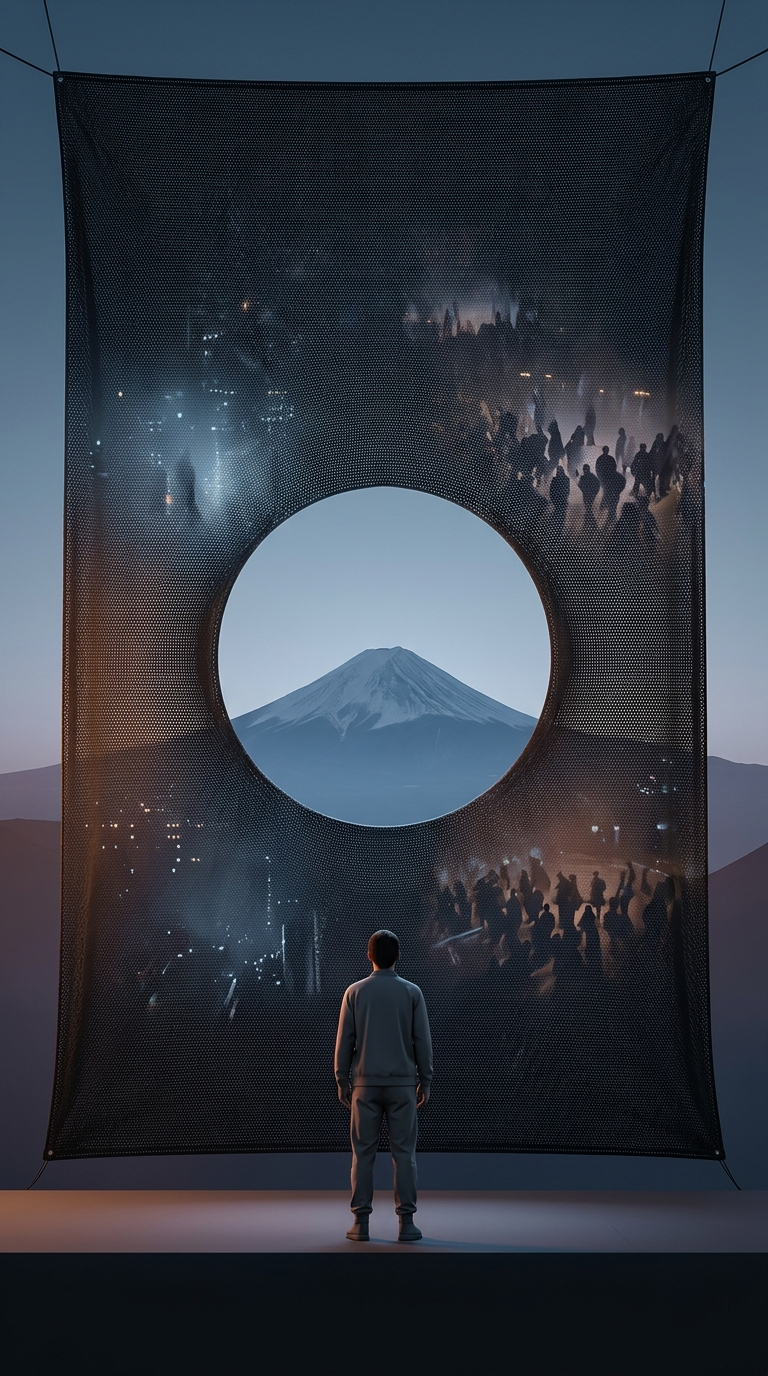
The view became a crowd-control problem
At a popular photo spot in Fujikawaguchiko, visitors had found an unusually striking composition: Mount Fuji rising behind a Lawson convenience store. The contrast between the everyday storefront and Japan’s iconic peak made the location easy to recognize—and attractive to people hoping for the same picture.
But the photo stop sat beside an ordinary town street, not in a viewing park built to handle crowds. Visitors gathered on sidewalks and near the road, creating safety concerns and bringing complaints about litter and people entering private property. The town’s problem was not the mountain; it was the congestion around one particular camera angle.
Blocking the composition, not the mountain
Officials put up a large black mesh screen where photographers typically stood. By interrupting the line of sight between the street and Fuji, the barrier made it harder to take the familiar storefront-and-mountain shot. Mesh offered a physical way to discourage stopping without closing the road or trying to control the mountain’s visibility across the town.
The screen addressed the immediate bottleneck by changing what drew people to that precise spot. It could not eliminate tourism or prevent visitors from seeking other views, but it made the roadside photo less available. The striking image had turned a working neighborhood corner into an unofficial attraction; the barrier was an attempt to give the street back to the people who used it every day.