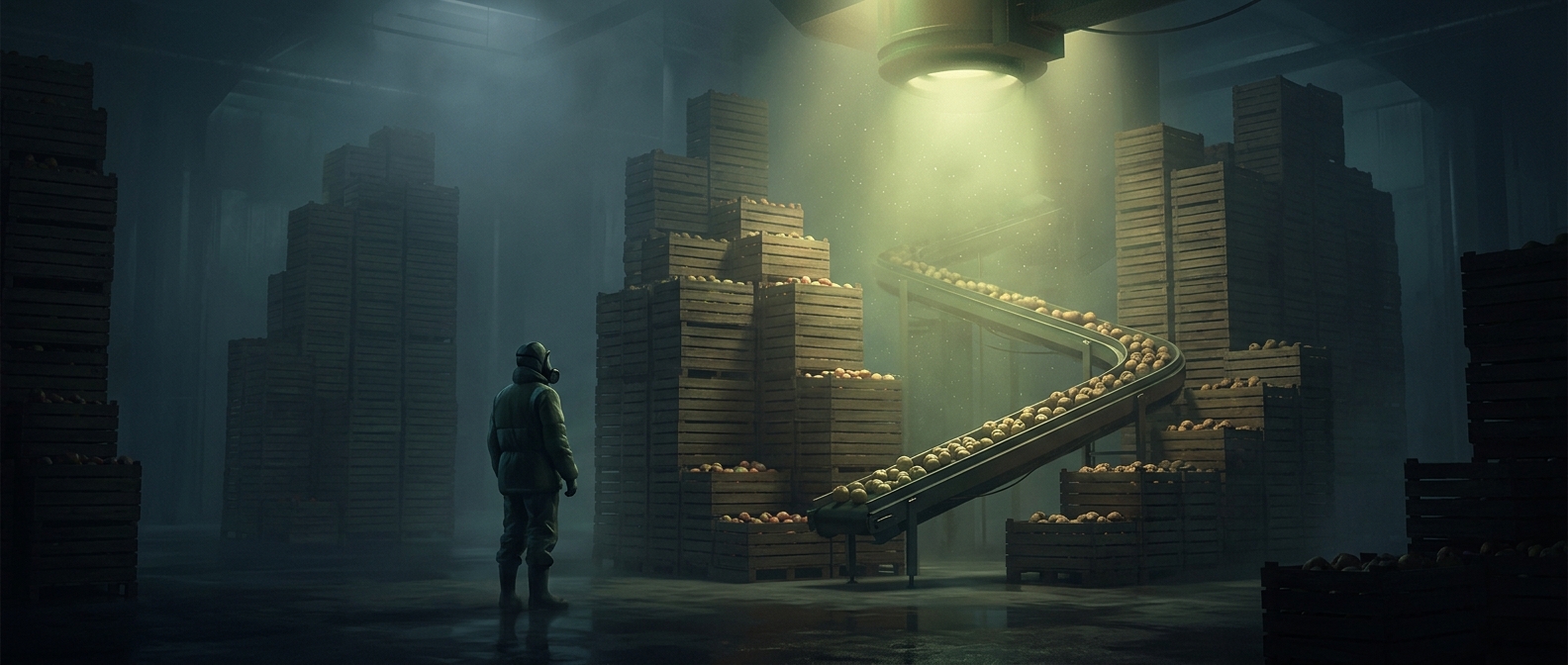
Storage turns harvest season into year-round supply
Apples keep changing after they are picked. They use stored sugars and oxygen in a process called respiration, while producing ethylene, a gas that helps drive ripening. Cold slows these processes, but commercial storage can slow them further by carefully controlling the air around the fruit.
The room changes the apple’s pace
In controlled-atmosphere storage, equipment reduces oxygen and adjusts carbon dioxide while keeping temperature and humidity within narrow ranges. With less oxygen available, an apple’s respiration slows; cool, humid air also limits softening and water loss. The fruit is not literally frozen in time, and the balance must be managed: too little oxygen or too much carbon dioxide can damage it.
This works best with apples harvested at the right stage and varieties suited to long storage. Once the fruit comes out, it can be sorted, packed, and shipped, with warmer conditions allowing ripening to resume more quickly.
Why retailers and growers rely on it
Without long-term storage, much of the crop would have to be sold soon after harvest, when many growers are bringing apples to market at once. Storage lets suppliers release fruit over a longer period, helping retailers maintain a steadier selection and giving growers more flexibility about when to sell. That flexibility depends on costly rooms, monitoring, and energy—and on choosing fruit that can tolerate the wait.
So an apple’s age alone does not tell you how it will taste. Variety, harvest maturity, and storage conditions all matter; the practical trick is slowing change enough that the fruit still has the crispness shoppers expect when it reaches the produce aisle.