How a viral sequence became a shield
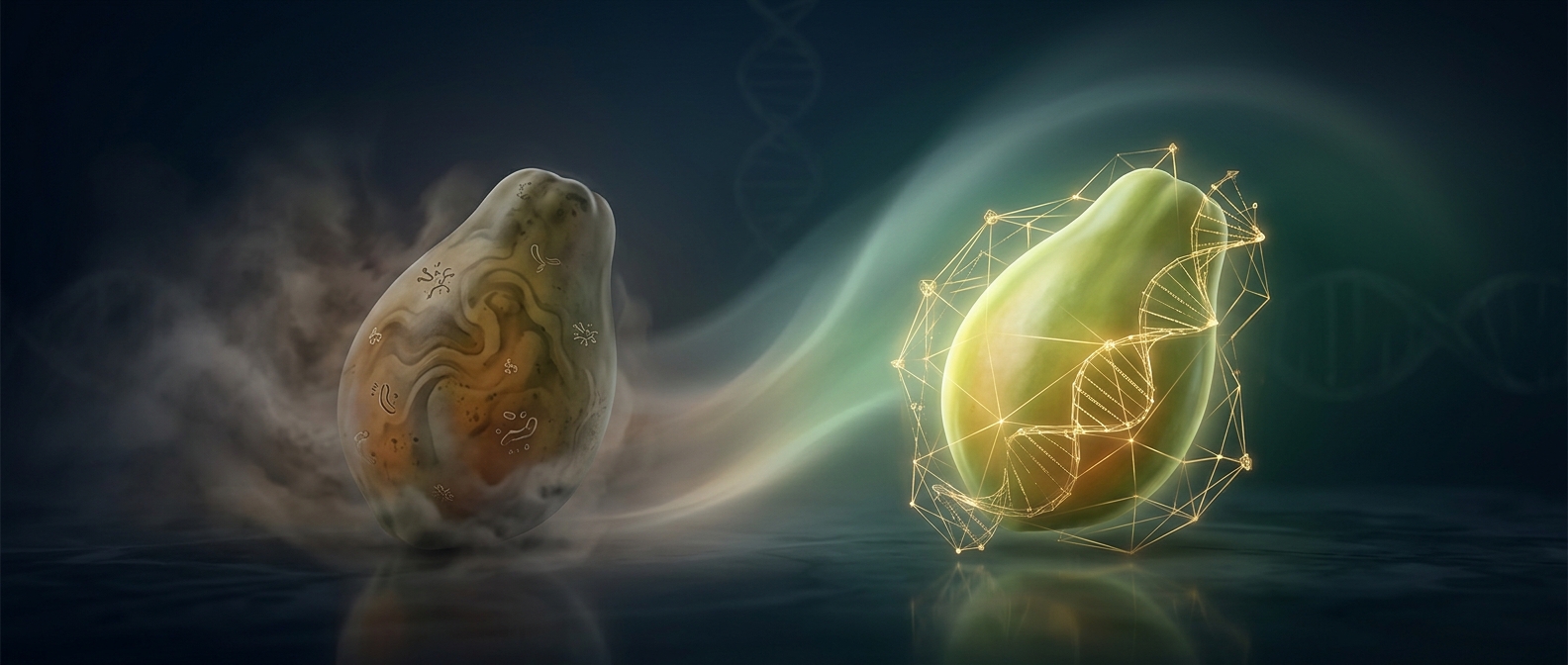
Papaya ringspot virus spreads from plant to plant and can leave papaya leaves mottled and fruit production badly reduced. In Hawaii, the disease threatened farms that depended on a crop with few practical ways to stop the virus once it was established.
Researchers responded by putting a small piece of the virus’s genetic material into papaya plants. It was not a whole virus: the inserted sequence could not infect a plant or make new viruses on its own. Instead, it gave the papaya a way to recognize the invader.
The plant’s molecular alarm system
When a virus infects a cell, it releases genetic instructions made of RNA. The engineered papaya carries matching viral information. That match can activate RNA interference, a natural cellular defense in which the plant breaks down RNA with a familiar sequence. If the virus’s instructions are cut up, it has a harder time making the components needed to spread.
The strategy is a form of pathogen-derived resistance: using a piece of a pathogen to help an organism defend itself against that pathogen. It does not make every plant immune to every disease; the protection is aimed at the matching virus.
Why the approach mattered to growers
For farmers, the difference was practical: a crop that could withstand ringspot virus was far more viable than one repeatedly damaged by it. Resistant papaya varieties helped sustain commercial production in Hawaii, where losing the crop would have meant losses not only for growers but also for the businesses and workers tied to packing and selling it.
The surprising lesson is that the useful part of a virus can be its genetic signature. By carrying that signature, the papaya could recognize the disease’s instructions early enough to interfere with them.