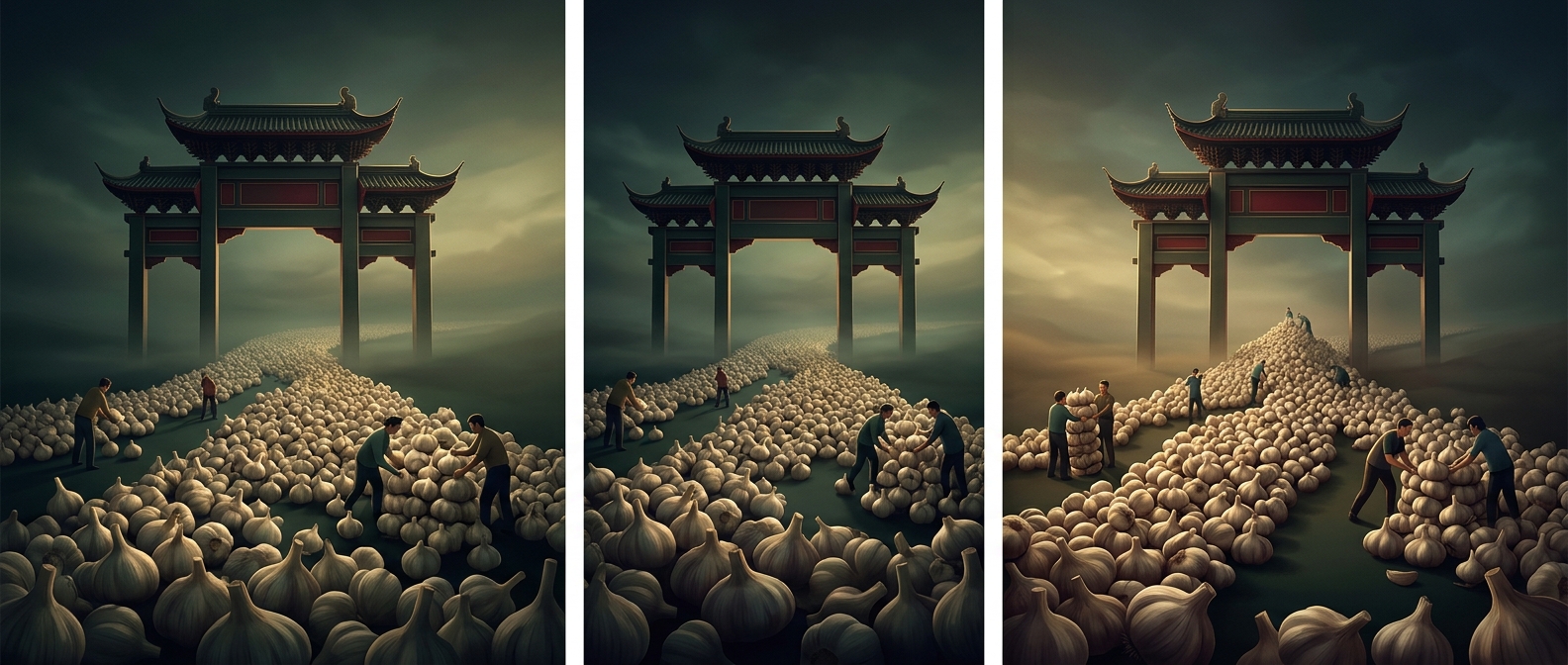
How scale can make garlic hard to beat on price
A garlic export advantage begins before the crop reaches a port. When large growing regions produce enormous harvests, farms and traders can spread costs—such as equipment, handling, and transport—across more bulbs. Bulk purchasing and repeated, specialized work can also make each unit cheaper to grow and prepare for sale.
That advantage matters because garlic is sold in a competitive market where buyers can compare supplies from different countries. If one source can offer consistent volumes at a lower price, importers and food businesses have a reason to choose it, putting pressure on growers elsewhere.
The harvest is only part of the cost
Export garlic must be prepared for a long trip: bulbs need to be dried or cured, sorted, packed, and moved through the supply chain. Large-scale operations can make these steps more efficient, while concentrating production in one region can make it easier to assemble shipments big enough for distant buyers. The final price reflects this whole chain, not simply what it costs to grow a bulb.
For farmers in competing countries, that creates a difficult tradeoff. They may need to cut costs, specialize in garlic with distinctive qualities, or serve customers willing to pay more for local produce. A low-priced bulb on a faraway shelf can therefore reshape choices much closer to home—long before anyone breaks it open.