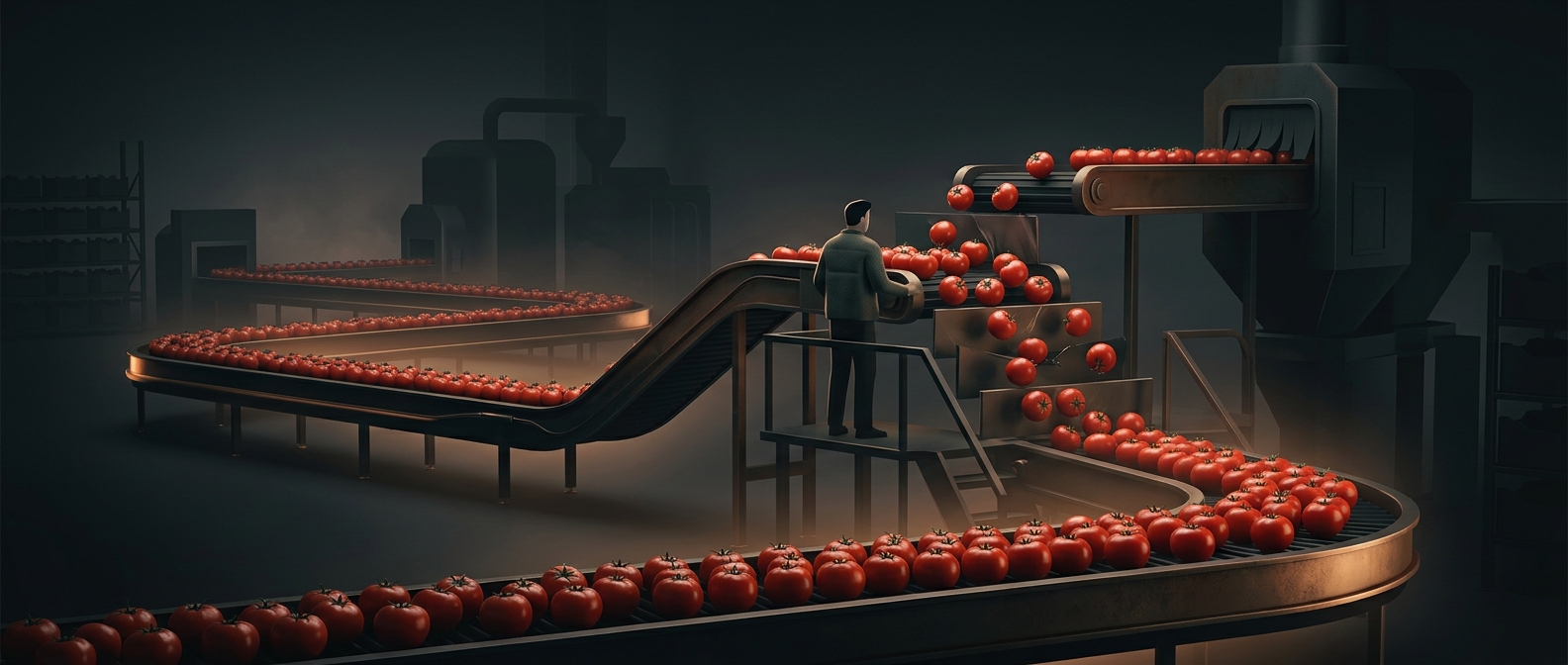
The tomato is engineered for the journey
A tomato moving through a commercial supply chain may be picked by machine, packed in bulk, stacked in a truck and handled again at a store. Each step can bruise or crack fruit. Firm tomatoes are more likely to emerge intact, so growers and shippers have a practical reason to favor varieties that can withstand handling and remain saleable longer.
Breeding can reinforce that toughness by selecting plants whose fruit holds its shape under pressure. It is a trade-off made across generations: traits that reduce damage matter not only in the field but also in the cost of sorting, transporting and discarding tomatoes that arrive split or bruised.
Flavor competes for attention
Firmness does not automatically make a tomato bland. But when durability is a major breeding target, flavor may receive less emphasis. Texture, aroma and taste also depend on ripeness and other characteristics, and a fruit harvested or sold for its ability to travel may not be chosen under the same priorities as one grown to eat close to where it was picked.
That is why a supermarket tomato can look intact after a long trip yet disappoint at the table: the qualities that protect it on the way there are not necessarily the ones that make it taste best.