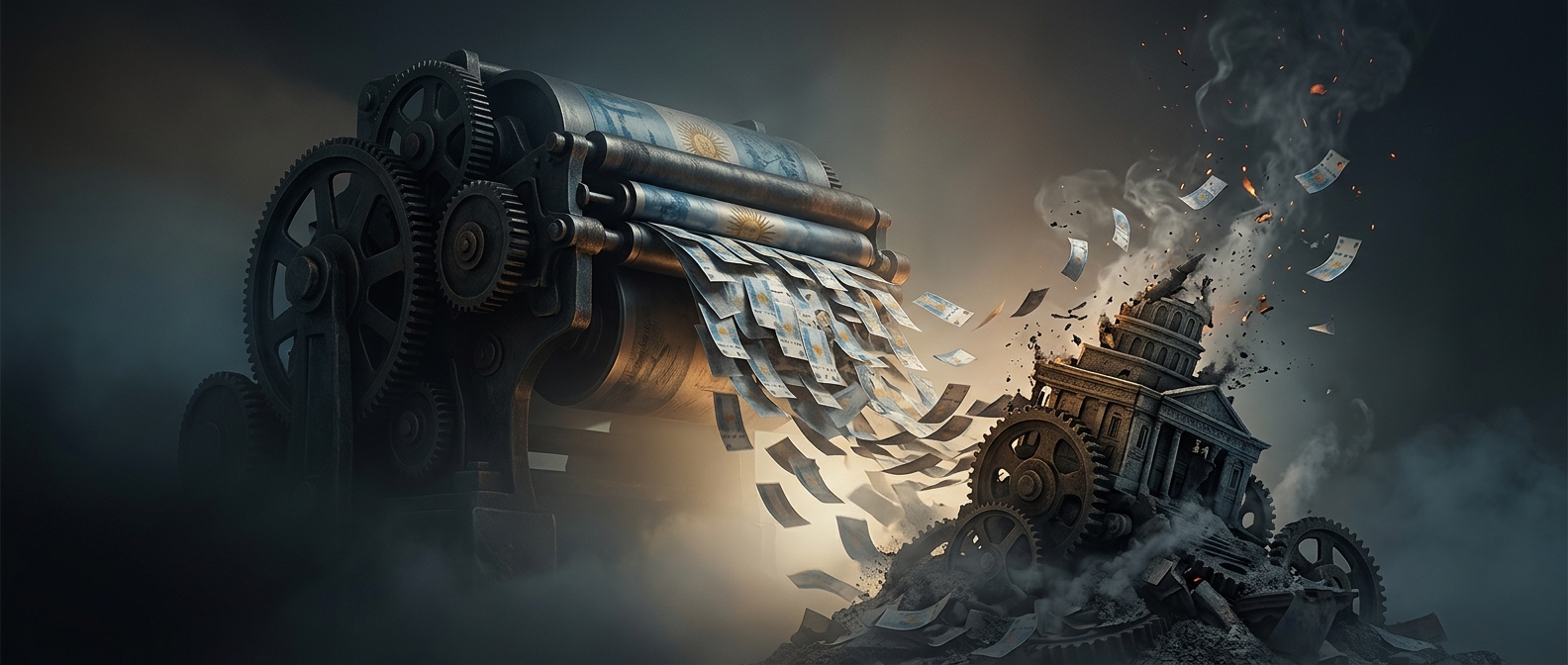
The gap between bills and revenue
A government’s bills do not wait for a good moment in the economy. Salaries, pensions, public services and debt payments fall due on schedule, while tax receipts can lag or fall short. A budget deficit is the difference between what the government spends and what it collects. It must be covered somehow: by borrowing, using available funds, cutting or delaying spending, or obtaining money created by the central bank.
For Argentina, access to ordinary borrowing has often been limited or expensive, making central-bank financing an available way to bridge that gap. The central bank can provide pesos to the government, which then spends them into the economy. That solves an immediate cash problem, but it does not create more goods or services for sale.
Why the quick fix can feed the next one
When more pesos chase roughly the same supply of goods, businesses and households may respond by raising prices or seeking dollars to protect their savings. If people expect prices to keep climbing, they may spend pesos sooner, reinforcing pressure on prices and the currency. The result can erode the purchasing power of the very money used to meet government obligations.
That creates a difficult loop: inflation makes budgets harder to plan, while the government still has bills to pay. Printing can cover payments in the short term, but relying on it can make confidence in the peso harder to restore. The underlying choice remains whether to close the budget gap through more revenue, less spending, borrowing, or money creation—and each route carries its own costs. A payment made in newly created pesos may therefore settle today’s bill while making tomorrow’s pesos buy less.