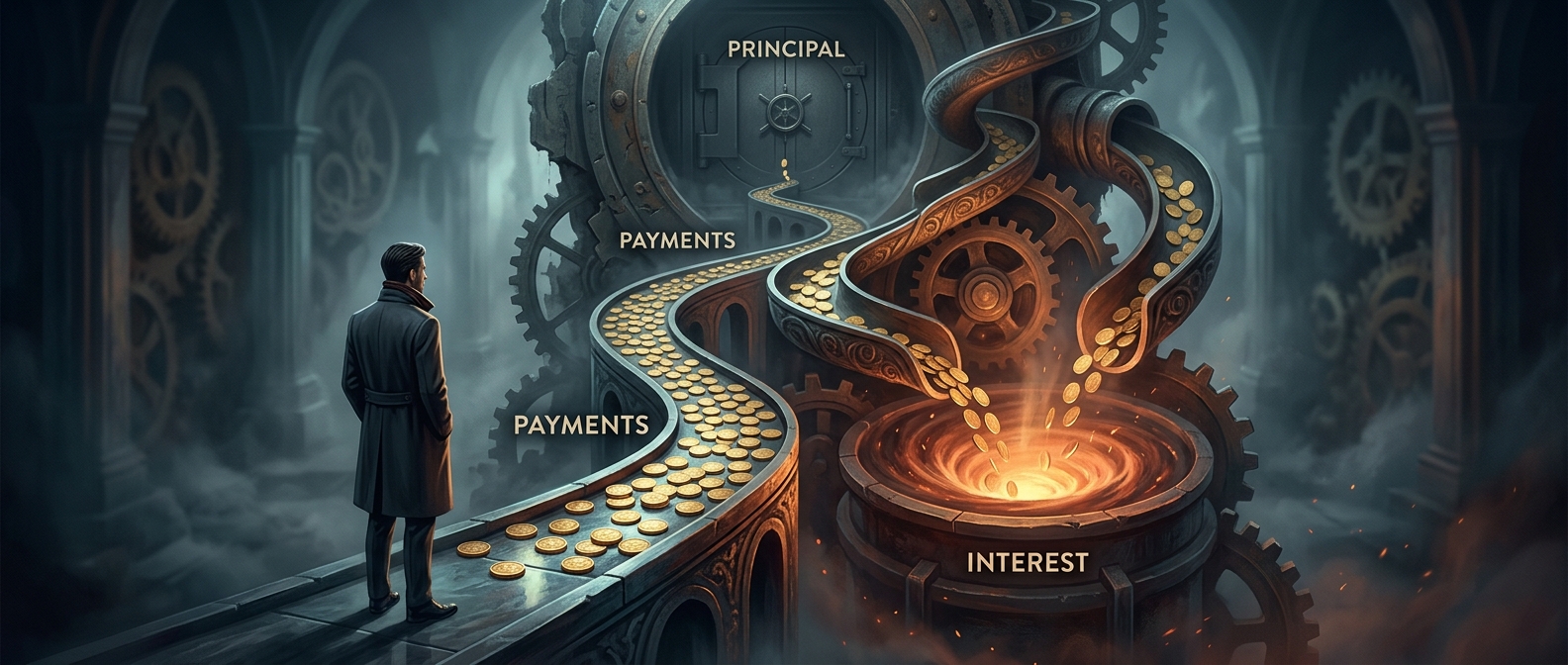
When interest becomes part of the balance
Debt grows by compounding when unpaid interest is added to the amount owed, so future interest can be charged on both the original borrowing and earlier interest. That enlarged amount is the new base for calculating interest. The borrower does not need to take out another loan for the balance to rise.
The timing depends on the debt’s terms. Some loans add unpaid interest to principal at specified points, a process called capitalization. With other debts, interest may accrue over time and appear on the account later. Either way, if payments fail to cover the interest being charged, the balance can keep growing.
Why small payments can lose ground
A payment usually has to cover current interest before it can reduce the amount borrowed, though the exact allocation depends on the agreement. If a payment barely covers interest, little—or none—goes toward principal. The next round of interest is then calculated on a balance that has hardly shrunk, or may have grown.
That is why a minimum payment can keep an account current without quickly paying it off. The danger is not simply that interest is expensive: the longer a substantial balance remains, the more time it has to generate additional interest. A payment above the amount currently accruing can start reducing the base on which future interest is calculated; paying down principal makes each later round less costly.