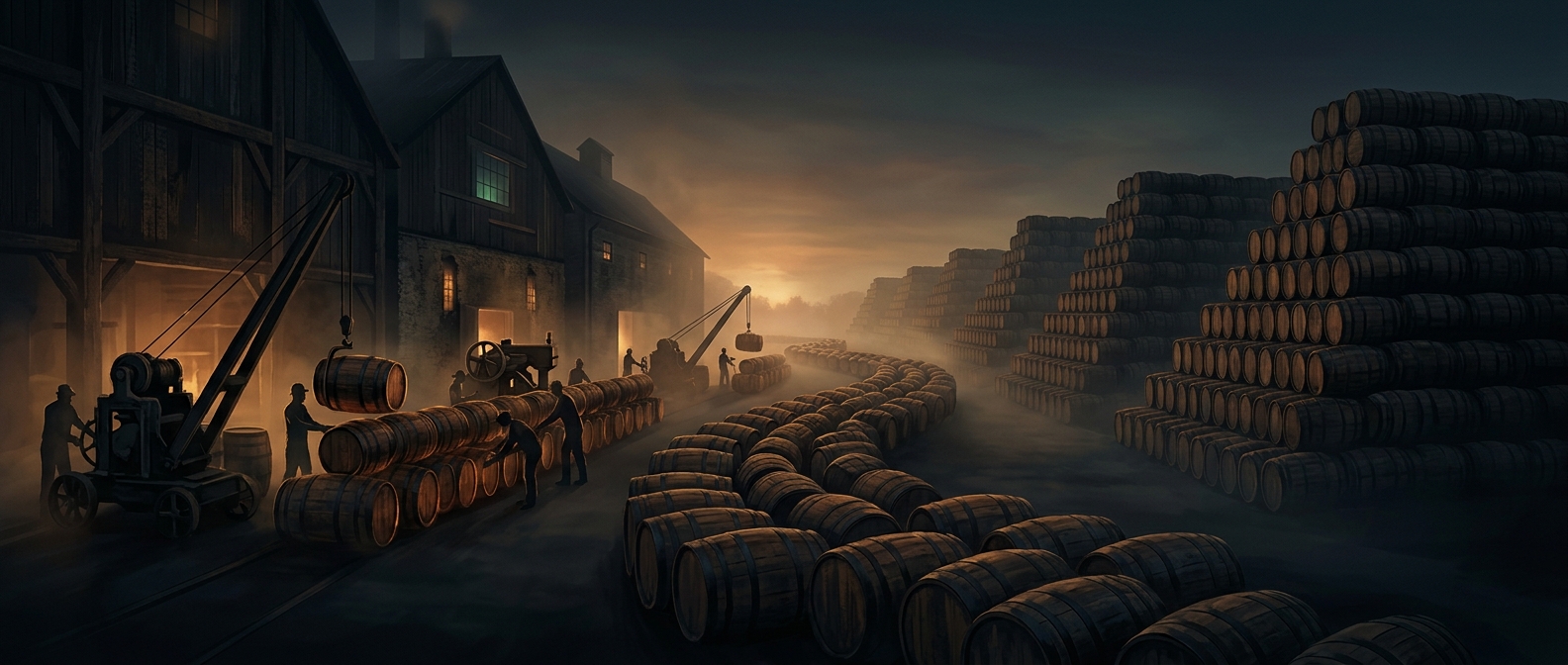
A one-use rule creates a secondhand cask market
Bourbon’s aging standard requires it to mature in new, charred oak containers. Once a cask has done that job, it cannot be used to age another batch of bourbon that will be sold as bourbon. The rule creates a steady stream of seasoned barrels—and a reason for other whisky makers to buy them.
“Can’t reuse” is specific to making bourbon under that standard, not a ban on using the wood again. A distillery can sell or repurpose a cask, while makers of other spirits can put it to work for a different kind of aging.
Why a used barrel still has value
Oak is more than a container: as whisky rests, it draws compounds from the wood that shape its color, aroma, and flavor. A fresh, charred barrel gives bourbon a strong dose of oak character. After one filling, some of that readily available character has been extracted, but the cask still has useful flavor to give—and can also soften and color a new spirit as it matures.
For Scotch and Japanese whisky producers, buying used bourbon casks can be a practical alternative to sourcing and preparing new oak. The casks also offer a familiar way to build flavor without giving every whisky the same intense imprint a fresh barrel would bring.
The barrel’s value continues downstream
The arrangement links two different production needs: bourbon makers need new casks for each qualifying batch, while other whisky makers can make productive use of casks that have already been filled. Instead of becoming waste after one run, a barrel travels to another distillery, where its earlier life becomes part of the next whisky’s flavor.