When a Grove Becomes a Place of Listening
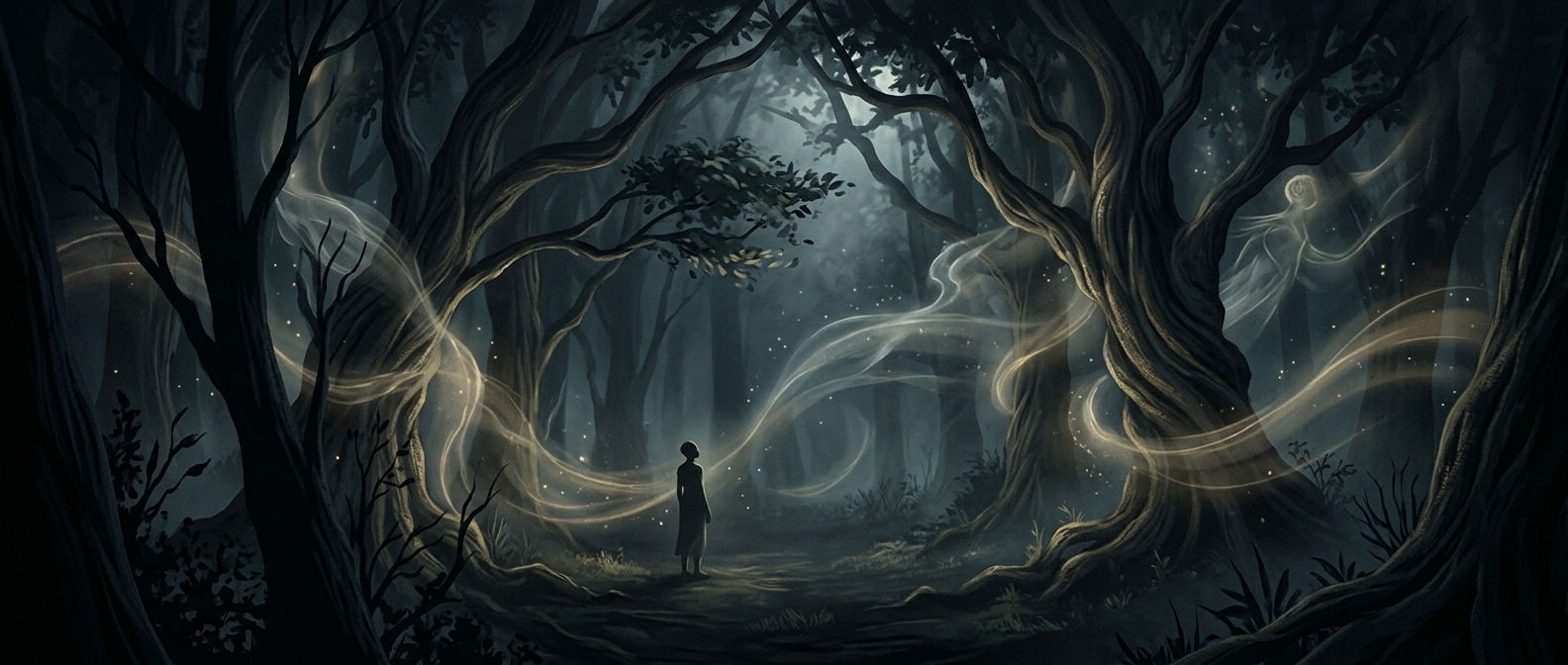
In some African traditions, a sacred woodland is more than a stand of trees: it is a place where the living understand themselves to remain in relationship with the dead. Wind moving through leaves can be interpreted as ancestral speech. The rustle matters not because it can be translated into ordinary words, but because the sound is encountered in a place already set apart for remembrance and spiritual presence.
That meaning depends on the grove as well as the wind. A forest is usually approached as landscape; a sacred grove may be approached with reverence, restraint, or a sense of obligation. Its trees and sounds belong to a shared tradition through which people understand ancestry, community, and their ties to a particular place. Practices and beliefs differ across communities, so this is not a single belief held across Africa.
Sound, Memory, and a Living Landscape
Wind is fleeting: it stirs the canopy, then passes. That makes the leaves a vivid way to imagine a connection that is present but not visible. The dead are not necessarily understood as simply absent; in this tradition, the grove gives that continuing relationship a location and a sensory form. A person standing beneath the trees can hear the natural world and understand it through inherited spiritual meaning at the same time.
The idea also changes how the woodland is regarded. If a grove is a place of ancestral presence, treating it as ordinary, disposable land would miss its significance. Its importance rests not only in what grows there, but in the relationships and obligations that the place carries. The wind’s rustle becomes memorable because it joins two things that are usually separated: a passing sound in the trees and an enduring bond with those who came before.