Why the Equinox Does Not Give Every Place 12 Hours of Daylight
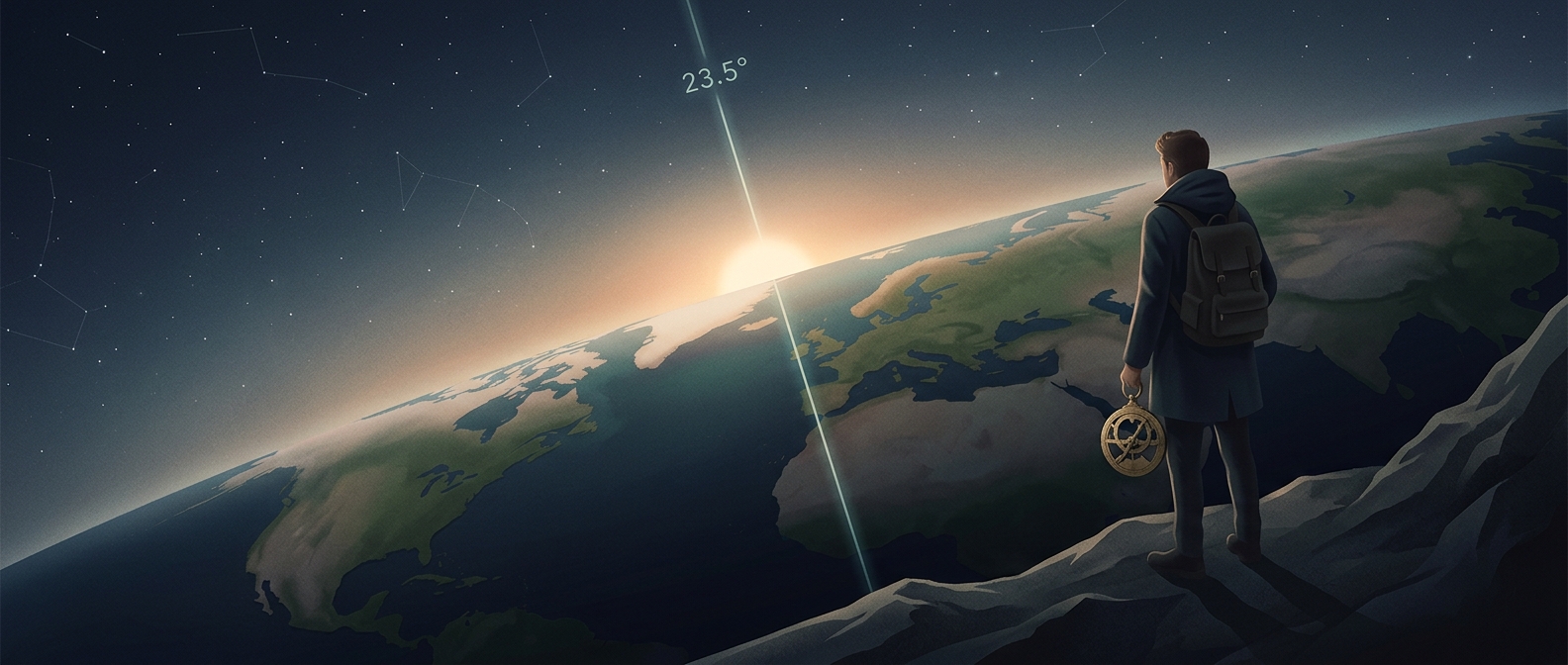
An equinox happens when the Sun crosses Earth’s equator in the sky. At that point, the boundary between the planet’s illuminated and dark sides runs nearly through both poles, giving the two hemispheres a broadly even share of daylight. But “daylight” is measured from sunrise to sunset, not from the moment the Sun’s center appears above the horizon to the moment it disappears.
That distinction adds a little time. Sunrise is usually counted when the Sun’s upper edge first appears, and sunset when its upper edge vanishes. Earth’s atmosphere also bends sunlight, making the Sun visible even while it is geometrically just below the horizon. Together, these effects make the measured day slightly longer than 12 hours.
The Difference Depends on Where You Stand
The precise balance varies with latitude and with how sunrise and sunset are observed. Near the equator, daylight changes little through the year; at higher latitudes, the Sun’s path meets the horizon at a shallower angle, so the transition between day and night lasts longer. Local terrain and the visible horizon can shift the observed times, too.
So the equinox is a useful marker of seasonal balance, not a worldwide stopwatch reset. On that date, one location may already have slightly more than 12 hours between sunrise and sunset, while another has slightly less.