Why Ten Dots Could Represent the Whole World
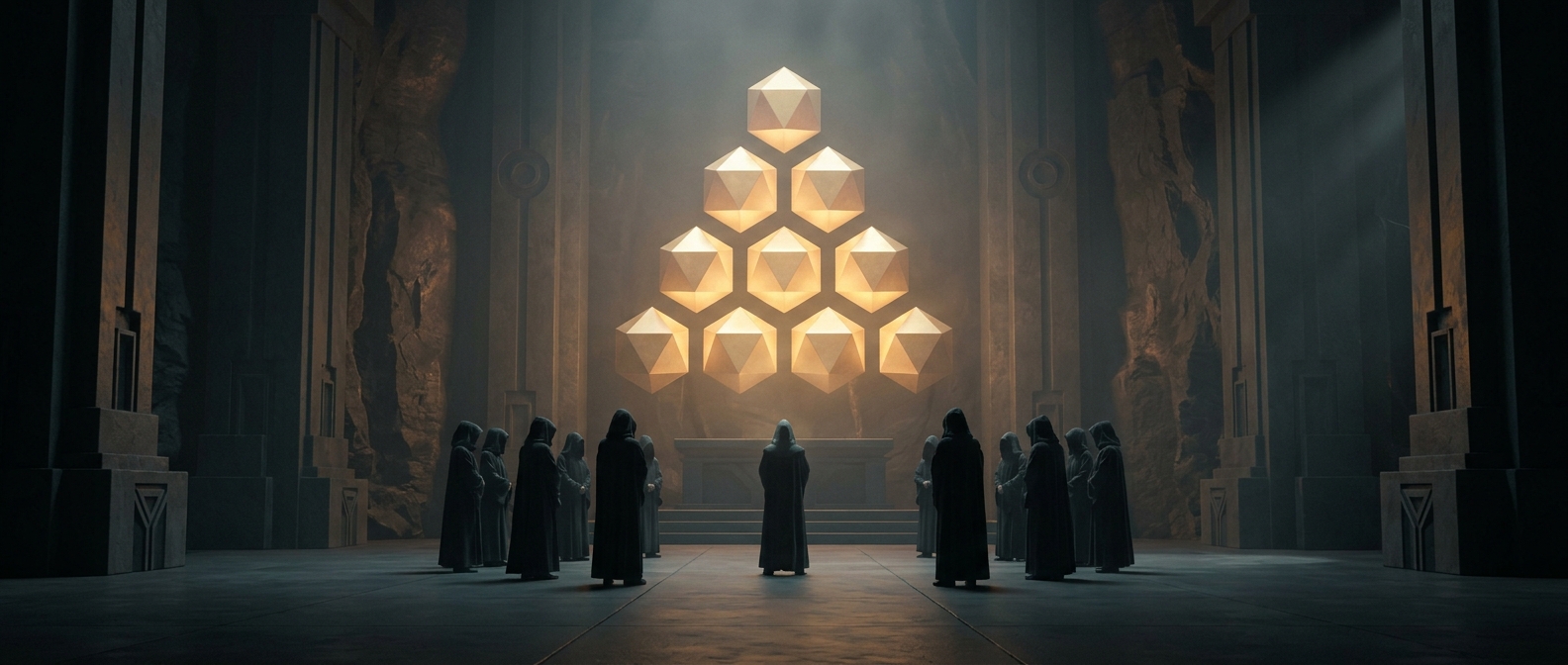
The tetractys was a triangular arrangement of ten points: one in the first row, two in the second, three in the third, and four in the fourth. For Pythagoreans, it was more than a clever way to picture the number ten. It condensed a theory of how order emerges: a few simple numbers combine to make a complete, balanced whole.
The triangle also connected arithmetic to sound. Ratios among the first four whole numbers describe basic musical intervals: 2:1 gives an octave, 3:2 a fifth, and 4:3 a fourth. Those relationships helped make number seem like a hidden structure beneath the audible world—and, by extension, the cosmos.
A Sacred Sign and a Serious Oath
That mix of mathematical pattern and cosmic meaning made the tetractys sacred within the Pythagorean community. It could be treated with the reverence given to a divine power, rather than as a mere diagram. Pythagoreans swore important oaths by it, signaling that their commitment was bound to the order they believed the numbers revealed.
The triangle’s force came from what it joined: a visible arrangement, a set of numerical relationships, and a claim about reality. A small pattern of dots could thus stand for a universe governed by harmony—and make an oath by that pattern feel like an appeal to the deepest order of things.