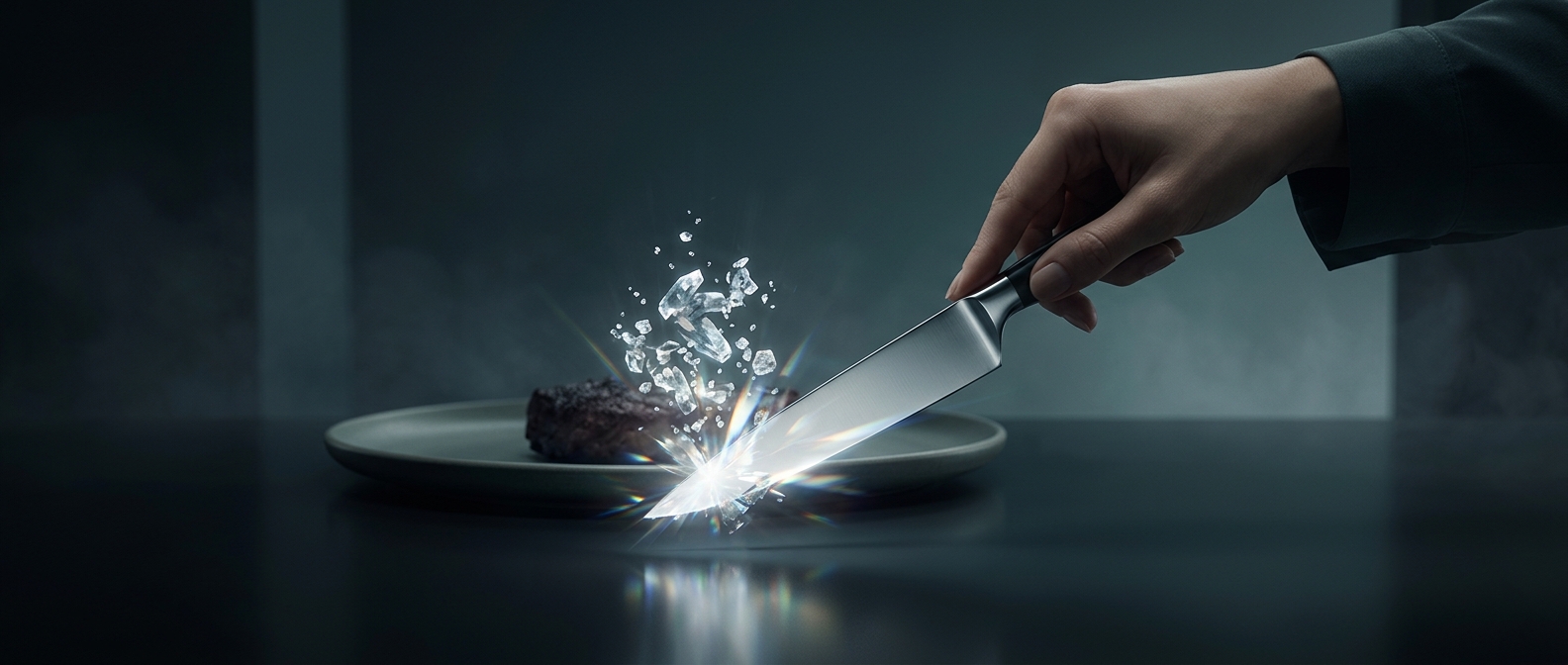
How a knife can prime your palate
Taste begins before food reaches the tongue. The brain combines signals from the mouth with what the eyes see and what a person expects, using those clues to interpret flavor. A sharp-looking knife can act as a visual cue: its pointed, angular shape suggests sharpness and intensity, qualities people may also associate with a stronger taste.
That expectation can subtly tilt perception. The food’s salt level has not changed, but the same bite may seem more forceful—or saltier—when the setting has primed the mind to anticipate intensity. This is a cross-sensory association: information from one sense influences how another is experienced.
A nudge, not a seasoning
The effect is about perception, not chemistry. A knife cannot add sodium or reliably make every dish taste saltier. The food itself, a person’s expectations, and other cues at the table all contribute to flavor, so the visual prompt is best understood as a small nudge rather than a dependable way to alter taste.
That distinction explains why presentation can matter even when a recipe stays the same. Before the first bite, the brain is already assembling clues; a pointed blade can become one of them.