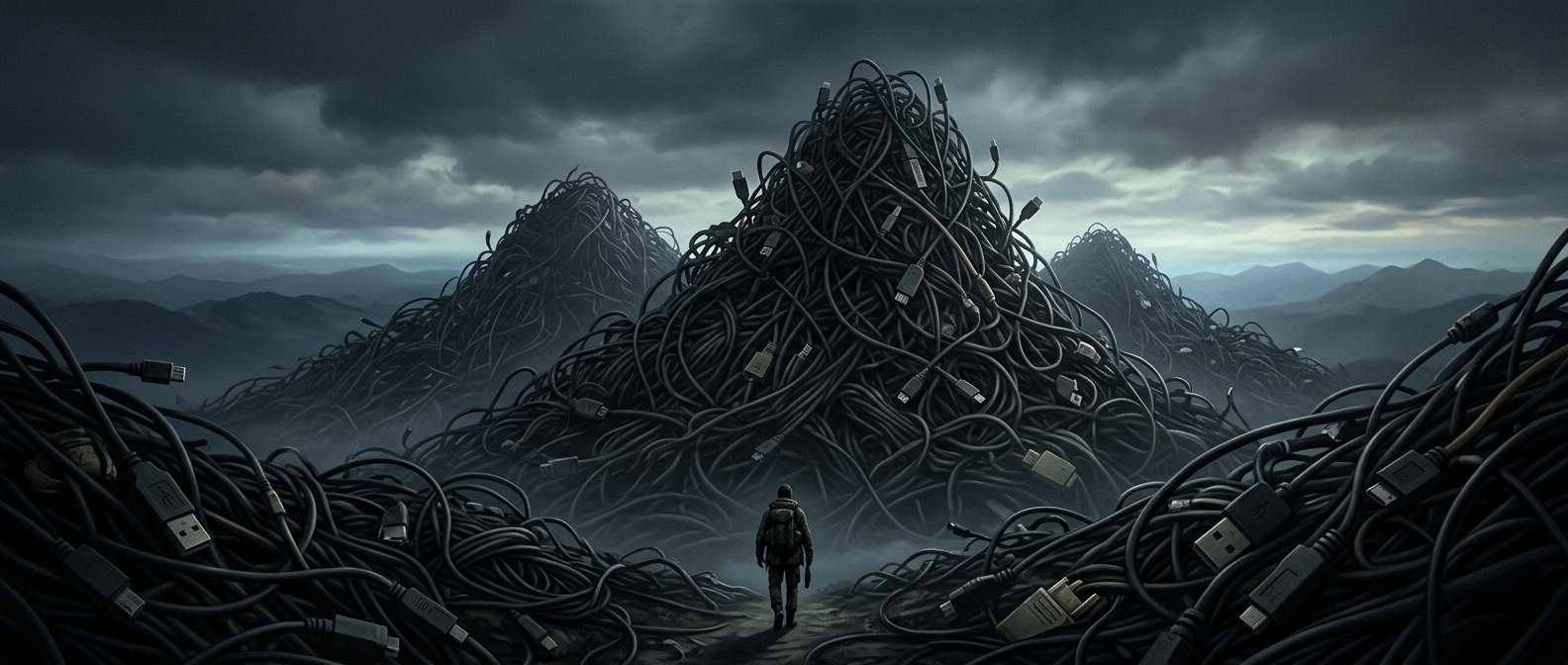
Why One Cable Can’t Replace Another
A charging cable is more than a wire with a plug on each end. Its connectors must fit the device, and its wiring and electronics must support the way that device takes power. Some cables also carry data, while others are designed mainly for charging. Even when two plugs look alike, the cable or charger may not support the same power level or features.
That makes a new device purchase a small compatibility reset. A phone, tablet, or accessory may switch connector types—or use a familiar connector with different capabilities. The old cable still works with the gadget it was made for, but it may be useless for the replacement. A household gradually accumulates cords that are functional in isolation and inconvenient as a collection.
The Cost of Connector Churn
Manufacturers have had reasons to change connectors: smaller devices leave less room for a port, and newer designs can support faster charging or data transfer. But each transition shifts the burden to owners, who must keep track of which cable goes with which device or buy adapters. An adapter can bridge some physical mismatches, but it cannot make every cable and device combination support every charging or data feature.
The result is waste as well as clutter. Cables contain metals and plastics that are difficult to recover economically when discarded, and a working cord can become surplus simply because the matching device is gone. The hidden cost of a connector change is not just a new cable; it is the useful hardware left behind.