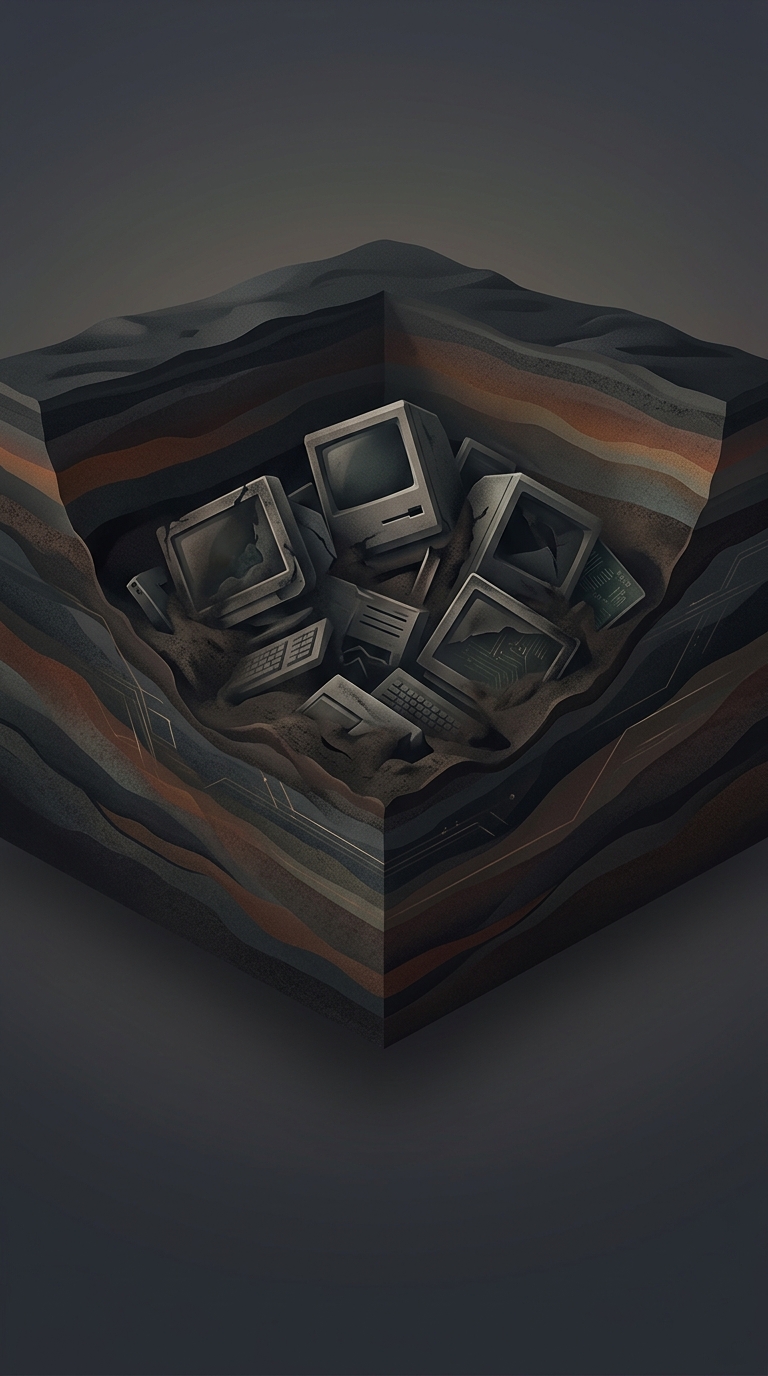
The Trash Was a Temporary Holding Place
On the original Macintosh, dragging a file to the Trash did not put it in a durable, system-wide recycle bin. The Trash was tied to the disk currently in use, and its contents were kept as temporary working state rather than preserved for you to revisit later. That distinction mattered because the Macintosh relied on floppy disks: the files you were working with might live on a disk you would soon remove.
Why the Contents Could Disappear
A modern computer can keep deleted items in a bin on persistent storage, where they remain after a restart. The 1984 Macintosh’s Trash did not offer that kind of dependable holding place. Its contents could be cleared when the Finder’s temporary state ended—such as when you ejected the disk or shut down—or when scarce memory ran out.
The risk came from treating the Trash as a safety net when it was really a brief pause before deletion. Once that temporary record was gone, there might be no easy way to restore the file. The icon looked familiar, but the guarantee behind it was very different.
A Different Idea of “Delete”
This design made sense in a machine built around removable disks and tight resource limits, but it demanded attention from users. Putting something in the Trash was not the same as storing it there for later review; the disk and the session still mattered. A file you hoped to recover was safest left untouched until you were certain you no longer needed it.