How a moving strip replaces repeated trips
At the mine, ore drops onto a tough, reinforced belt. Electric motors turn large drive pulleys, which pull the belt along a route supported by smaller rollers. The rollers carry the weight and reduce friction; the belt’s return side loops underneath to be loaded again. At the far end, the ore falls into a stockpile or another stage of processing.
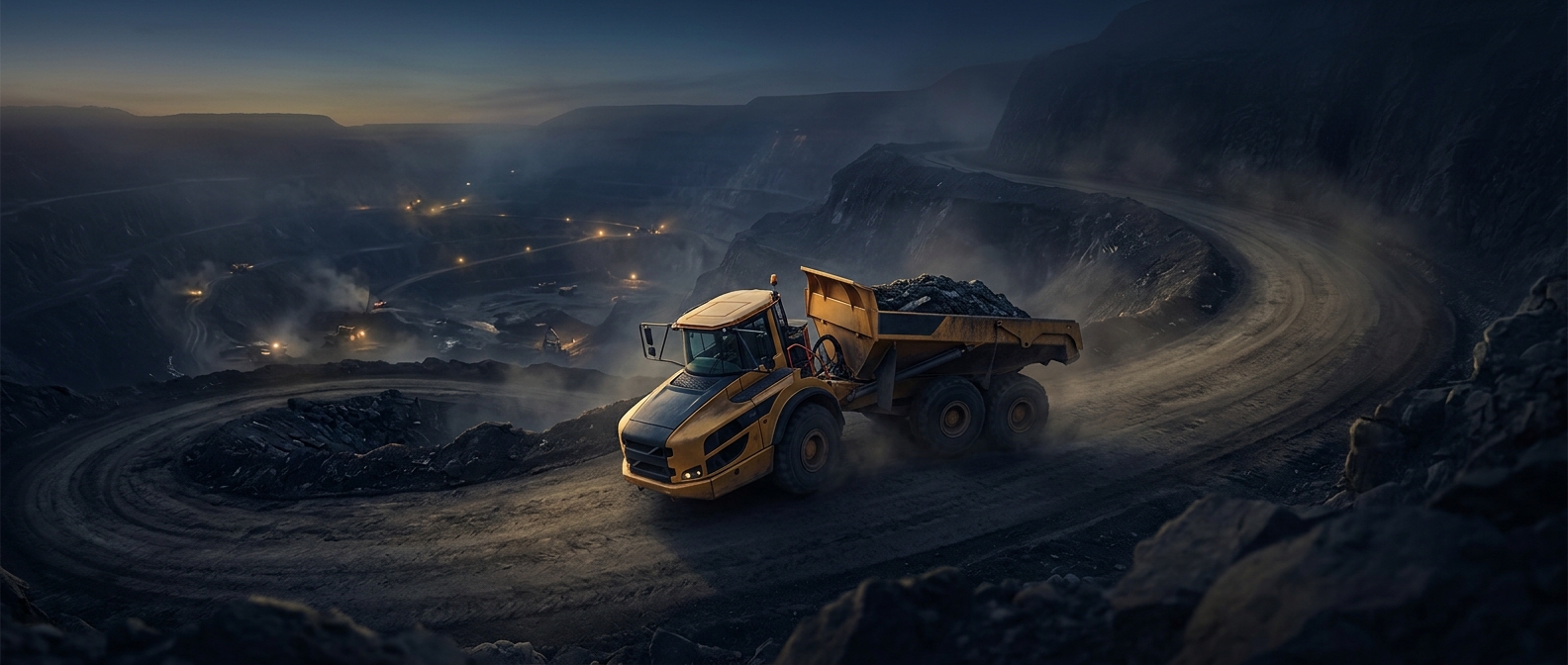
The key difference from trucking is not simply that the belt moves continuously. A truck carries a batch, then must return for another. A conveyor keeps feeding material along the route, so loading and transport can happen at the same time.
The route is part of the machine
A long conveyor must handle more than distance. Its path may rise, dip, or curve around terrain, and the belt must stay centered as its load shifts. The belt is kept taut so the drive pulleys can grip it; rollers and supports hold it in shape. Where one belt ends and ore transfers to another, the falling material has to be guided to limit spillage and wear.
Those transfer points, drive stations, and exposed stretches all need inspection. A damaged belt or jam can interrupt the whole flow, so sensors and maintenance crews help spot trouble before a small problem becomes a long stoppage.
Fewer journeys, different tradeoffs
Conveyors can reduce the stream of truck trips on a fixed route, but they are not a no-maintenance shortcut: they require power, substantial infrastructure, and a route suited to the terrain. Their advantage is steady movement. Instead of waiting for each loaded vehicle to make a round trip, ore can arrive at processing in a continuing flow—one long, synchronized system rather than a succession of separate hauls.