How heckling turned The Rocky Horror Picture Show into an event
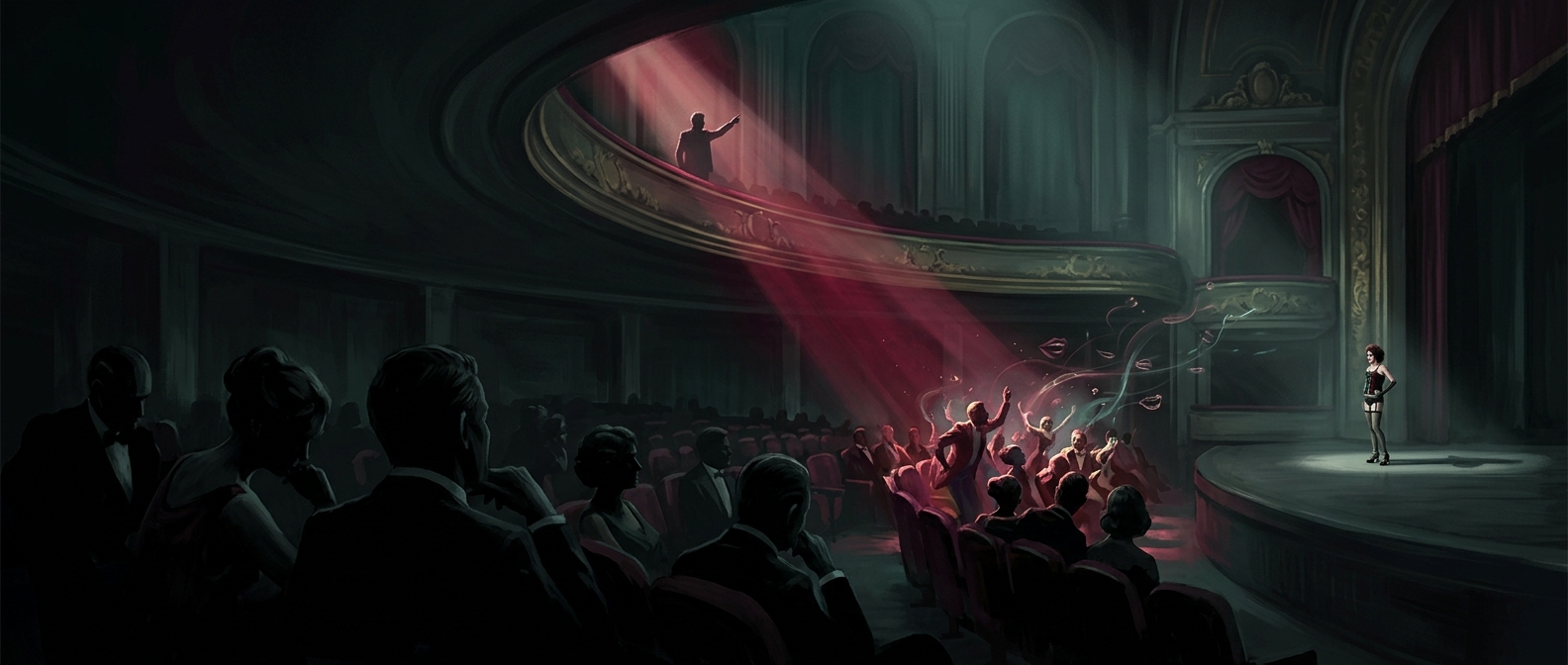
At a conventional movie screening, talking back is a nuisance. At New York’s Waverly Theater, it became part of the attraction: regulars called out responses to the screen, turning The Rocky Horror Picture Show from something people watched into something they did together.
That difference mattered because the film was not drawing the broad audience Fox had hoped for. The Waverly’s midnight crowd offered a different clue: even if the movie was not a mainstream hit, a devoted audience might return—and bring others—if the screening felt like a shared ritual.
From a local reaction to a marketing strategy
In 1976, Fox executive Tim Deegan noticed the audience heckling at the Waverly and promoted the film to midnight audiences elsewhere. Midnight screenings suited the film’s offbeat tone and gave fans room to make the show their own. A late-night crowd could be smaller than a regular opening-weekend audience, but its enthusiasm was visible, audible, and repeatable.
The theater became more than a place to see the film. The audience’s responses helped newcomers learn how to participate, while returning fans gave each screening a sense of continuity. The movie stayed the same; the experience around it changed.
Why the audience could help keep it alive
This approach gave Rocky Horror a route to an audience that ordinary advertising might not reach. Instead of selling the film only as a finished product, the midnight screenings sold a social occasion: a chance to join a crowd that knew the cues and welcomed participation. Word of mouth could then travel from one theater community to another.
The useful insight was not simply that people shouted at a movie. It was that their behavior revealed a durable kind of demand. By recognizing the Waverly crowd as evidence of a format that could travel, Fox helped turn a screening into a recurring performance—and gave the film a way to survive beyond its initial release.