How Sail Position Can Turn a Boat
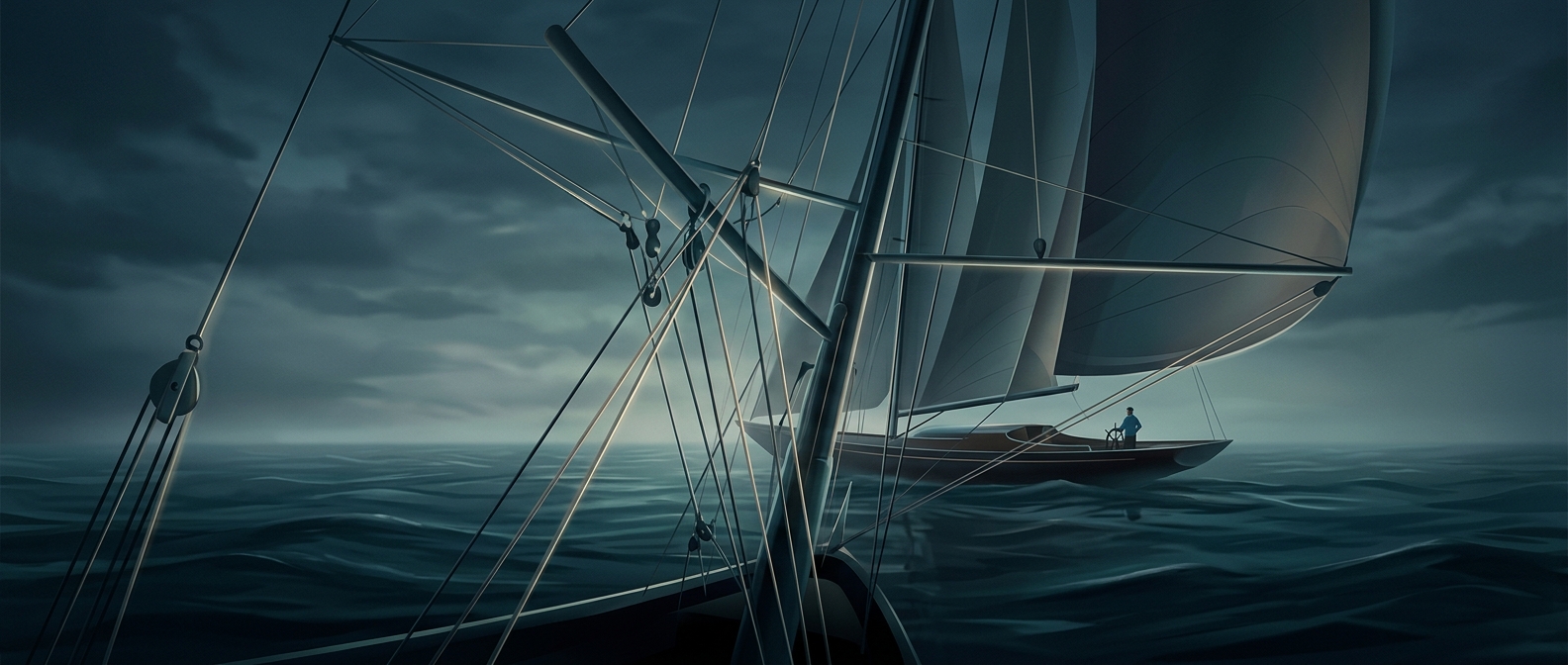
A sail does more than propel a boat. Wind pressure on it also creates a sideways force, and where that force acts can make the boat yaw—rotate left or right around its middle.
The key comparison is between the sail’s center of effort, the approximate point where wind force acts, and the hull’s center of lateral resistance, where the underwater hull and keel resist sideways motion. If those points do not line up, the force creates a turning moment. Move the sail’s pressure point ahead of the hull’s resistance point and the bow tends to turn one way; move it aft and the tendency reverses.
Steering by Trimming, Not Just Turning
A sailor changes the sail’s angle and position with the sheets, the ropes that control it. Easing or hauling a sheet changes how the wind loads the sail, while shifting the sail’s position changes the leverage of that force. The hull and keel matter too: they provide the underwater resistance that lets the sail’s sideways push become a turn rather than simply sliding the boat sideways.
This is not the same as pointing the sail like a car’s front wheels. The boat’s response depends on wind direction, sail shape, and hull design, so steering requires adjusting sail pressure as conditions change. A balanced setup lets the boat hold a course; an imbalance makes it tend to turn, which the sailor can use deliberately.
The Tradeoff of Going Rudderless
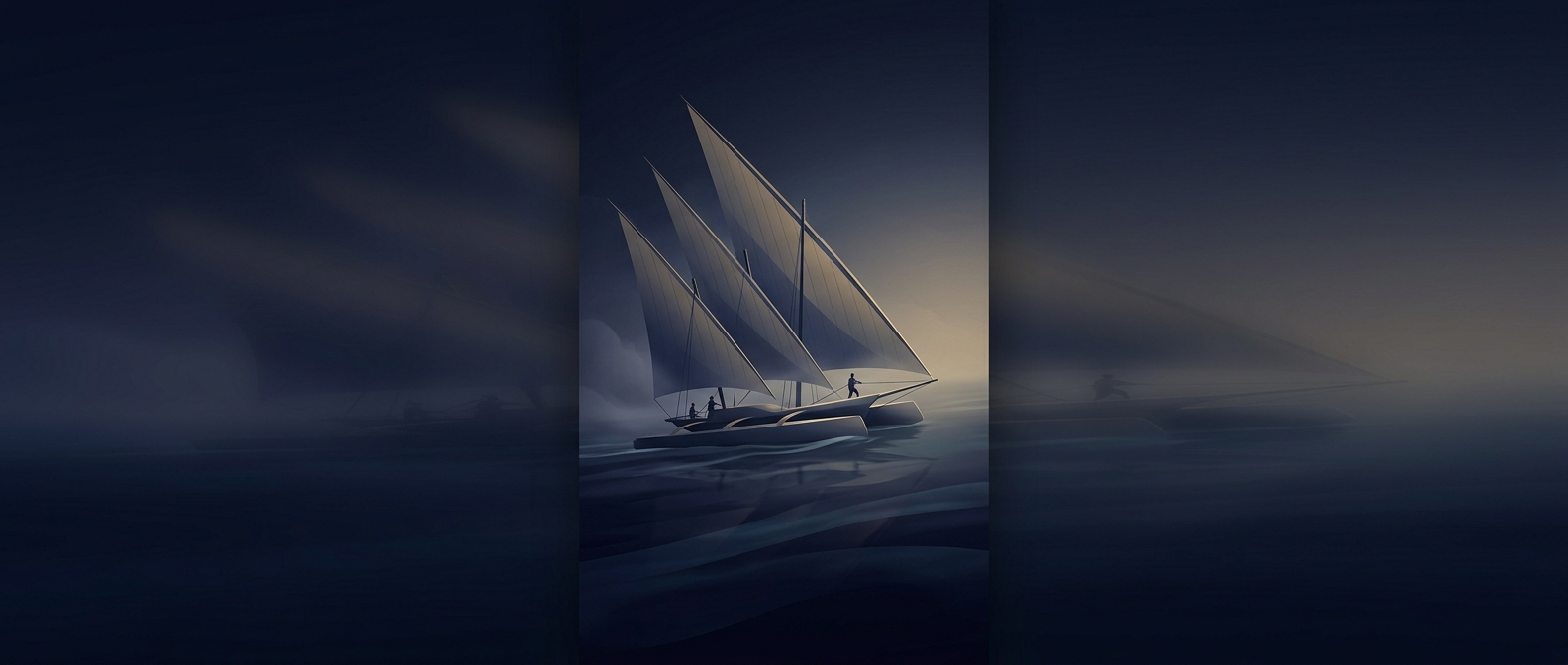
A rudderless boat must use sail trim—and often its course relative to the wind—to control direction. That can be elegant and simple, but it gives the sailor less direct control than a rudder, especially when maneuvering or when the wind is light. The practical lesson is that a sailboat’s steering system is not only the blade at the stern: the sail, keel, and hull together form a controllable balance of forces.