How a Snowmobile Finds Grip in Deep Snow
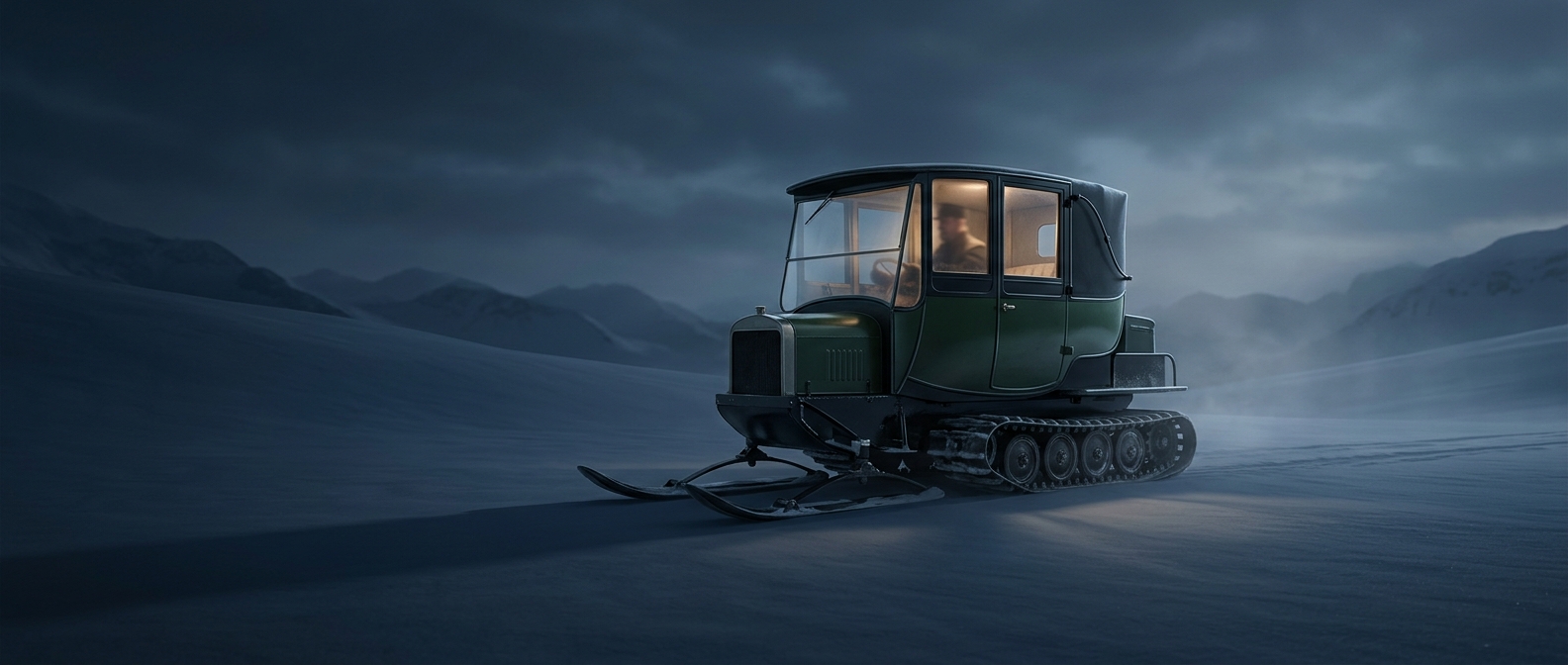
A snowmobile moves by separating two jobs: a broad rear track pushes it forward, while two narrow front skis guide it. The track’s long contact area spreads the machine’s weight over more snow than a small tire would, helping it ride on soft powder instead of digging straight down. Its raised tread also bites into the snow to create forward traction.
Steering is a different challenge. The skis turn against the surface, and the rider shifts weight to help the machine change direction. On packed trails, that can feel direct; in deep, loose snow, the skis may have less to push against, so turns require more care. The same arrangement that makes travel possible does not make every drift or slope easy to cross.
A Narrow Route to Medical Care
For a doctor traveling to an isolated home, the snowmobile’s value was not speed alone. It could follow a route where a wheeled vehicle lost traction or could not get through, carrying a person and essential supplies across snow-covered ground. That made the vehicle a practical link between patients and medical help when winter erased ordinary road access.
But the machine could not remove the hazards that caused the isolation. Visibility, cold, changing snow, and the limits of the route still shaped whether a trip was possible. Its importance lay in making some journeys feasible that otherwise might have had to wait for roads to clear.