Why Backward Mogul Skiing Is So Difficult
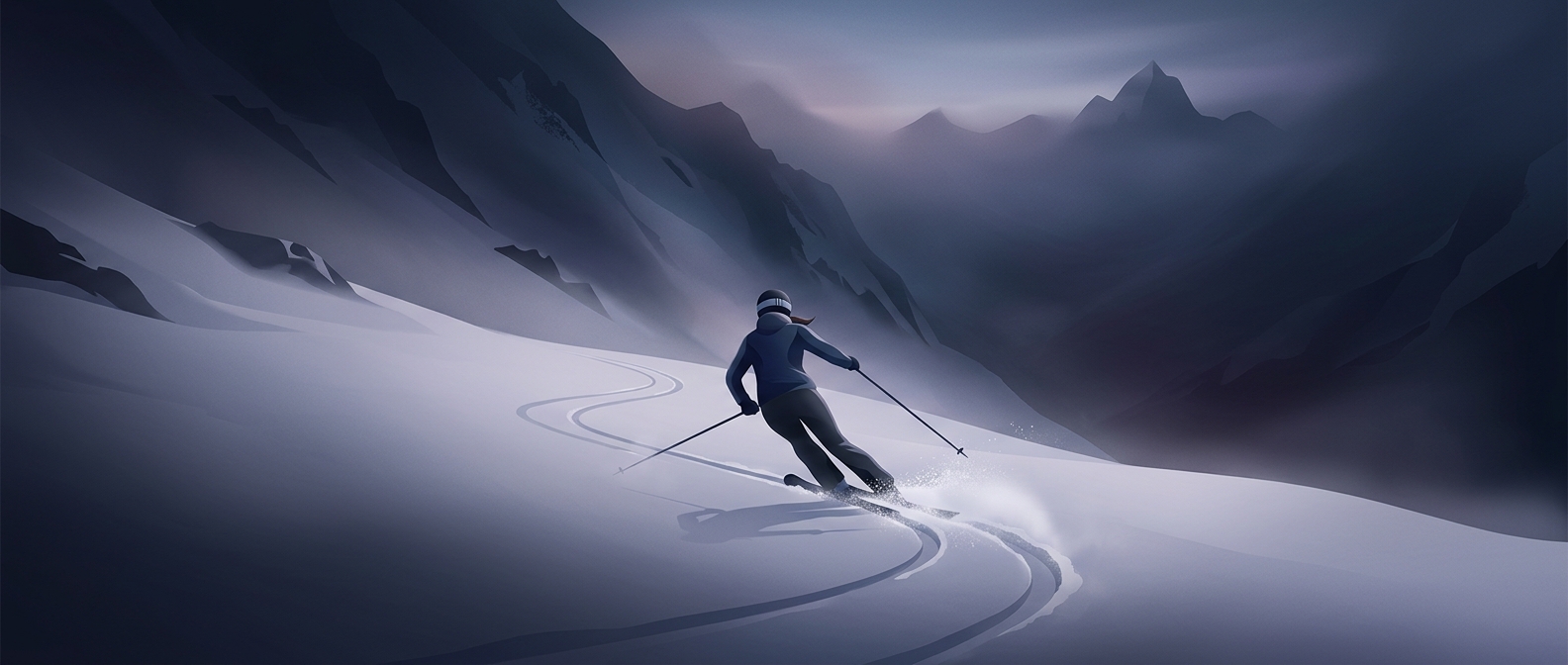
A mogul run is a field of uneven snow mounds, with troughs between them. Skiers normally look downhill and use the bumps to shape their turns and control speed. Descending backward reverses that relationship: the skis still travel downhill, but the skier’s chest and face point uphill. The terrain approaching the skis is largely behind the skier.
That makes every bump a timing problem. A skier has to bend and extend the legs to absorb changing terrain while steering the skis, even though the next obstacle is hard to see. Turning the head over a shoulder offers a quick view, but it cannot provide the same steady, forward-facing picture a skier gets on a normal descent.
Reading the Run in Glimpses
Rather than stare over one shoulder, a backward skier needs to keep checking the route while maintaining balance and control. Those glances help locate the next mound or open lane; the skier then has to act on that information before the skis reach it. On closely spaced moguls, the delay between seeing an obstacle and responding leaves little room for correction.
The challenge is not simply staying upright while facing the wrong way. It is managing speed and choosing a line with limited visibility, while the legs continue to respond to snow the skier cannot watch continuously. Each successful turn depends on combining brief visual checks with practiced movement—making a bumpy run a test of both control and awareness.